
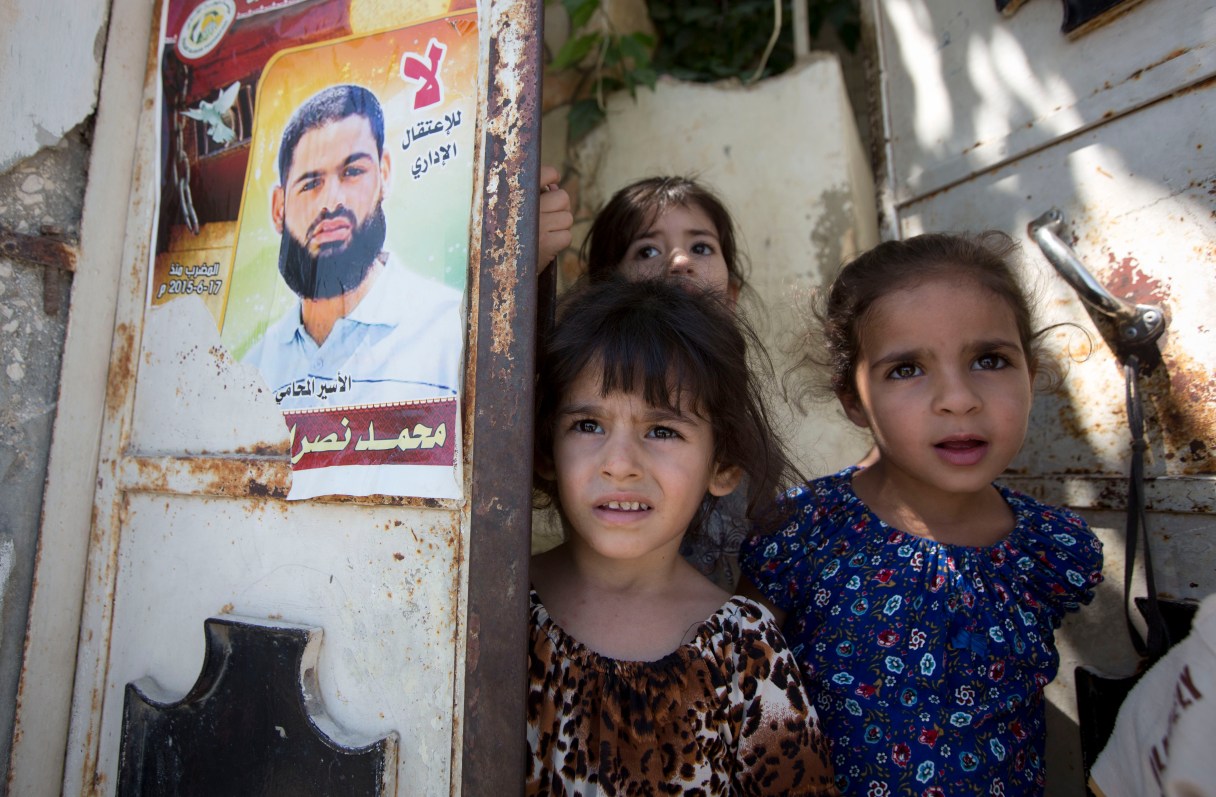
EINABOS, West Bank (AP) – Palestinian hunger striker Mohammed Allan spent his college years as an activist and leader in the student wing of the Palestinian Islamic Jihad group at a West Bank university. Now unconscious and shackled to a hospital bed, the lawyer accused of affiliating with terrorists has focused attention on Israel’s controversial detention and force-feeding policies.
Allan was arrested in November 2014 and held for two six-month periods under administrative detention, which allows authorities to imprison suspects for months or years without charge. Israel defends the practice as a necessary tool to stop militant activity.
He began his hunger strike in June, 63 days ago, to protest his incarceration without charge and has been unconscious since Friday at the intensive care unit of the Barzilai hospital in Israel’s southern city of Ashkelon. Doctors say he has organ damage because of the fast and his condition remains precarious.
Palestinian prisoners have used hunger strikes before to draw attention to their detention without trial or charges. Fearing that a fasting detainee’s death could spark unrest among Palestinians, Israel has at times acceded to hunger strikers’ demands. In June, it freed Khader Adnan, a 36-year-old senior activist in Islamic Jihad, after a 55-day hunger strike protesting his detention without charge.
Allan’s fast is the first to test Israel’s law, passed narrowly in July, that allows a judge to sanction force-feeding or medical treatment if an inmate’s life is threatened, even if the prisoner refuses.