
Wednesday, November 11, 2026Nov 11

May wins no-confidence vote, but still is beset by Brexit

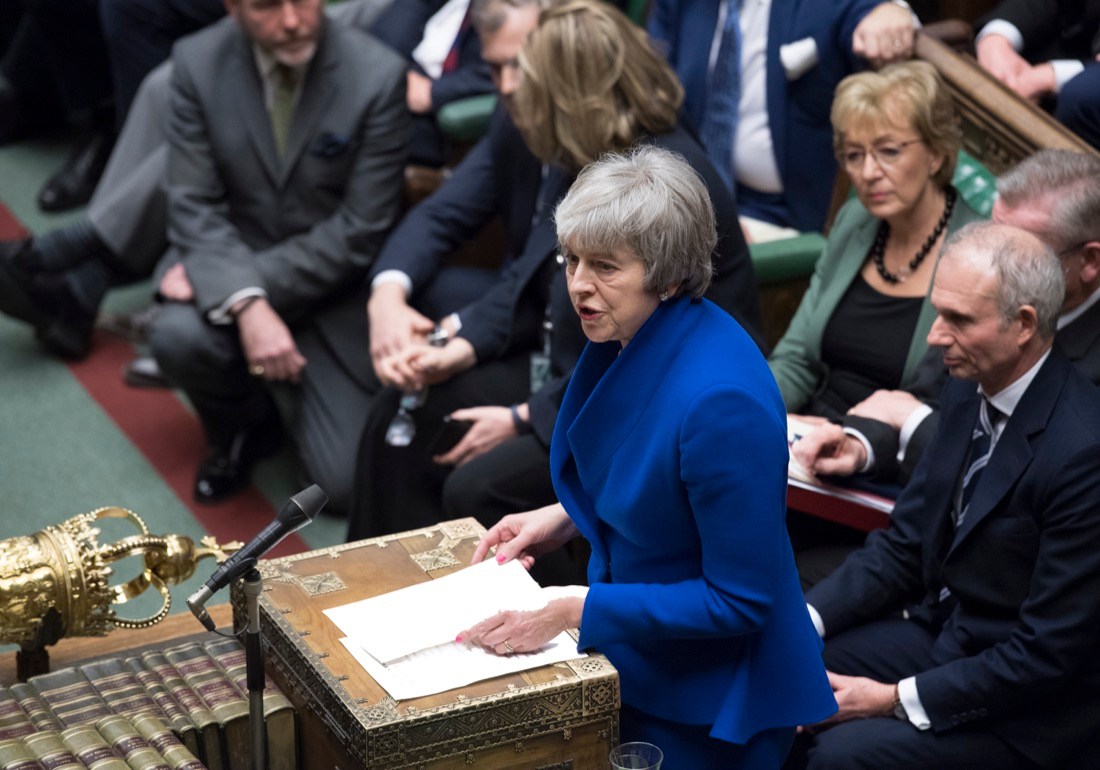
Britain's Prime Minister Theresa May speaks to parliament after she won a no-confidence vote against her government, in the House of Commons, London, Wednesday Jan. 16, 2019. Prime Minister Theresa May won the no confidence vote called for by opposition Labour Party leader Jeremy Corbyn, following the dramatic failure of the government Brexit vote. (Jessica Taylor, UK Parliament via AP)
Britain's Prime Minister Theresa May speaks to parliament after she won a no-confidence vote against her government, in the House of Commons, London, Wednesday Jan. 16, 2019. Prime Minister Theresa May won the no confidence vote called for by opposition Labour Party leader Jeremy Corbyn, following the dramatic failure of the government Brexit vote. (Jessica Taylor, UK Parliament via AP) Britain's Prime Minister Theresa May speaks to parliament after she won a no-confidence vote against her government, in the House of Commons, London, Wednesday Jan. 16, 2019. Prime Minister Theresa May won the no confidence vote called for by opposition Labour Party leader Jeremy Corbyn, following the dramatic failure of the government Brexit vote. (Jessica Taylor, UK Parliament via AP)

LONDON (AP) – British Prime Minister Theresa May survived a no-confidence vote in Parliament on Wednesday to remain in office – but saw more of her power ebb away as she battled to keep Brexit on track after lawmakers demolished her European Union divorce deal.

May won a narrow victory, 325 votes to 306 votes, on an opposition motion seeking to topple her government and trigger a general election.

Now it’s back to Brexit, where May is caught between the rock of her own negotiating red lines and the hard place of a Parliament that wants to force a radical change of course.

After defeating the no-confidence motion, May said she would hold talks “in a constructive spirit” with leaders of opposition parties and other lawmakers in a bid to find a way forward for Britain’s EU exit.

She appeared outside her 10 Downing St. residence after meeting the leaders of several smaller parties. The prime minister named the parties in a statement in which she called on opposition politicians in Parliament to “put self-interest aside” and find a consensus on Britain’s path out of the EU.