
Thursday, November 12, 2026Nov 12

Dionne: The Supreme Court as political machine

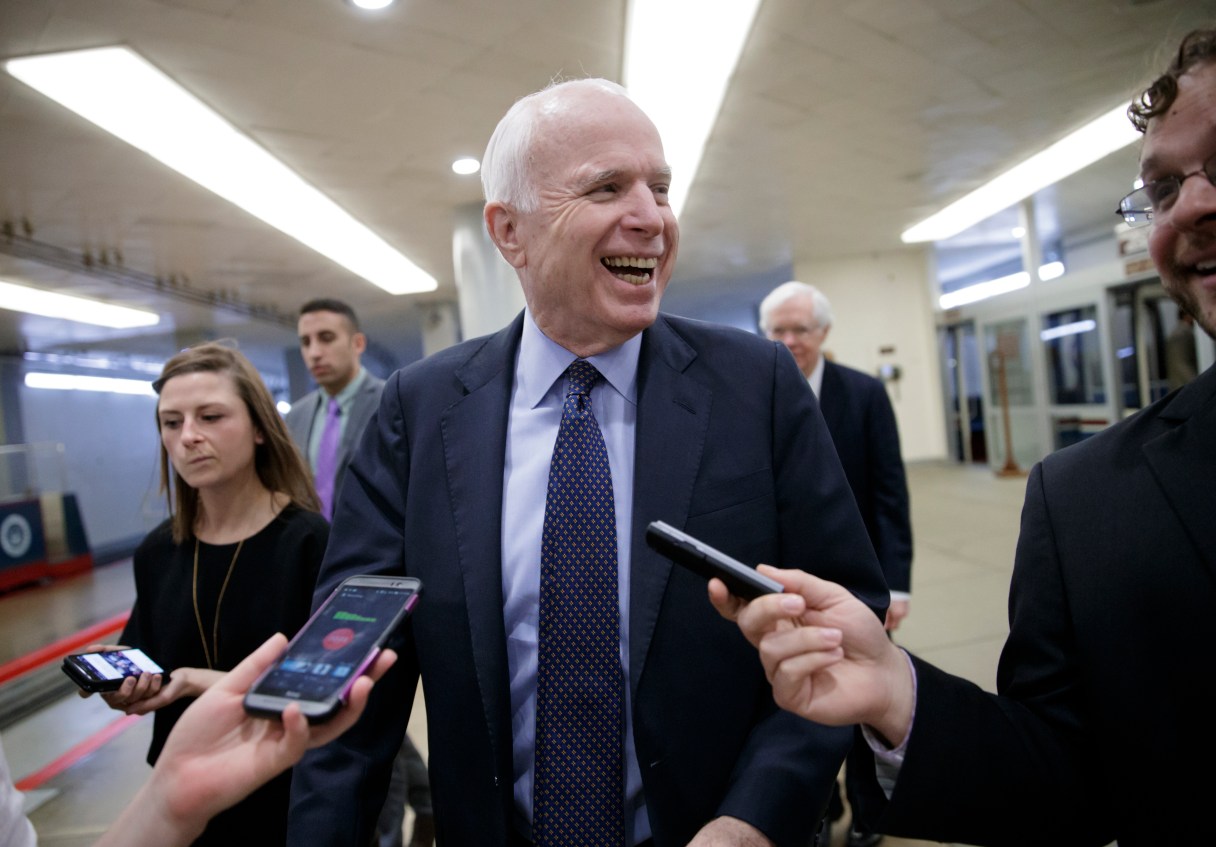
Sen. John McCain, R-Ariz. is pursued by reporters as he arrives for the scheduled cloture vote to end debate on President Donald Trump's Supreme Court nominee Neil Gorsuch, on Capitol Hill in Washington, Thursday, April 6, 2017, as the Republican majority is poised to change Senate rules and lower the vote threshold for Supreme Court nominees from 60 votes to a simple majority. McCain feels that move will diminish the bipartisanship and said "I fear that someday we will regret what we are about to do." (AP Photo/J. Scott Applewhite)
Sen. John McCain, R-Ariz. is pursued by reporters as he arrives for the scheduled cloture vote to end debate on President Donald Trump's Supreme Court nominee Neil Gorsuch, on Capitol Hill in Washington, Thursday, April 6, 2017, as the Republican majority is poised to change Senate rules and lower the vote threshold for Supreme Court nominees from 60 votes to a simple majority. McCain feels that move will diminish the bipartisanship and said "I fear that someday we will regret what we are about to do." (AP Photo/J. Scott Applewhite) Sen. John McCain, R-Ariz. is pursued by reporters as he arrives for the scheduled cloture vote to end debate on President Donald Trump's Supreme Court nominee Neil Gorsuch, on Capitol Hill in Washington, Thursday, April 6, 2017, as the Republican majority is poised to change Senate rules and lower the vote threshold for Supreme Court nominees from 60 votes to a simple majority. McCain feels that move will diminish the bipartisanship and said "I fear that someday we will regret what we are about to do." (AP Photo/J. Scott Applewhite)

WASHINGTON – Why did Democrats filibuster Judge Neil Gorsuch? Because they’ve had enough with the politics of power grabbing and bullying.

At the root of this fight was the long-term conservative effort to dominate the Supreme Court and turn it to the political objectives of the right.

This was thus about far more than retaliation, however understandable, for the Senate Republicans’ refusal to give even a hearing to Judge Merrick Garland, President Obama’s nominee for the seat Gorsuch would fill. Behind the most recent judicial struggle was a series of highly politicized Supreme Court rulings.

It started with Bush v. Gore, when five conservative justices abruptly halted the recount of Florida’s ballots in the 2000 election and made George W. Bush president.

The unsigned majority opinion unmasked (to use the word of the moment) the unprincipled and unmistakably results-oriented nature of the decision with this lovely little sentence: “Our consideration is limited to the present circumstances, for the problem of equal protection in election processes generally presents many complexities.”