
Wednesday, November 11, 2026Nov 11

Global AIDS conference exposes South Africa’s dramatic turn

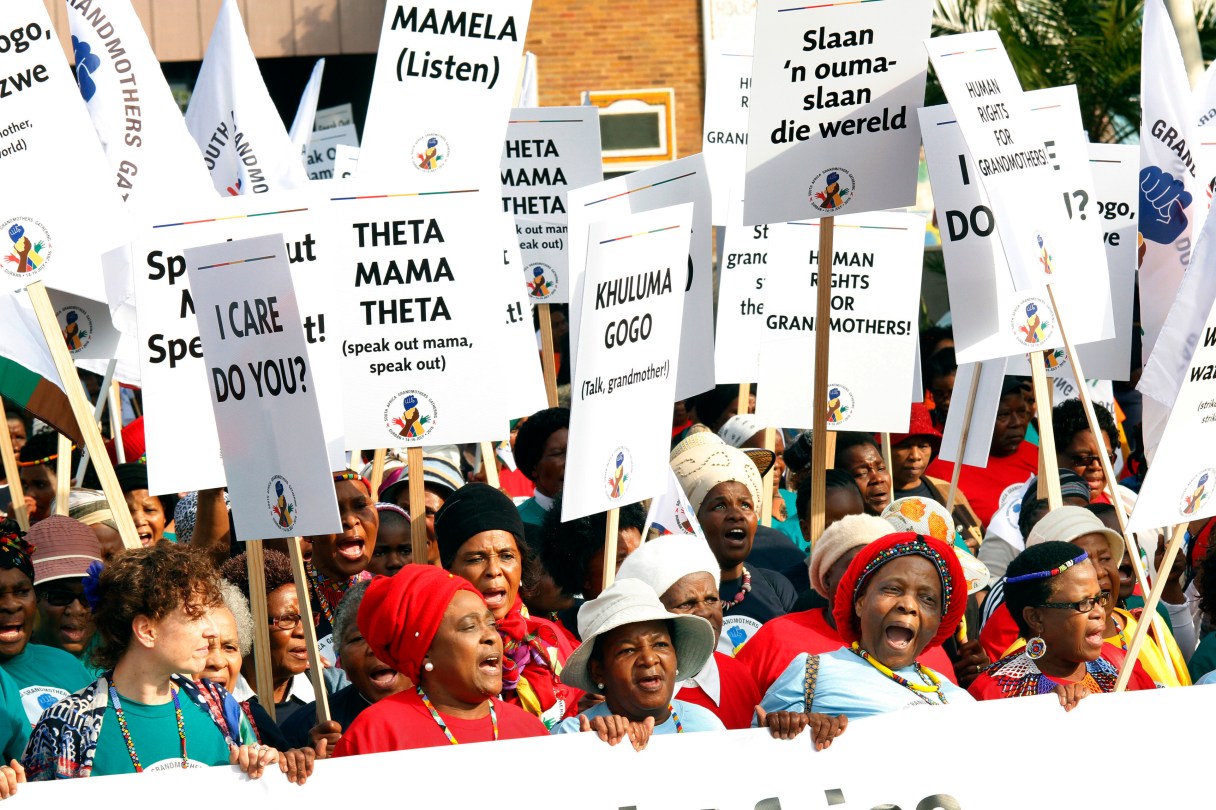
Several hundred protesting grandmothers gather in Durban, South Africa, Saturday July 16, 2016, and march to the International Conference Center, to demand more government support as caregivers for children orphaned by the AIDS epidemic. On Monday, the return of hundreds of AIDS researchers and activists to Durban will highlight how radically the country's outlook has changed. South Africa now is a global proving ground for treatment and prevention, including a study of an experimental HIV vaccine set to begin later this year. (AP Photo)
Several hundred protesting grandmothers gather in Durban, South Africa, Saturday July 16, 2016, and march to the International Conference Center, to demand more government support as caregivers for children orphaned by the AIDS epidemic. On Monday, the return of hundreds of AIDS researchers and activists to Durban will highlight how radically the country's outlook has changed. South Africa now is a global proving ground for treatment and prevention, including a study of an experimental HIV vaccine set to begin later this year. (AP Photo) Several hundred protesting grandmothers gather in Durban, South Africa, Saturday July 16, 2016, and march to the International Conference Center, to demand more government support as caregivers for children orphaned by the AIDS epidemic. On Monday, the return of hundreds of AIDS researchers and activists to Durban will highlight how radically the country's outlook has changed. South Africa now is a global proving ground for treatment and prevention, including a study of an experimental HIV vaccine set to begin later this year. (AP Photo)

JOHANNESBURG (AP) – The first time the world came to South Africa for a conference on AIDS, the country’s leader shocked attendees by questioning whether HIV really caused the disease.

President Thabo Mbeki then walked out of the room as a slender 11-year-old boy with AIDS addressed the crowd in response, pleading for treatment and understanding in a region where the epidemic was taking its harshest toll.

“Don’t be afraid of us. We are all the same,” Nkosi Johnson said. He died the next year.

South Africa’s official attitude to AIDS at that meeting in 2000 and for several years afterward set back the country so badly that more than 330,000 people died because the government withheld HIV drugs, a Harvard study found.

The AIDS conference was “the low-water mark for South Africa,” the country’s current health minister, Aaron Motsoaledi, wrote in the Mail & Guardian newspaper last week.