
APPOMATTOX, Va. (AP) – A Civil War cannonball that ripped through Hannah Reynolds’ master’s cabin made her a footnote of misfortune, the lone civilian death at the Battle of Appomattox Court House. She died a slave at 60, hours before the war to end slavery unofficially came to a close.
A century and a half later, Reynolds’ story is being rewritten: Newly discovered records show that she lingered for several days – long enough to have died a free woman.
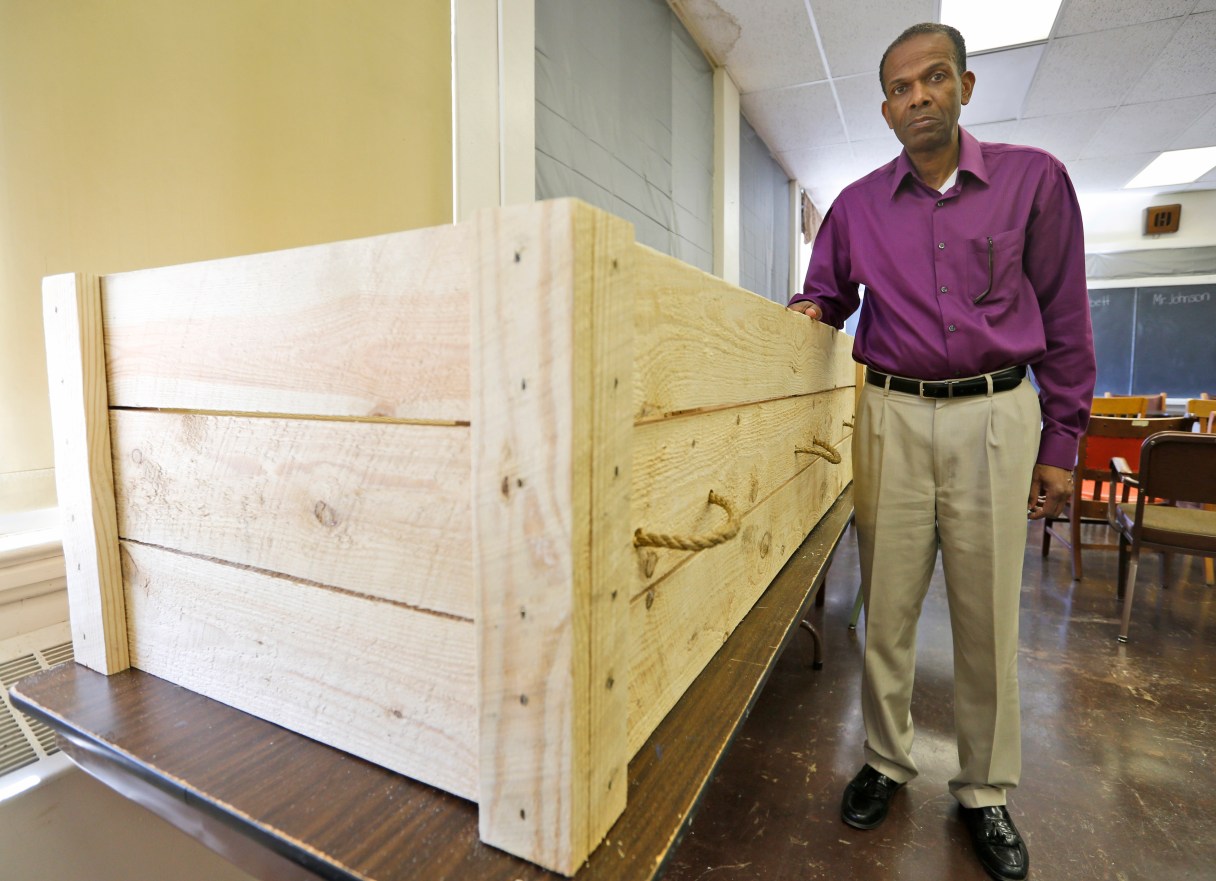
This new historical narrative has made Reynolds, along with Confederate General Robert E. Lee and Union Gen. Ulysses Grant, one of the central figures in commemorative activities marking Lee’s surrender at Appomattox, Virginia, starting Wednesday. Friday night, a eulogy in period language will be delivered over a plain wooden coffin representing Reynolds’ remains, a 100-member gospel choir will sing spirituals and 4,600 candles will be lit to represent the slaves in Appomattox County who were emancipated by Lee’s surrender to Grant, his Union counterpart.
The Reynolds story has also inspired some soul searching in this rural county in Virginia’s tobacco belt where black and white students were taught in separate schools more than a century after Lee’s farmhouse surrender and where discussions of race are approached delicately, if not at all.
“It’s hard to bring up. It’s even harder to get an honest and open discussion of it,” said Joseph Servis, an advanced placement U.S. history teacher at Appomattox High School. His students wrote essays drawing on their own experiences, black and white, with race.