
Wednesday, November 11, 2026Nov 11

Top Alabama court upholds Confederate monument protections

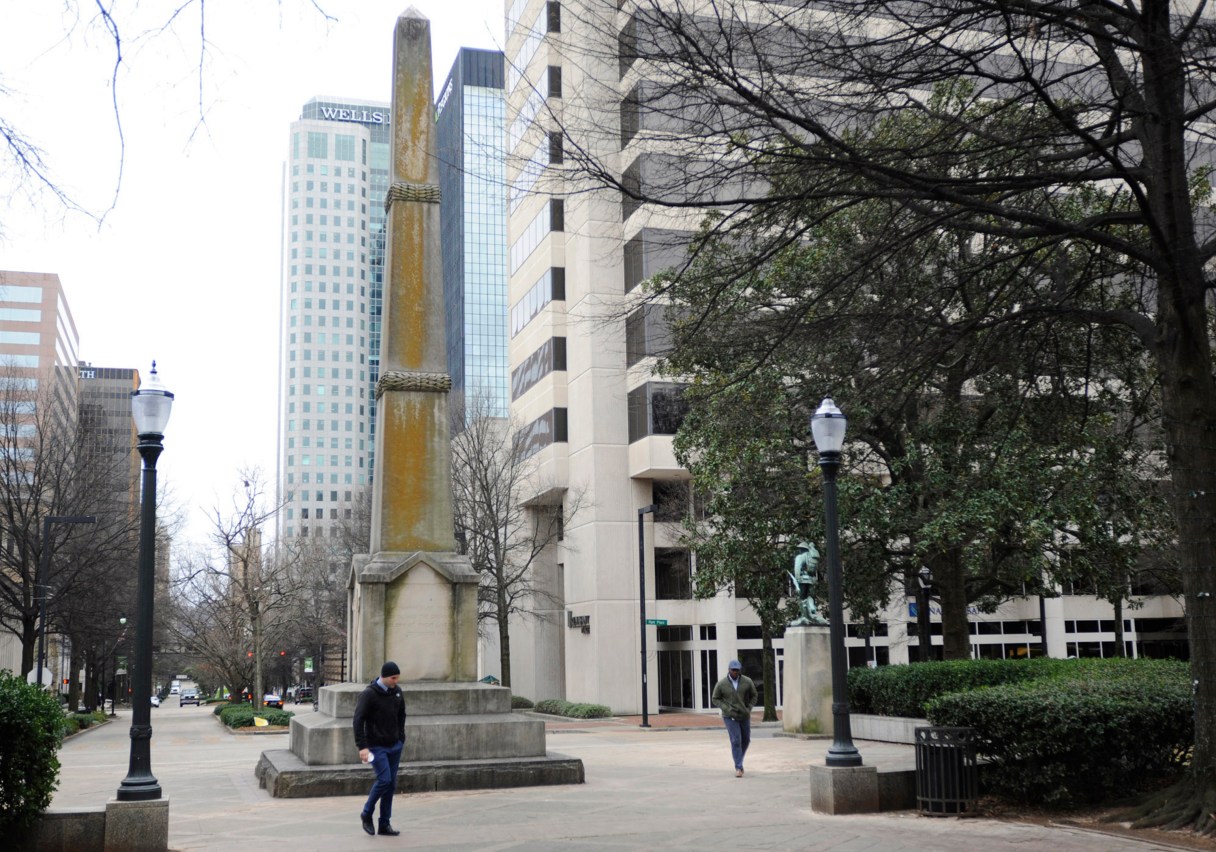
FILE - In this Tuesday, Feb. 9, 2016 file photo, men walk past a Confederate monument in Linn Park in downtown Birmingham, Ala. The Alabama Supreme Court on Wednesday, Nov. 27, 2019 upheld a state law barring cities from moving, or altering, Confederate monuments. Justices on Wednesday reversed a circuit judge’s ruling that declared the law unenforceable because it violated the free speech rights of local communities. (AP Photo/Jay Reeves, File)
FILE - In this Tuesday, Feb. 9, 2016 file photo, men walk past a Confederate monument in Linn Park in downtown Birmingham, Ala. The Alabama Supreme Court on Wednesday, Nov. 27, 2019 upheld a state law barring cities from moving, or altering, Confederate monuments. Justices on Wednesday reversed a circuit judge’s ruling that declared the law unenforceable because it violated the free speech rights of local communities. (AP Photo/Jay Reeves, File) FILE - In this Tuesday, Feb. 9, 2016 file photo, men walk past a Confederate monument in Linn Park in downtown Birmingham, Ala. The Alabama Supreme Court on Wednesday, Nov. 27, 2019 upheld a state law barring cities from moving, or altering, Confederate monuments. Justices on Wednesday reversed a circuit judge’s ruling that declared the law unenforceable because it violated the free speech rights of local communities. (AP Photo/Jay Reeves, File)

MONTGOMERY, Ala. (AP) – The Alabama Supreme Court ruled Wednesday that the majority-black city of Birmingham violated a state law protecting Confederate monuments when it put plywood panels in front of a towering obelisk in a downtown park.

The all-Republican court reversed a circuit judge’s ruling that struck down Alabama’s 2017 law protecting Confederate monuments as an unconstitutional violation of the free speech rights of local communities. Justices directed the judge to instead enter an order declaring that Birmingham violated the 2017 Alabama Memorial Preservation Act, and to fine the city $25,000.

Alabama sued Birmingham in 2017 after municipal officials erected a wooden box obscuring the inscriptions on a 52-foot-tall (16-meter-tall) obelisk honoring Confederate veterans. Justices on Wednesday agreed with the attorney general’s office that the city had violated the 2017 law.

A spokesman for the city said they are “strongly disappointed” with the decision.

“This ruling appears to be less about the rule of law and more about politics,” Rick Journey, director of communications in the office of public information for the city of Birmingham said in a statement.