
Thursday, November 12, 2026Nov 12

Tunisia overwhelmingly passes anti-terror law

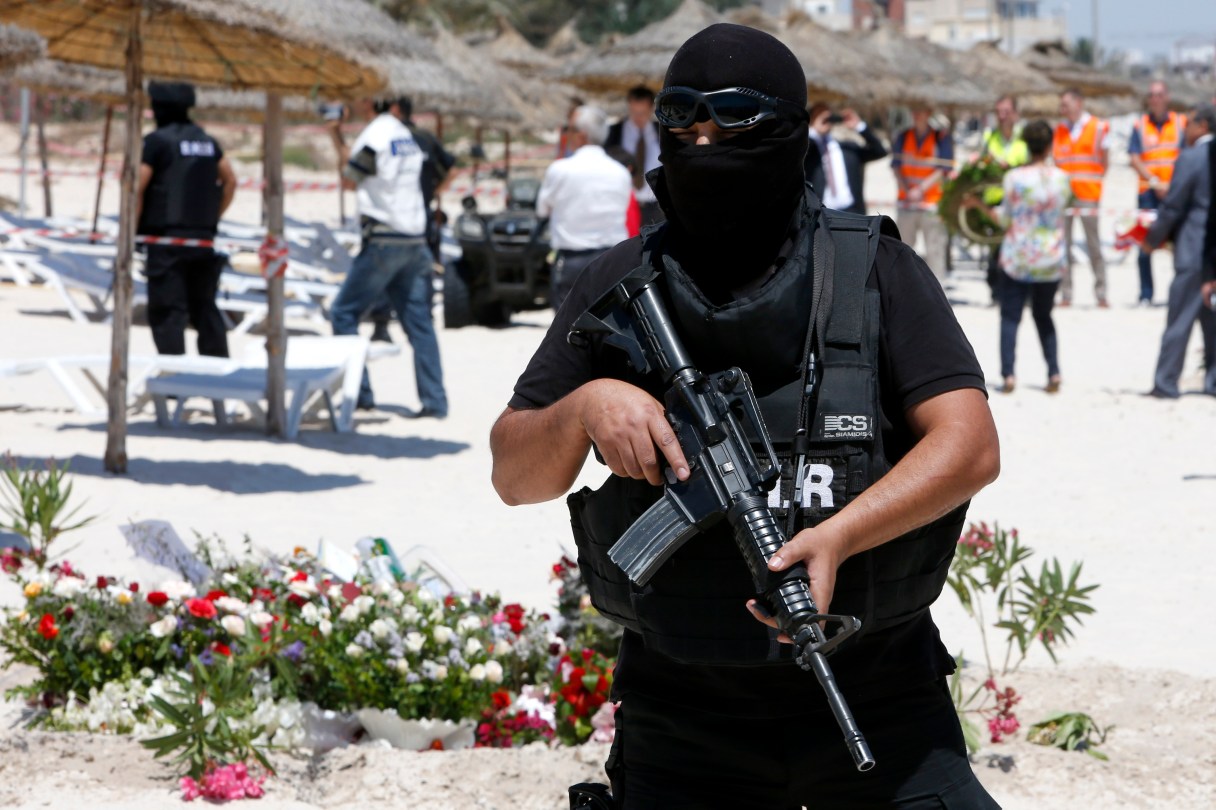
FILE - In this Monday, June 29, 2015 file photo, a hooded Tunisian police officer stands guard ahead of the visit of top security officials of Britain, France, Germany and Belgium at the scene of Friday's shooting attack in front of the Imperial Marhaba hotel in the Mediterranean resort of Sousse, Tunisa. Tunisia's parliament on Friday, July 24 voted overwhelmingly to pass the country’s new anti-terror law after a pair of devastating attacks against tourists, but critics fear the new legislation may endanger this North African nation’s hard won freedoms.  (AP Photo/Abdeljalil Bounhar, file)
FILE - In this Monday, June 29, 2015 file photo, a hooded Tunisian police officer stands guard ahead of the visit of top security officials of Britain, France, Germany and Belgium at the scene of Friday's shooting attack in front of the Imperial Marhaba hotel in the Mediterranean resort of Sousse, Tunisa. Tunisia's parliament on Friday, July 24 voted overwhelmingly to pass the country’s new anti-terror law after a pair of devastating attacks against tourists, but critics fear the new legislation may endanger this North African nation’s hard won freedoms. (AP Photo/Abdeljalil Bounhar, file) FILE - In this Monday, June 29, 2015 file photo, a hooded Tunisian police officer stands guard ahead of the visit of top security officials of Britain, France, Germany and Belgium at the scene of Friday's shooting attack in front of the Imperial Marhaba hotel in the Mediterranean resort of Sousse, Tunisa. Tunisia's parliament on Friday, July 24 voted overwhelmingly to pass the country’s new anti-terror law after a pair of devastating attacks against tourists, but critics fear the new legislation may endanger this North African nation’s hard won freedoms. (AP Photo/Abdeljalil Bounhar, file)

TUNIS, Tunisia (AP) – Tunisia’s parliament voted overwhelmingly to pass the country’s new anti-terror law after a pair of devastating attacks against tourists, but critics fear the new legislation may endanger the North African nation’s hard-won freedoms.

Alone among the countries that underwent the 2011 uprisings of the Arab Spring, Tunisia emerged with a democracy, but amid a rise in attacks by Islamic radicals, the new government is increasingly considering stability and security over personal freedoms.

“There are many holes in the law that could open the way to human rights violations,” said a statement by coalition of Tunisian 10 civil society groups, including the bar association, the journalists’ union and several rights groups.

The law, which had languished in parliament for years and was approved late Friday, was fast-tracked after gunmen in March attacked the national museum in Tunis and killed 21 foreign tourists. Three months later, another gunman attacked a resort in Sousse killing 38 tourists, mostly Britons.

Since then, the government has mobilized 100,000 additional army and police units around the country, including 3,000 dedicated to guarding hotels and tourist sites.