
Thursday, November 12, 2026Nov 12

Trial of Freddie Gray van driver gives his side of the story

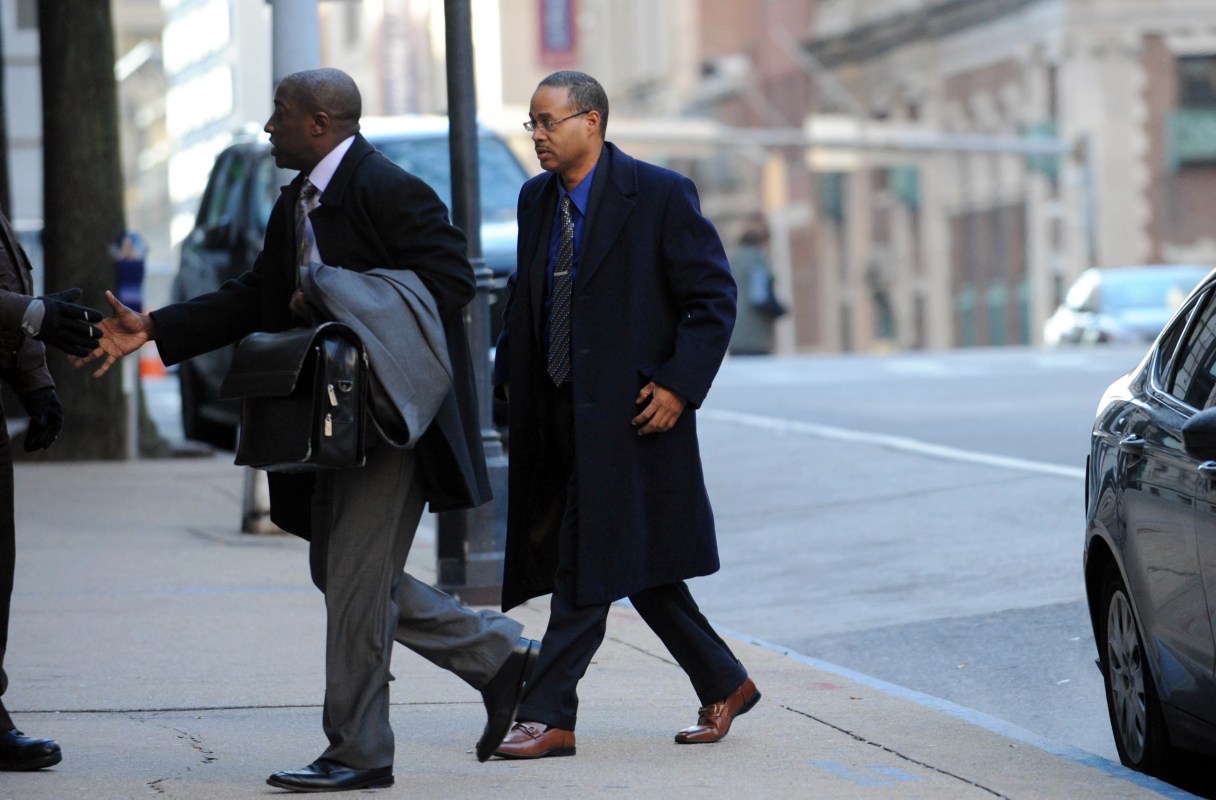
FILE - In a Wednesday, Jan. 6, 2016 file photo, Caesar Goodson, right, arrives at Courthouse East, in Baltimore for a motions hearing ahead of the trial for Goodson, who drove the police transport van where Freddie Gray was critically injured. Prosecutors want William Porter, whose trial ended in a mistrial last month, to testify against Goodson and Sgt. Alicia White. (Kim Hairston/The Baltimore Sun via AP, File)  WASHINGTON EXAMINER OUT; MANDATORY CREDIT
FILE - In a Wednesday, Jan. 6, 2016 file photo, Caesar Goodson, right, arrives at Courthouse East, in Baltimore for a motions hearing ahead of the trial for Goodson, who drove the police transport van where Freddie Gray was critically injured. Prosecutors want William Porter, whose trial ended in a mistrial last month, to testify against Goodson and Sgt. Alicia White. (Kim Hairston/The Baltimore Sun via AP, File) WASHINGTON EXAMINER OUT; MANDATORY CREDIT FILE - In a Wednesday, Jan. 6, 2016 file photo, Caesar Goodson, right, arrives at Courthouse East, in Baltimore for a motions hearing ahead of the trial for Goodson, who drove the police transport van where Freddie Gray was critically injured. Prosecutors want William Porter, whose trial ended in a mistrial last month, to testify against Goodson and Sgt. Alicia White. (Kim Hairston/The Baltimore Sun via AP, File) WASHINGTON EXAMINER OUT; MANDATORY CREDIT

BALTIMORE (AP) – Police van driver Caesar Goodson was with Freddie Gray for every second of his 45-minute trip from the site of his arrest to the Western District police station, where Gray arrived critically injured and unresponsive. But Goodson’s account of what happened on that day remains a mystery: He is the only one of six officers charged in Gray’s death not to speak to investigators.

His trial, which begins Monday, will offer the public its first chance to hear Goodson’s side of the story.

Goodson was behind the wheel of the van that carried Gray to six different locations while he was handcuffed and shackled but unrestrained in the rear. He faces the most serious charge of all – second-degree murder, which carries a maximum sentence of 30 years in prison. To be convicted, prosecutors must prove that Goodson was so callous in his disregard for Gray’s life that he deliberately allowed him to die.

Goodson will be the second officer to go on trial, but his could yield the first verdict. Last month, Officer William Porter’s trial ended with a hung jury, making the stakes for Goodson’s trial even higher in a city still on edge from the rioting and unrest in April.

Gray, a young black man, died April 19, a week after he broke his neck in police custody. His death exposed the deep divide between the public and the police in Baltimore, and became a national symbol of the Black Lives Matter movement.