
Thursday, November 12, 2026Nov 12

Q&A: Yemen at dangerous crossroads as Shiites seize power

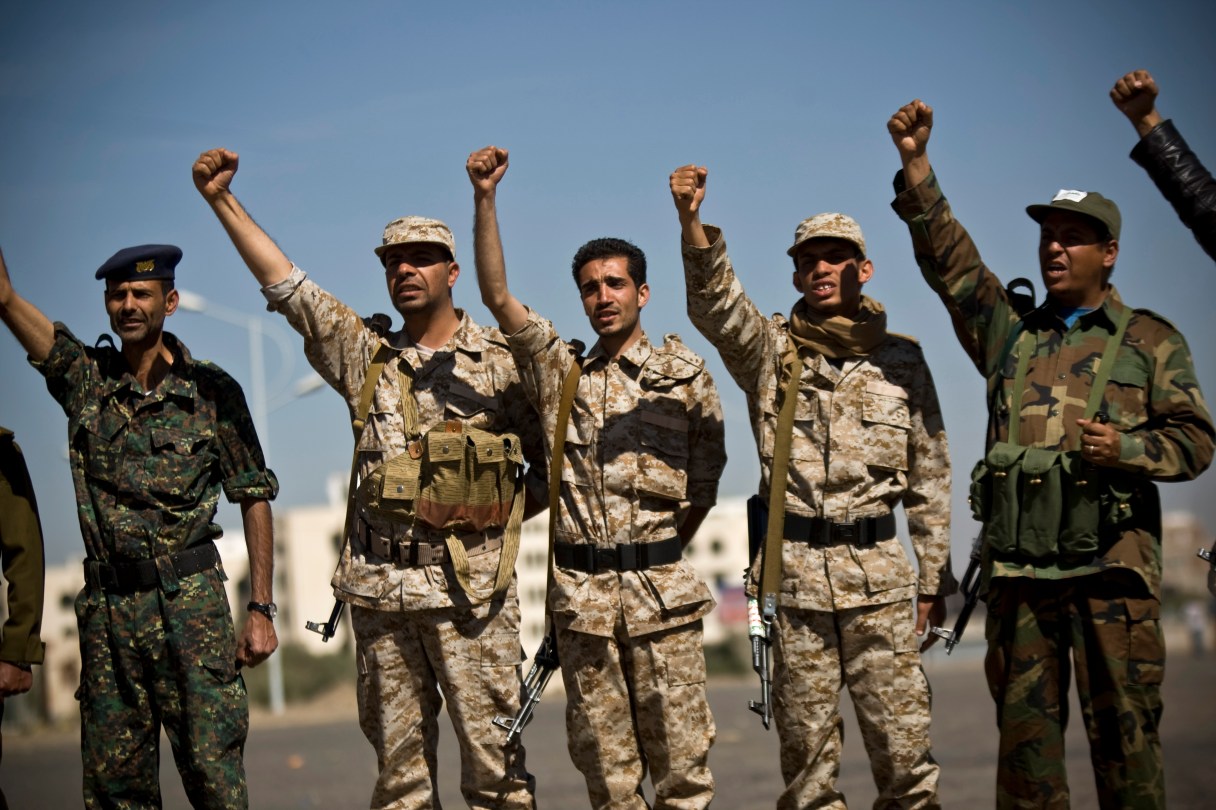
FILE - In this Wednesday, Feb. 4, 2015 file photo, Houthi Shiite Yemenis wearing army uniforms chant slogans during a rally to show support for their comrades in Sanaa, Yemen. On Saturday, Feb. 7, 2015, a day after taking power, Shiite rebels in Yemen found themselves increasingly under pressure Saturday as thousands protested against their rule and a group of nearby countries denounced their "coup." (AP Photo/Hani Mohammed, File)
FILE - In this Wednesday, Feb. 4, 2015 file photo, Houthi Shiite Yemenis wearing army uniforms chant slogans during a rally to show support for their comrades in Sanaa, Yemen. On Saturday, Feb. 7, 2015, a day after taking power, Shiite rebels in Yemen found themselves increasingly under pressure Saturday as thousands protested against their rule and a group of nearby countries denounced their "coup." (AP Photo/Hani Mohammed, File) FILE - In this Wednesday, Feb. 4, 2015 file photo, Houthi Shiite Yemenis wearing army uniforms chant slogans during a rally to show support for their comrades in Sanaa, Yemen. On Saturday, Feb. 7, 2015, a day after taking power, Shiite rebels in Yemen found themselves increasingly under pressure Saturday as thousands protested against their rule and a group of nearby countries denounced their "coup." (AP Photo/Hani Mohammed, File)

Yemen’s Shiite rebels have dissolved parliament and declared a transitional government in the majority Sunni nation. The move raises doubts over whether the U.S.-led counter-terrorism campaign against Yemen’s branch of the al-Qaida terror network can continue without local support.

___

Q: WHO ARE THE HOUTHIS?

A: They are a modern Shiite tribal movement rooted in northern Yemen along the nation’s border with Saudi Arabia. Their name honors their first military commander, Hussein al-Houthi, who launched an anti-government rebellion following the U.S. invasion of Iraq with the aim of toppling Yemen’s pro-Western government. He was killed by Yemen’s army in 2004. Houthis again took part in the 2011 Arab Spring rebellion against the government of then-President Ali Abdullah Saleh, but rejected a compromise plan that passed power to Saleh’s successor, Abed Rabbo Mansour Hadi. They since have consolidated their military hold over Yemen’s northern provinces and, in September 2014, moved south to seize control of the capital, Sanaa, and other major cities.

___