
Tuesday, November 10, 2026Nov 10

5 years after 34 South African miners shot dead, no arrests

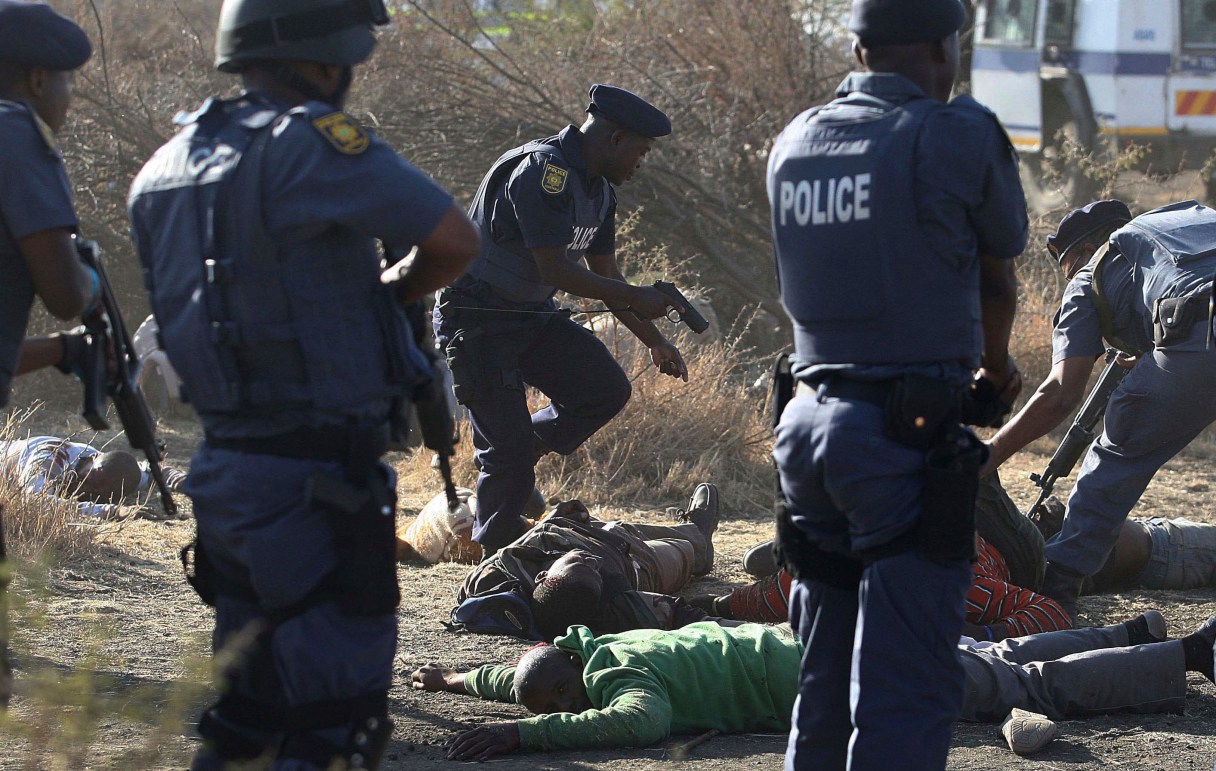
FILE - In this Aug. 16, 2012 file photo police surround the bodies of striking miners after opening fire on a crowd at the Lonmin Platinum Mine in Marikana, near Rustenburg, South Africa killing 34. Five years after the event rights groups say no one has been prosecuted and miners' living conditions are as "squalid" as ever. (AP Photo/File)
FILE - In this Aug. 16, 2012 file photo police surround the bodies of striking miners after opening fire on a crowd at the Lonmin Platinum Mine in Marikana, near Rustenburg, South Africa killing 34. Five years after the event rights groups say no one has been prosecuted and miners' living conditions are as "squalid" as ever. (AP Photo/File) FILE - In this Aug. 16, 2012 file photo police surround the bodies of striking miners after opening fire on a crowd at the Lonmin Platinum Mine in Marikana, near Rustenburg, South Africa killing 34. Five years after the event rights groups say no one has been prosecuted and miners' living conditions are as "squalid" as ever. (AP Photo/File)

JOHANNESBURG (AP) – Five years after South African police shot dead 34 striking mine workers, recalling police brutality under apartheid, rights groups say no one has been prosecuted and miners’ living conditions are as “squalid” as ever.

On Aug. 16, 2012, police opened fire on workers demanding wage increases and better living conditions at a platinum mine operated by Lonmin Plc in Marikana. At least 70 were injured.

The shootings shocked South Africa, where mining is a major pillar of the economy.

Despite the outrage, no prosecutions have been made in connection with the killings, Amnesty International said in a report released this week to mark the anniversary. That’s despite President Jacob Zuma’s pledge last year that criminal charges would be brought against several senior police officers.

“The tragedy of the Marikana killings is compounded by the shocking fact that no one responsible for the bloodshed has yet been held accountable,” Shehnilla Mohamed, executive director of Amnesty International South Africa, said in a statement.