
Wednesday, November 11, 2026Nov 11

COVID-19 infections rising in Georgia since recent lows

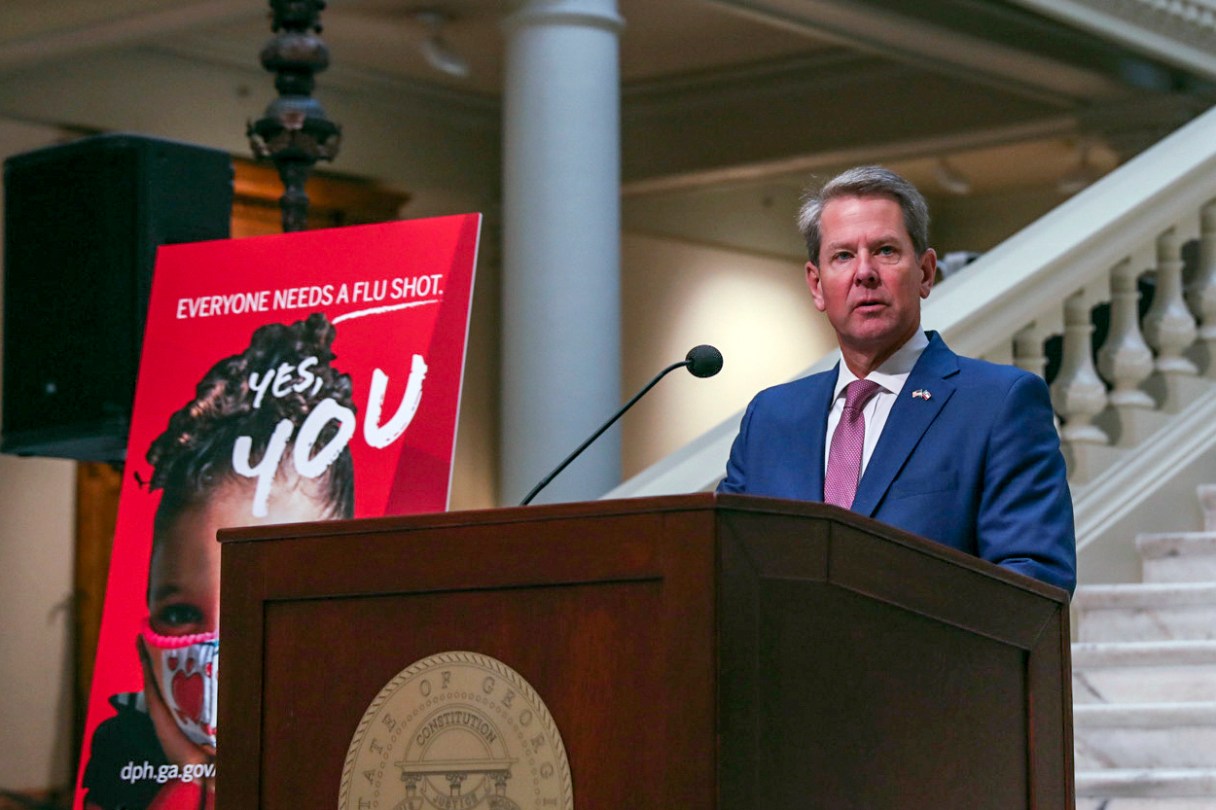
Georgia Gov. Brian Kemp speaks to reporters about Georgia's COVID-19 outbreak, Wednesday, Oct. 7, 2020, at the state Capitol in Atlanta. Kemp says that Georgia is making progress in reducing coronavirus infections, but is urging people to get a flu shot in addition to practicing social distancing, wearing masks and washing hands. (Riley Bunch/The Daily Times via AP)
Georgia Gov. Brian Kemp speaks to reporters about Georgia's COVID-19 outbreak, Wednesday, Oct. 7, 2020, at the state Capitol in Atlanta. Kemp says that Georgia is making progress in reducing coronavirus infections, but is urging people to get a flu shot in addition to practicing social distancing, wearing masks and washing hands. (Riley Bunch/The Daily Times via AP) Georgia Gov. Brian Kemp speaks to reporters about Georgia's COVID-19 outbreak, Wednesday, Oct. 7, 2020, at the state Capitol in Atlanta. Kemp says that Georgia is making progress in reducing coronavirus infections, but is urging people to get a flu shot in addition to practicing social distancing, wearing masks and washing hands. (Riley Bunch/The Daily Times via AP)

ATLANTA (AP) – The number of COVID-19 cases is rising in Georgia, although infections in the state are not climbing as fast as those nationwide.

Even with relatively few infections reported Monday, the state’s seven-day average is close to 1,300, more than 10% above the recent bottom on Oct. 8. The number of people hospitalized with confirmed cases of COVID-19 has also been rising for a week, crossing back above 1,300 on Monday.

“Things are not going well for Georgia,” Amber Schmidtke, an epidemiologist who writes a daily analysis of Georgia’s number, wrote Monday.

She and other experts fear another jump like the one seen in June, in part because cases and hospitalizations never fell as low as they did in the spring.

One issue is that Georgia is still not including probable cases in its daily reports. Those cases are mostly diagnosed from rapid antigen tests, and many other states are counting them as positives. Public Health Commissioner Kathleen Toomey said recently that the state is working on a plan to report probable cases daily.