
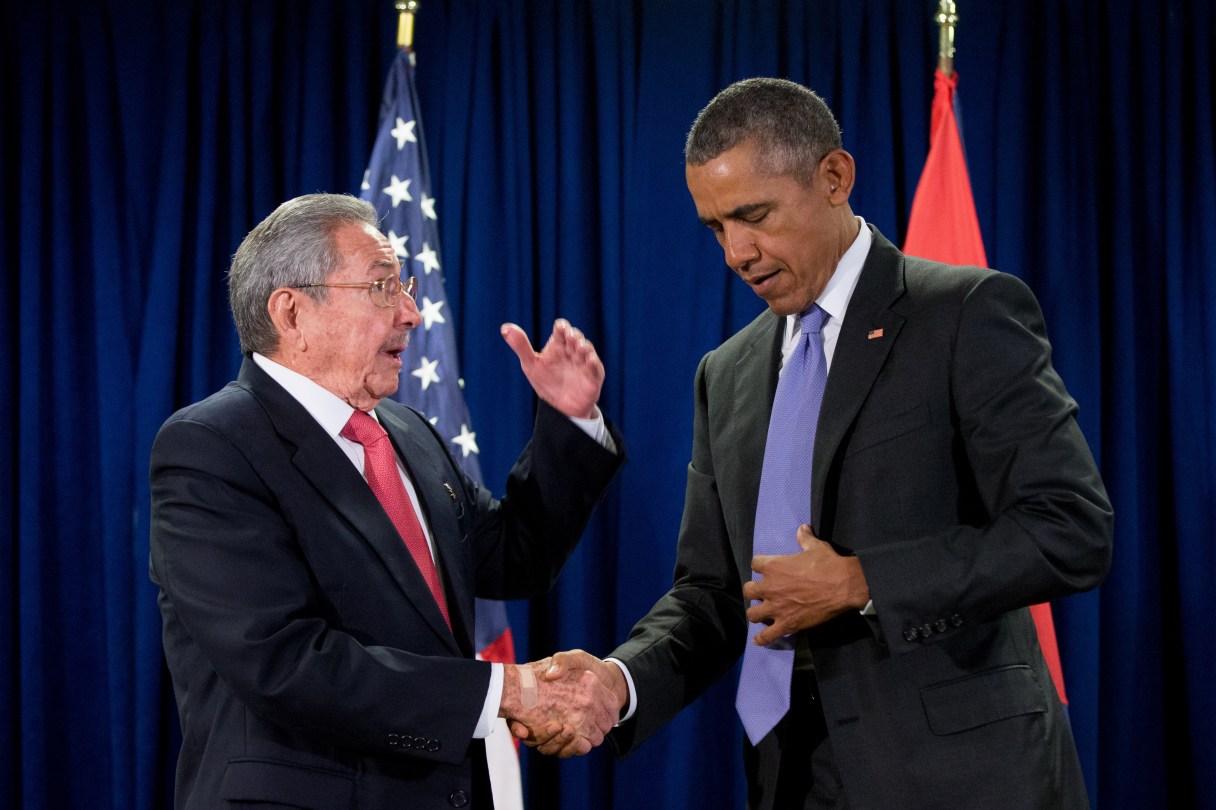
 A poster features portraits of Cuba’s President Raul Castro, left, and U.S. President Barack Obama and reads in Spanish “Welcome to Cuba” outside a restaurant in Havana, Cuba, Thursday, March 17, 2016. Obama is scheduled to travel to the island on March 20, the first U.S. presidential trip to Havana in nearly 90 years. (AP Photo/Ramon Espinosa)
WASHINGTON – President Barack Obama will open a new era in the United States’ thorny relationship with Cuba during a history-making trip that has two seemingly dissonant goals: locking in his softer approach while also pushing the island’s communist leaders to change their ways.
Obama’s two-and-a-half-day visit starting today will be a crowning moment for the ambitious diplomatic experiment that he and President Raul Castro’s government announced barely a year ago. After a half-century of acrimony, the two former Cold War foes are now in regular contact. American travelers and businesses are eagerly eyeing opportunities on the tiny nation 90 miles south of Florida.
Joined by his family, Obama will stroll the streets of Old Havana and meet with Castro in his presidential offices – images unimaginable just a few years ago. He will sit in the stands with baseball-crazed Cubans for a historic game between their beloved national team and Major League Baseball’s Tampa Bay Rays.
Obama also will meet with political dissidents. Their experiences in the one-party state help explain why some Cuban-Americans see Obama’s outreach as a disgraceful embrace of a government whose practices and values betray much of what America stands for. Increasingly, though, that’s becoming a minority view among Cuban-Americans, as well as the broader U.S. population.
White House officials are mindful that Obama cannot appear to gloss over deep and persistent differences. Even as the president works toward better ties, his statements alongside Castro and dissidents will be scrutinized for signs of how aggressively he is pushing the Havana government to fulfill promises of reform.