
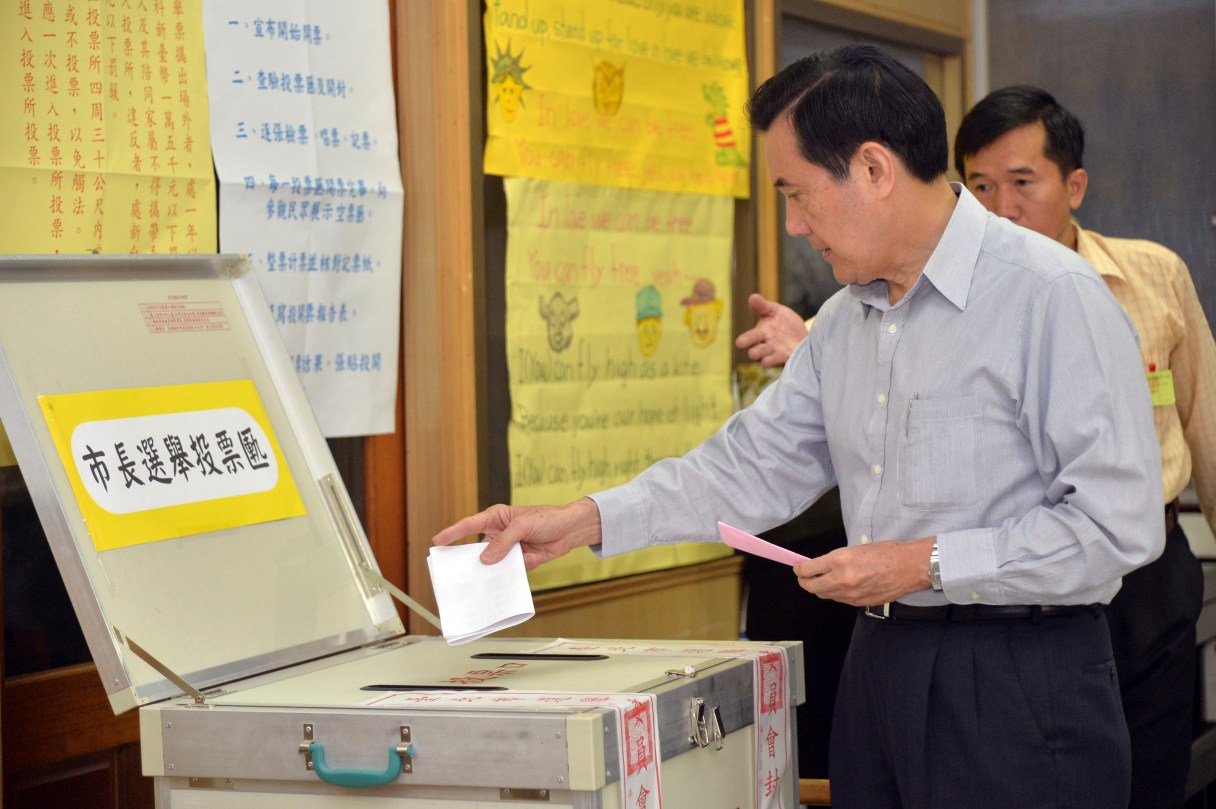
TAIPEI, Taiwan (AP) – Taiwan’s relations with historic foe China are playing a key role in local elections on the self-ruled island Saturday as the ruling Nationalist Party meets increased resistance to forging stronger ties with Beijing.
Voters on the island with a population of about 23 million will elect representatives to 11,130 local seats, including mayoral posts in major cities such as the capital, Taipei.
A poor showing for the Nationalists would make it easier for the rival Democratic Progressive Party to win the presidency in early 2016, an outcome expected to disrupt negotiations with China on trade and investment deals that have lifted Taiwan’s half-trillion-dollar economy while raising Beijing’s hopes for political reunification.
Beijing has claimed sovereignty over Taiwan since the Chinese civil war of the 1940s, keeping relations icy until Nationalist President Ma Ying-jeou took office in 2008. He set aside the sovereignty issue to ease tensions and bind Taiwan to China’s massive economy.
The Democratic Progressive Party questions deals with China as long as the Communist leadership wants to reunify with a reluctant Taiwan. Their cause received support in March when thousands of student-led protesters known as the Sunflower Movement occupied parliament and nearby streets in Taipei to stop ratification of a service trade liberalization agreement.