
Wednesday, November 11, 2026Nov 11

In Kashmir, closed mosque belies India’s religious freedom

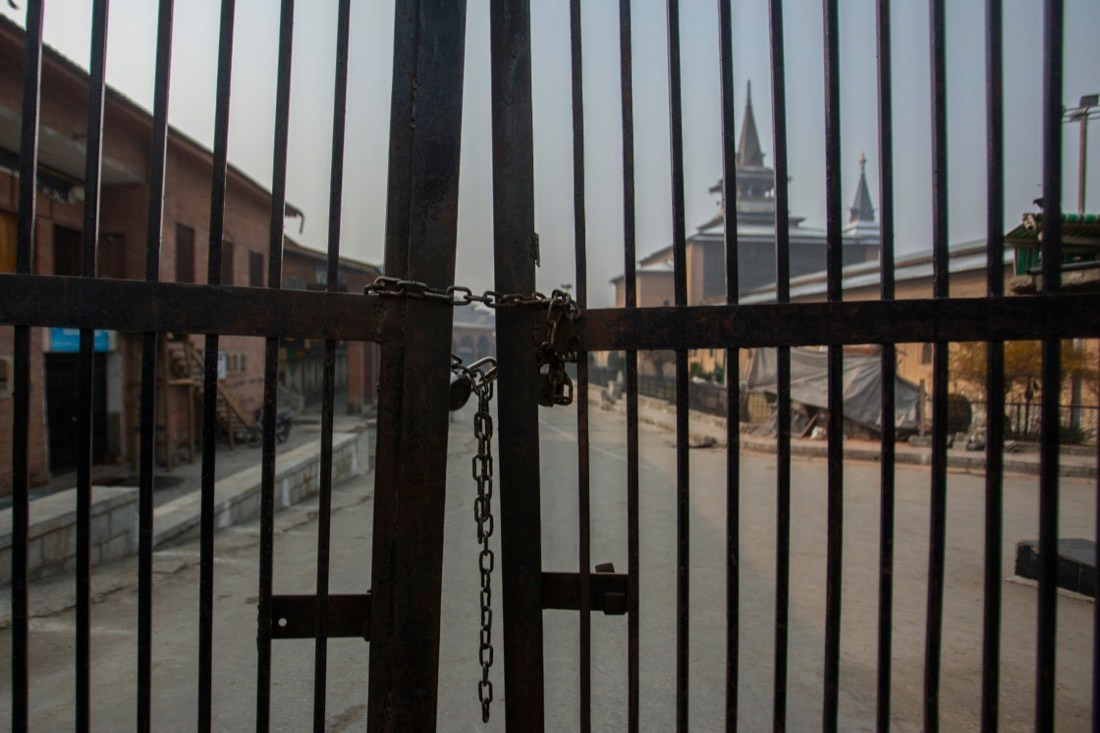
Kashmir's Jamia Masjid, or the grand mosque is seen through its gate that remains locked on Fridays in Srinagar, Indian controlled Kashmir, Nov. 26, 2021. Authorities allow the mosque to remain open the other six days, but only a few hundred worshippers assemble there on those occasions. Indian authorities see it as a trouble spot, a nerve center for anti-India protests and clashes that challenge New Delhi's sovereignty over disputed Kashmir. For Kashmiri Muslims it is a symbol of faith, a sacred place where they offer not just mandatory Friday prayers but also raise their voice for political rights. (AP Photo/Mukhtar Khan)
Kashmir's Jamia Masjid, or the grand mosque is seen through its gate that remains locked on Fridays in Srinagar, Indian controlled Kashmir, Nov. 26, 2021. Authorities allow the mosque to remain open the other six days, but only a few hundred worshippers assemble there on those occasions. Indian authorities see it as a trouble spot, a nerve center for anti-India protests and clashes that challenge New Delhi's sovereignty over disputed Kashmir. For Kashmiri Muslims it is a symbol of faith, a sacred place where they offer not just mandatory Friday prayers but also raise their voice for political rights. (AP Photo/Mukhtar Khan) Kashmir's Jamia Masjid, or the grand mosque is seen through its gate that remains locked on Fridays in Srinagar, Indian controlled Kashmir, Nov. 26, 2021. Authorities allow the mosque to remain open the other six days, but only a few hundred worshippers assemble there on those occasions. Indian authorities see it as a trouble spot, a nerve center for anti-India protests and clashes that challenge New Delhi's sovereignty over disputed Kashmir. For Kashmiri Muslims it is a symbol of faith, a sacred place where they offer not just mandatory Friday prayers but also raise their voice for political rights. (AP Photo/Mukhtar Khan)

SRINAGAR, India (AP) – Jamia Masjid, the grand mosque of Srinagar, dominates its neighborhood with an imposing main gate and massive turrets. It can hold 33,000 worshippers, and on special occasions over the years hundreds of thousands of Muslims have filled nearby lanes and roads to offer prayers led from the mosque.

But Indian authorities see the mosque as a trouble spot – a nerve center for protests and clashes that challenge India’s sovereignty over the disputed Kashmir region.

For Kashmiri Muslims it is a sacred venue for Friday prayers and a place they can raise their voices for political rights.

In this bitter dispute, the mosque in Kashmir’s main city has largely remained closed for the past two years. The mosque’s chief priest has been detained in his home almost nonstop throughout that time, and the mosque’s main gate is padlocked and blocked with corrugated tin sheets on Fridays.

The closure of the mosque, which is revered by Kashmir’s mostly Muslim population, has deepened their anger.