
Wednesday, November 11, 2026Nov 11

2 ex-UK soldiers face murder charges in 1972 Belfast killing

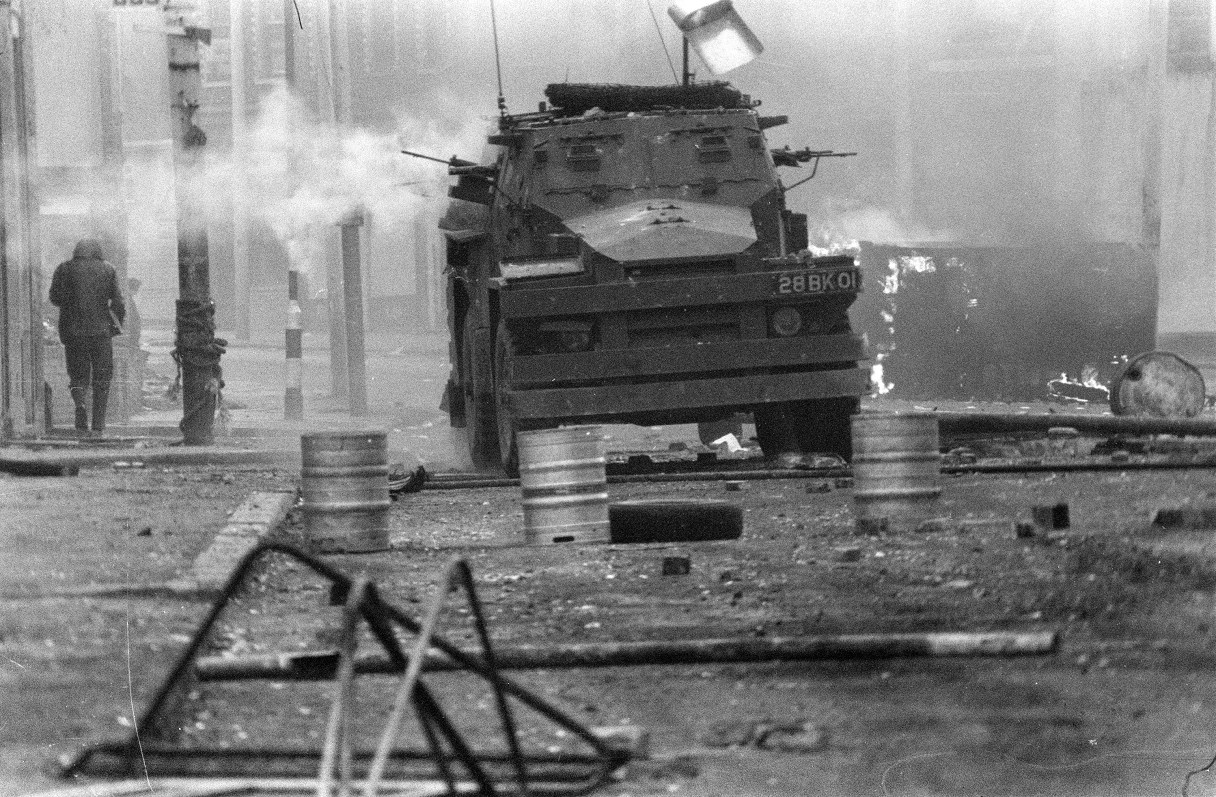
FILE - In this April 17, 1972 file photo, a British Army armoured vehicle makes its way along a barricade while on patrol in the Lower Falls area of west Belfast. Trouble in the area erupted after the shooting of Joe McCann, an IRA leader, the previous day. Belfast prosecutors say Friday Dec. 16, 2016, they will pursue murder charges against two retired British soldiers who fatally shot 25-year-old Joe McCann, a commander of the outlawed Official IRA faction. (AP Photo/Michel Lipchitz, File)
FILE - In this April 17, 1972 file photo, a British Army armoured vehicle makes its way along a barricade while on patrol in the Lower Falls area of west Belfast. Trouble in the area erupted after the shooting of Joe McCann, an IRA leader, the previous day. Belfast prosecutors say Friday Dec. 16, 2016, they will pursue murder charges against two retired British soldiers who fatally shot 25-year-old Joe McCann, a commander of the outlawed Official IRA faction. (AP Photo/Michel Lipchitz, File) FILE - In this April 17, 1972 file photo, a British Army armoured vehicle makes its way along a barricade while on patrol in the Lower Falls area of west Belfast. Trouble in the area erupted after the shooting of Joe McCann, an IRA leader, the previous day. Belfast prosecutors say Friday Dec. 16, 2016, they will pursue murder charges against two retired British soldiers who fatally shot 25-year-old Joe McCann, a commander of the outlawed Official IRA faction. (AP Photo/Michel Lipchitz, File)

DUBLIN (AP) – Two retired British soldiers who fatally shot an unarmed Irish Republican Army member outside his Belfast home in 1972 will be prosecuted for murder in a rare case of its kind, Northern Ireland authorities announced Friday.

The Public Prosecution Service in Belfast said in a statement that “all the available evidence” merits murder charges against two Parachute Regiment soldiers who opened fire on 25-year-old Joe McCann, a commander of the outlawed Official IRA faction.

The initial police probe in 1972 found no basis to charge any of the soldiers who fired at McCann in the Markets district, an Official IRA power base during what was the bloodiest year of the entire Northern Ireland conflict. His death provoked days of rioting in Irish nationalist areas of Belfast and Northern Ireland’s second-largest city, Londonderry.

But a 2012 fact-finding report by a cold-case unit found that the soldiers had used unjustified lethal force against an unarmed man running away from them. It also concluded that investigators never interviewed key witnesses, including undercover officers tailing McCann at the time.

Northern Ireland Attorney General John Larkin referred the findings to prosecutors in 2014.