
Thursday, November 12, 2026Nov 12

EU leaders worried by rise in antisemitism, Holocaust denial

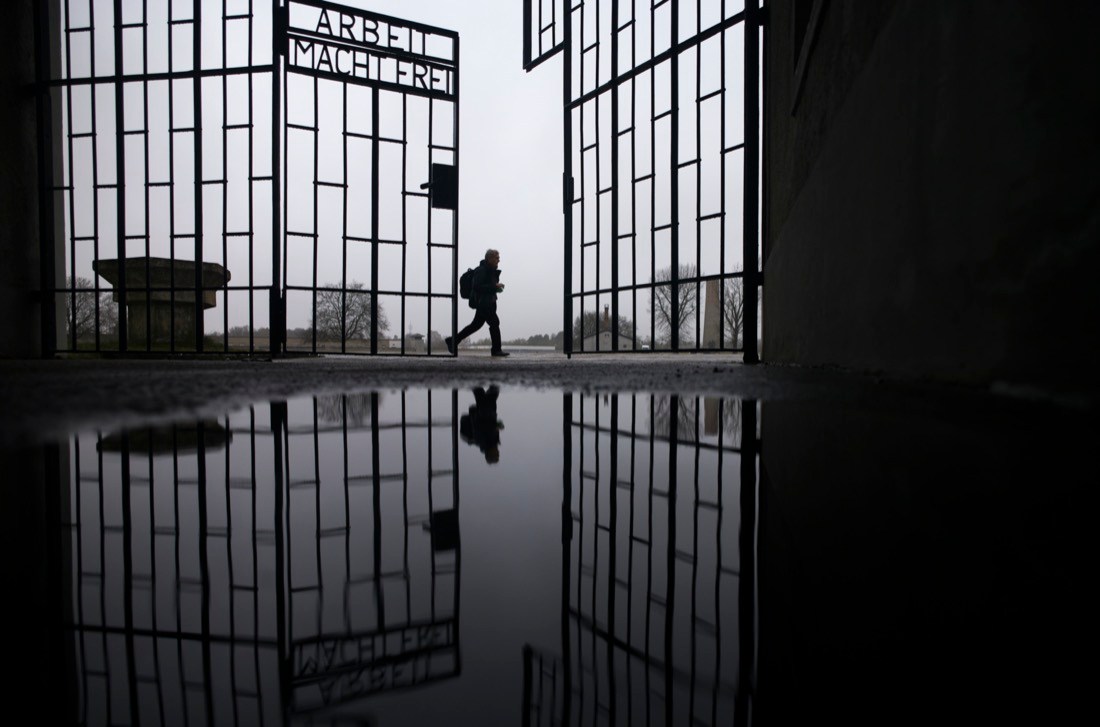
A person walks behind the gate of the Sachsenhausen Nazi death camp with the phrase 'Arbeit macht frei' (work sets you free) in Oranienburg, about 30 kilometers (18 miles) north of Berlin, Germany, Tuesday, Jan. 25, 2022. On Thursday Jan. 27, 2022 the International Holocaust Remembrance Day marks the liberation of the Auschwitz Nazi death camp on Jan. 27, 1945. (AP Photo/Markus Schreiber)
A person walks behind the gate of the Sachsenhausen Nazi death camp with the phrase 'Arbeit macht frei' (work sets you free) in Oranienburg, about 30 kilometers (18 miles) north of Berlin, Germany, Tuesday, Jan. 25, 2022. On Thursday Jan. 27, 2022 the International Holocaust Remembrance Day marks the liberation of the Auschwitz Nazi death camp on Jan. 27, 1945. (AP Photo/Markus Schreiber) A person walks behind the gate of the Sachsenhausen Nazi death camp with the phrase 'Arbeit macht frei' (work sets you free) in Oranienburg, about 30 kilometers (18 miles) north of Berlin, Germany, Tuesday, Jan. 25, 2022. On Thursday Jan. 27, 2022 the International Holocaust Remembrance Day marks the liberation of the Auschwitz Nazi death camp on Jan. 27, 1945. (AP Photo/Markus Schreiber)

BRUSSELS (AP) – European Union leaders pledged Wednesday to confront the rise of antisemitism and Holocaust denial witnessed during the coronavirus pandemic, on the eve of the annual commemorations of Auschwitz’s liberation.

European Council President Charles Michel said the lessons of the Holocaust are now “more relevant than ever.”

“First, because Jewish people feel threatened, and they are threatened,” he said. “They are even attacked in Europe. Just because they are Jewish. We do not accept this. We will never accept it.”

Michel spoke at an online event organized by the European Jewish Congress, which was also attended by European Commission President Ursula von der Leyen and European Parliament President Roberta Metsola.

The Commission – the EU’s executive branch – presented last year a new strategy to better tackle hate speech, raise awareness about Jewish life, protect places of worship and ensure that the Holocaust isn’t forgotten. According to Europe’s Fundamental Rights Agency, nine out of 10 Jews think antisemitism has increased in their country and is a serious problem.