
Wednesday, November 11, 2026Nov 11

Arab activist lied to get citizenship, jurors told

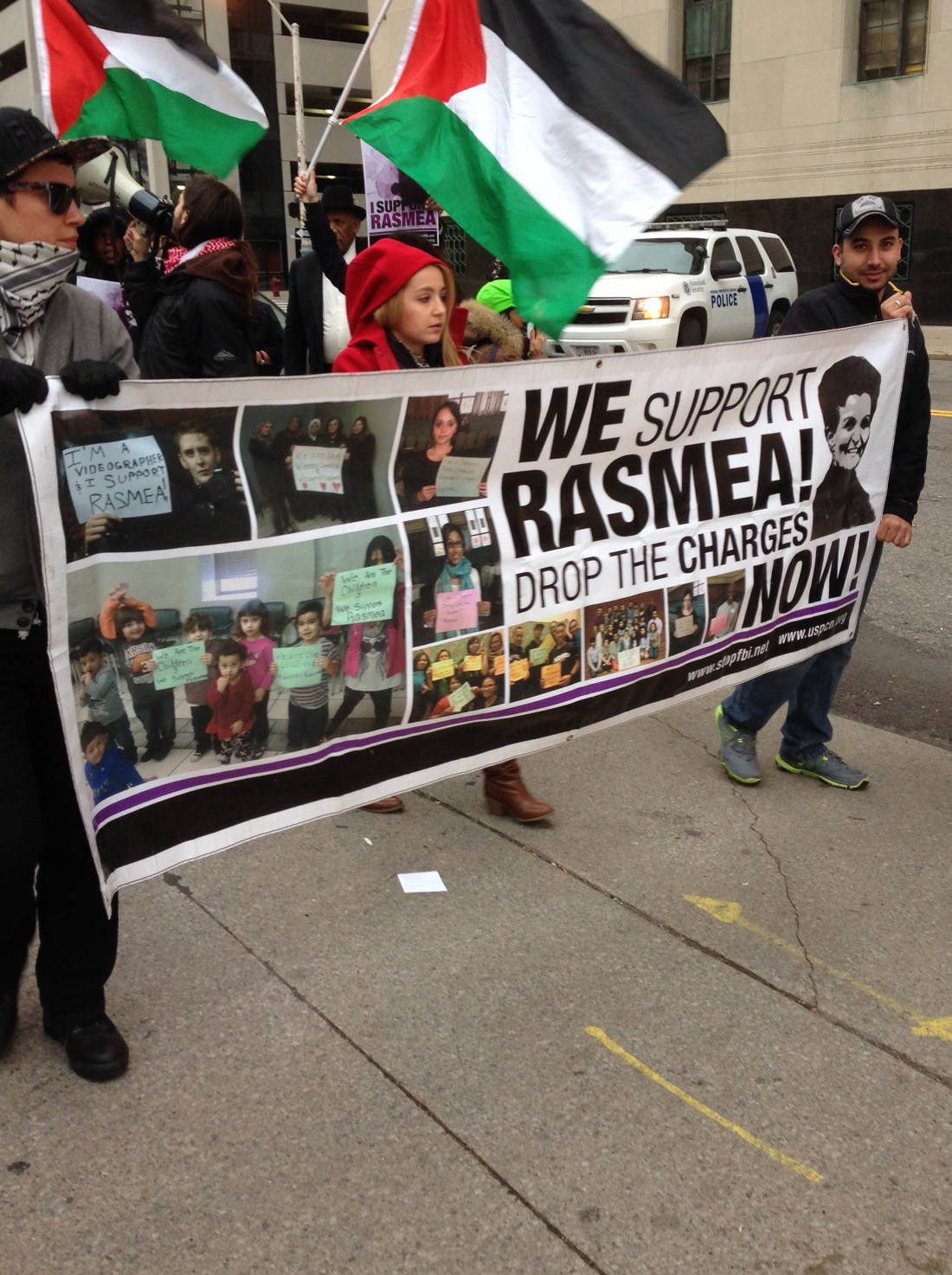
Rasmieh Odeh's supporters march outside the federal courthouse in Detroit, Tuesday, Nov. 4, 2014. Odeh, associate director at Chicago's Arab American Action Network, is charged with failing to tell U.S. immigration about her conviction for bombings in Israel in 1969, including one that killed two people at a supermarket. Odeh's trial began Tuesday. (AP Photo/Ed White)
Rasmieh Odeh's supporters march outside the federal courthouse in Detroit, Tuesday, Nov. 4, 2014. Odeh, associate director at Chicago's Arab American Action Network, is charged with failing to tell U.S. immigration about her conviction for bombings in Israel in 1969, including one that killed two people at a supermarket. Odeh's trial began Tuesday. (AP Photo/Ed White) Rasmieh Odeh's supporters march outside the federal courthouse in Detroit, Tuesday, Nov. 4, 2014. Odeh, associate director at Chicago's Arab American Action Network, is charged with failing to tell U.S. immigration about her conviction for bombings in Israel in 1969, including one that killed two people at a supermarket. Odeh's trial began Tuesday. (AP Photo/Ed White)

DETROIT (AP) – A Chicago Arab activist deceived U.S. officials for years, getting citizenship in 2004 without disclosing that she had spent a decade in an Israeli prison for bombings that damaged the British consulate and killed two people at a supermarket, a prosecutor said at the start of the woman’s trial Wednesday.

Rasmieh Odeh answered “no” when asked if she had ever been charged, convicted or imprisoned, first when she applied to enter the U.S. from Jordan in 1995 and then in 2004 when she sought citizenship in Detroit.

Odeh, associate director at the Arab American Action Network in Chicago, had many opportunities to come clean, especially in an interview during the citizenship process, but repeatedly lied, prosecutor Mark Jebson told jurors in federal court.

“She should have never been allowed in the United States from the beginning,” he said. “It’s a simple, straightforward case.”

Odeh, 67, doesn’t dispute her “no” answers on the forms. Defense attorney Michael Deutsch suggested she was confused, thinking the questions were about U.S. convictions, not ones in foreign countries.