
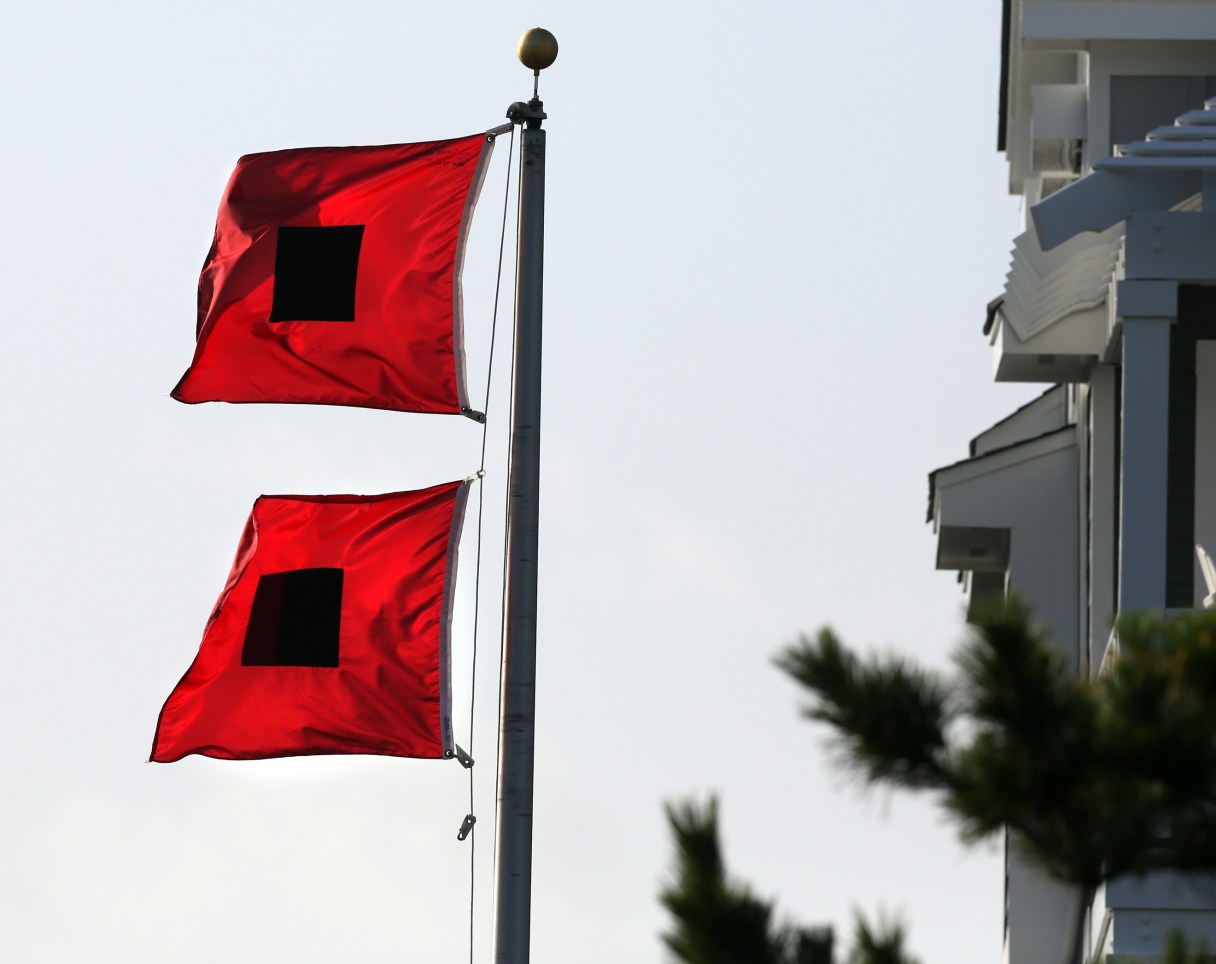
KILL DEVIL HILLS, N.C. (AP) – A strengthening Hurricane Arthur forced thousands of vacationers on the North Carolina coast to abandon their Independence Day plans while cities farther up the East Coast rescheduled fireworks displays threatened by rain from the storm.
Arthur strengthened to a Category 2 hurricane Thursday night, its winds strengthening to 100 mph before it made landfall near the southern end of the Outer Banks. Little change was expected in the storm’s strength Thursday night and Friday, and Arthur was expected to weaken as it travels northward and slings rain along the East Coast.
The annual Boston Pops Fourth of July concert and fireworks show were held Thursday night because of potential heavy rain from Arthur, while fireworks displays in New Jersey, Maine and New Hampshire were postponed until later in the weekend.
Arthur reached land late Thursday between Cape Lookout and Beaufort, North Carolina, near the southern end of the Outer Banks, a 200-mile string of narrow barrier islands with about 57,000 permanent residents.
The islands are susceptible to high winds, rough seas and road-clogging sands, prompting an exodus that began Wednesday night.