
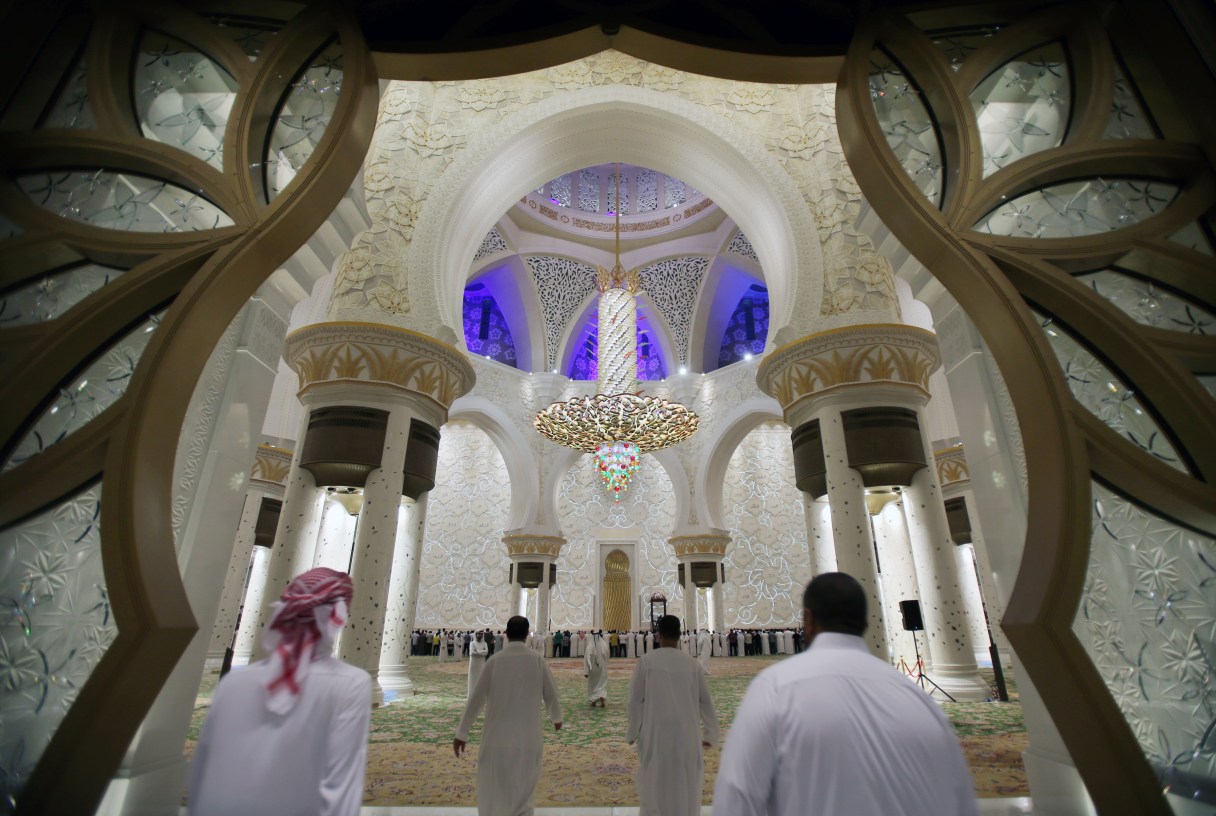
ABU DHABI, United Arab Emirates (AP) – During the Islamic holy month of Ramadan, Muslims are called on to reflect on their faith as they conduct their daily fast. This past month, some clerics and scholars reflected on ways to reform the religious discourse in Islam to keep up with modern-day challenges and oppose extremism.
A popular Egyptian religious figure used his daily TV show to talk about ways to renew interpretation of Islam’s holy book, the Quran. The United Arab Emirates hosted a series of Ramadan mosque lectures by dozens of clerics, including many from al-Azhar, Egypt’s premier Sunni Muslim center of thought and learning, and a popular American sheikh, who warned that renovation is needed in Islam after centuries of neglect in thought left the Muslim world in disrepair.
On one level, the religious reform effort – known in Arabic as “tajdeed,” or “renewal”- is aimed at drawing the faithful away from extremism at a time when militant violence has escalated in the region with the spread of the Islamic State group. A common theme among renewal-minded clerics is a call for greater emphasis on tolerance of others. On another level, the movement faces a struggle in revamping how the faith is practiced without altering its foundations.
Talk of change rose to the fore in January, when Egyptian President Abdel-Fattah el-Sissi called for a revolution in Islam, saying outdated interpretations made the Muslim world a source of destruction. He urged government clerics and the 1,000-year-old al-Azhar to carry out this change. On Tuesday, he broached the subject again, saying “tolerance is disregarded by extremist interpretations” of Islamic texts.
Critics of el-Sissi have accused him of using this effort to purge religious institutions of his Muslim Brotherhood opponents and control another arm of the state’s levers, in this instance a religious institution that is already weighed down by bureaucracy and government meddling.