
Wednesday, November 11, 2026Nov 11

Tennessee experiments with high-tech sleep monitors

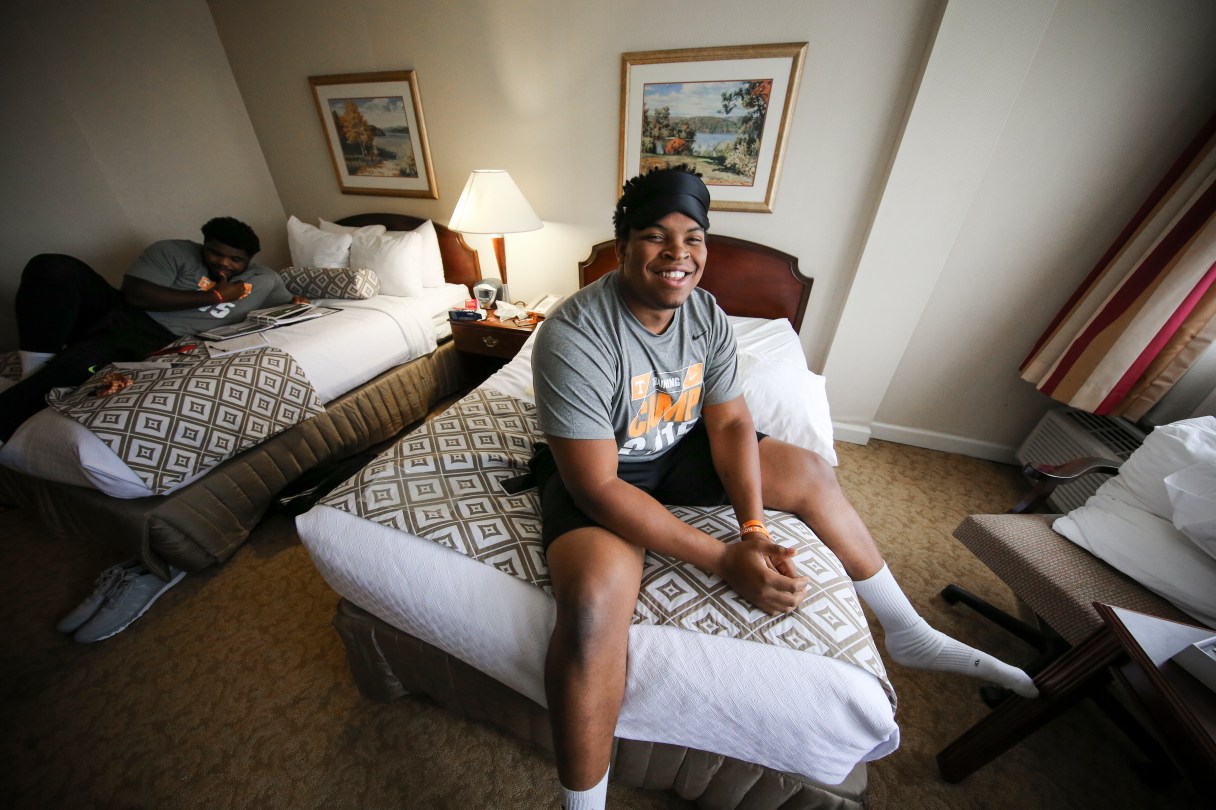
In this Aug 7, 2015 photo released by the University of Tennessee Athletics Department, offensive lineman Jashon Robertson, right, sits on a bed and works with a Sports Science Sleep Coach in a sleep study for the players in Knoxville, Tenn., at the university. Tennessee is studying its players’ sleep habits to make sure they don’t get caught napping when a game’s on the line. (Donald Page/Tennessee Athletics via AP)
In this Aug 7, 2015 photo released by the University of Tennessee Athletics Department, offensive lineman Jashon Robertson, right, sits on a bed and works with a Sports Science Sleep Coach in a sleep study for the players in Knoxville, Tenn., at the university. Tennessee is studying its players’ sleep habits to make sure they don’t get caught napping when a game’s on the line. (Donald Page/Tennessee Athletics via AP) In this Aug 7, 2015 photo released by the University of Tennessee Athletics Department, offensive lineman Jashon Robertson, right, sits on a bed and works with a Sports Science Sleep Coach in a sleep study for the players in Knoxville, Tenn., at the university. Tennessee is studying its players’ sleep habits to make sure they don’t get caught napping when a game’s on the line. (Donald Page/Tennessee Athletics via AP)

KNOXVILLE, Tenn. (AP) – About an hour before a Tennessee football player’s scheduled bedtime, he gets a reminder via an app on his phone or a text message. That’s when he puts on orange glasses that block out the glow of smartphones or computer screens, making it easier to fall asleep.

All the players have been given sleeping masks as well. Some have sensors above their mattresses and under their sheets to monitor heart rate, movement and respiration rate to detect their quality and quantity of sleep.

The idea is that if they sleep better each night, they’ll work better the following day.

“Look at any college student – the two things they struggle with are time management and sleep,” Tennessee coach Butch Jones said. “To be able to perform at a high level, you need your sleep, you need nine hours every day, you need to sleep in 68-degree room temperatures, all those things that we’re constantly stressing with our players.”

Jones’ staff is working in conjunction with Rise Science, a Chicago-based company hoping more teams follow the 25th-ranked Volunteers’ lead. The result is a carefully orchestrated sleep monitoring program for the team.