
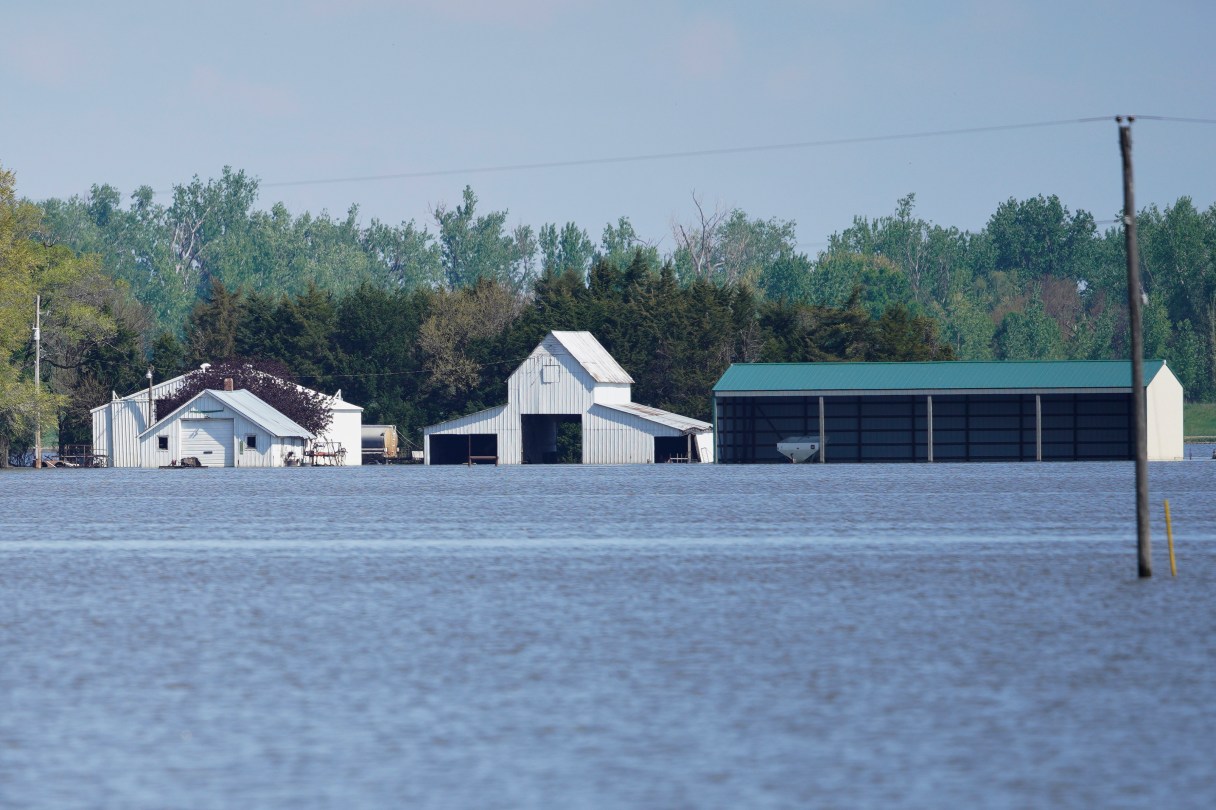
CRESCENT, Iowa (AP) – Frogs, carp and bugs thrived all summer in murky floodwaters where Gene Walter should have planted corn and soybeans. Last year’s ruined crop spilled from metal storage bins that burst nine months ago when the Missouri River surged through two levees near his southwest Iowa farm.
Like many in the water-weary Midwest, Walter doesn’t know if climate change was responsible for the second major flood in nine years. Or the increasingly frequent torrential rains that dump more water in an hour than he used to see in days.
Even so, “we kind of feel like it’s the new normal,” said Walter, who lost 46,000 bushels of corn and soybeans. “You can’t rely on anything. You can’t build anything. You can’t do future planning … the uncertainty is the thing that is really bad.”
This year’s devastating losses are forcing tough decisions about the future of farming in America’s flood plains, even among those skeptical of climate change and humans’ role in it.
Farmers who lost billions of dollars in grain, livestock, equipment, structures and unplanted crops are wondering whether they should – or can – return to the fertile bottomlands next year.