
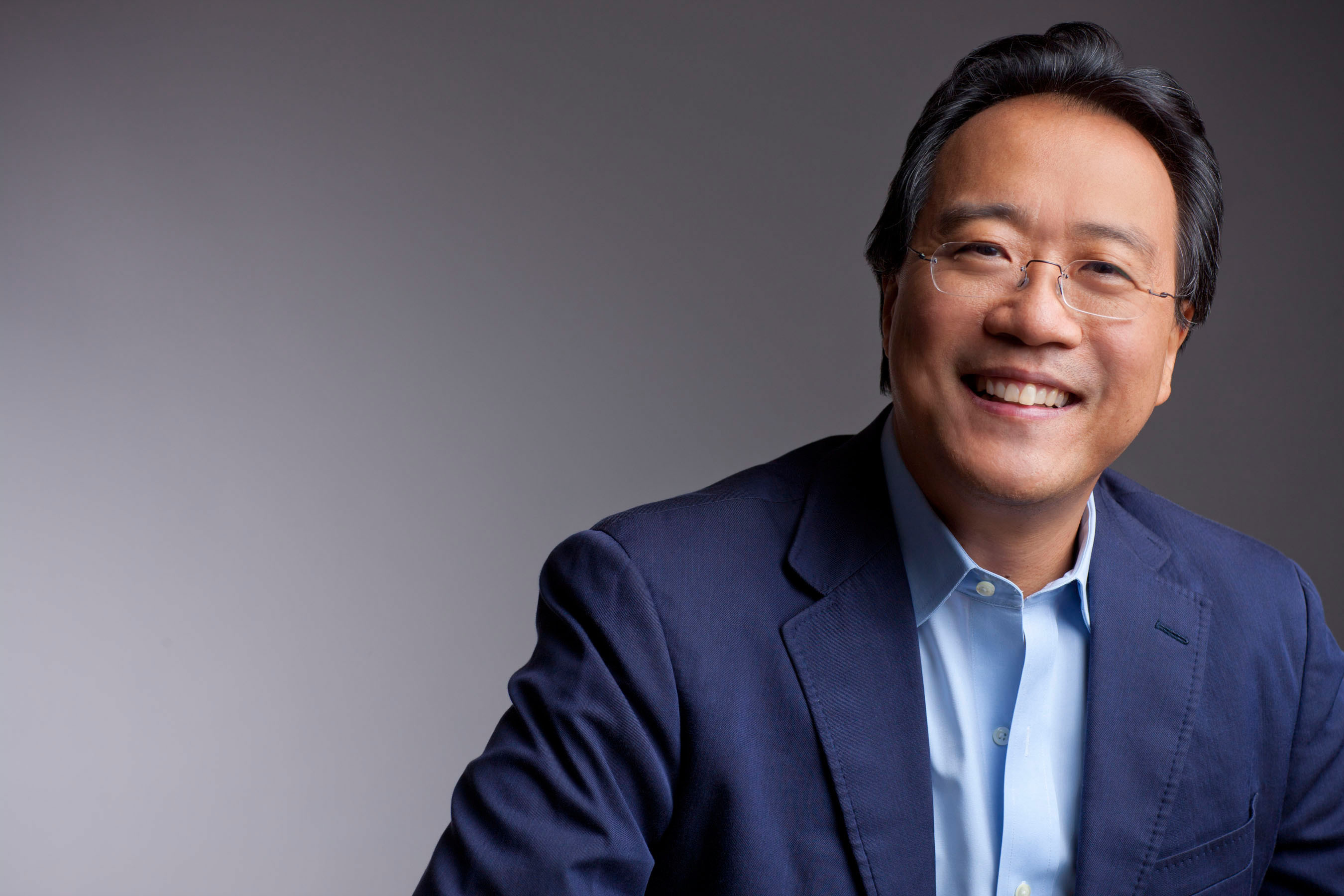
 Internationally renowned cellist Yo-Yo Ma
Just as some stars burn brighter than others in the night sky, so does the classical music firmament boast of its novas and supernovas. Thus it was that the Tivoli Theatre stood aglow with one of the concert world’s brightest constellations on Thursday evening-Yo-Yo Ma, cellist extraordinaire.
At least, those were the expectations that persuaded patrons to shell out two or three times the normal ticket price to see and hear the celebrated virtuoso in action. It was all in a good cause, of course, as a gala fund-raiser for the Chattanooga Symphony Orchestra-and it was worth the price.
Notwithstanding the debate about whether classical music superstars do more to help or hinder the long range future of classical music, one must admit that it’s great fun to see and hear really famous people, and you don’t get any “famouser” than Yo-Yo Ma.
He was a wunderkind, of course, appearing with Leonard Bernstein on the “Johnny Carson Tonight Show” at 8 years of age. But instead of fizzling out in later life, he’s gone on to inherit the mantle of cellist Pablo Casals, set the standard for contemporary cello playing, plus expanding the scope of what a “classical” musician performs-leading to albums such as “The Goat Rodeo Sessions” and “Appalachian Journey” (American acoustic/roots music) and “Silk Road Journeys” (music of Asia in traditional and contemporary garb), as well as traditional classical albums. He’s issued over 90 albums (garnering 17 Grammys), has played with every international orchestra and chamber ensemble of significance, and performed at President Barack Obama’s inauguration.
The evening’s musical fare featured the work of a single composer, Antonin Dvorak (1841-1904), who was slowly climbing the ladder of musical success in Bohemia when he accepted an invitation to head New York City’s newly-formed National Academy of Music in 1892. As a composer, Dvorak had always included folk music in his works to some degree, and in America, it was no different. He eagerly soaked up the novelties of African-American and Native American music, incorporating their spirit-although not direct quotations-into his current symphonic project, Symphony #9, Op 95, e minor, “From the New World.” Its debut at Carnegie Hall in 1893 was a hit and has lost none of its luster over the intervening years.