
Wednesday, November 11, 2026Nov 11

More CEOs, governments speak against North Carolina law

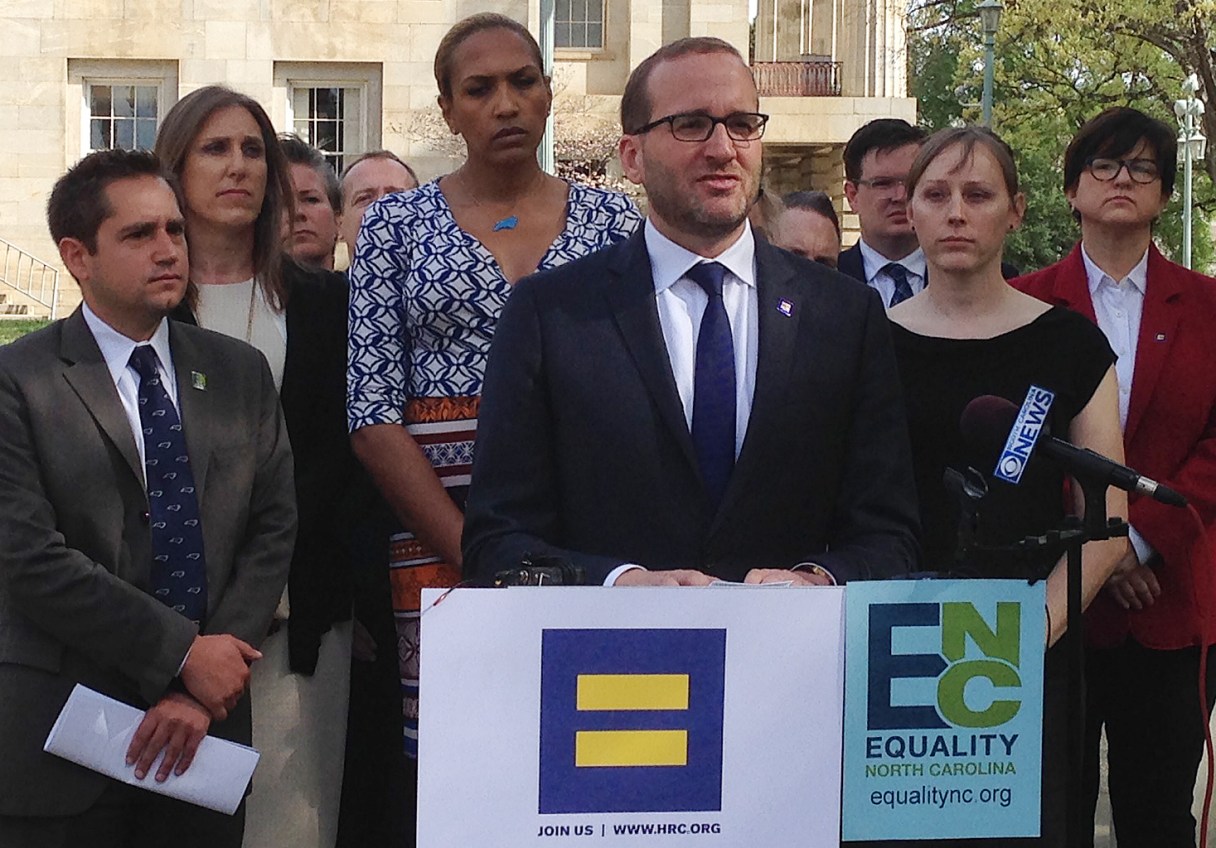
FILE - In this Thursday, March 30, 2016 file photo, Human Rights Campaign Executive Director Chad Griffin, center, speaks at a news conference at the old state Capitol Building in Raleigh, N.C. More company CEOs and municipal officials are joining other government and business leaders opposing North Carolina's new law that prevents specific anti-discrimination rules for LGBT people for public accommodations and restroom use. The Human Rights Campaign and Equality North Carolina released Friday, April 1, 2016, the names of another 10 company executives that have signed on to a letter criticizing the law and seeking its repeal, bringing the number of names to more than 120. New executives include those from Hewlett Packard Enterprise, Qualcomm and EMC Corp. (AP Photo/Gary Robertson, File)
FILE - In this Thursday, March 30, 2016 file photo, Human Rights Campaign Executive Director Chad Griffin, center, speaks at a news conference at the old state Capitol Building in Raleigh, N.C. More company CEOs and municipal officials are joining other government and business leaders opposing North Carolina's new law that prevents specific anti-discrimination rules for LGBT people for public accommodations and restroom use. The Human Rights Campaign and Equality North Carolina released Friday, April 1, 2016, the names of another 10 company executives that have signed on to a letter criticizing the law and seeking its repeal, bringing the number of names to more than 120. New executives include those from Hewlett Packard Enterprise, Qualcomm and EMC Corp. (AP Photo/Gary Robertson, File) FILE - In this Thursday, March 30, 2016 file photo, Human Rights Campaign Executive Director Chad Griffin, center, speaks at a news conference at the old state Capitol Building in Raleigh, N.C. More company CEOs and municipal officials are joining other government and business leaders opposing North Carolina's new law that prevents specific anti-discrimination rules for LGBT people for public accommodations and restroom use. The Human Rights Campaign and Equality North Carolina released Friday, April 1, 2016, the names of another 10 company executives that have signed on to a letter criticizing the law and seeking its repeal, bringing the number of names to more than 120. New executives include those from Hewlett Packard Enterprise, Qualcomm and EMC Corp. (AP Photo/Gary Robertson, File)

RALEIGH, N.C. (AP) – More company CEOs and municipal officials are joining other government and business leaders opposing North Carolina’s new law that prevents specific anti-discrimination rules for LGBT people for public accommodations and restroom use.

The Human Rights Campaign and Equality North Carolina released Friday the names of another 10 company executives that have signed on to a letter criticizing the law and seeking its repeal, bringing the number of names to more than 120. New executives include those from Hewlett Packard Enterprise, Qualcomm and EMC Corp.

The law, approved by the Republican legislature and GOP Gov. Pat McCrory, responded to a Charlotte City Council ordinance approved in February that would have extended protections to gays and lesbians as well as bisexual and transgender people while at hotels, restaurants and stores. Charlotte also would have allowed transgender people to use the restroom aligned with their gender identity.

Separately Friday, the venture capital arm of Google’s parent corporation confirmed it won’t invest in North Carolina startup businesses while the law is in place. GV spokeswoman Jodi Olson cited written comments by CEO Bill Maris in which he asked his firm’s partners to flag possible North Carolina investments because he’s “not comfortable deploying dollars into startups there until the voters there fix this.” The move was first reported by Re/code, a tech-focused news site.

The new law blocked Charlotte’s rules and prevented other local governments from approving similar ordinances. And government agencies of all kinds must now require people who use multi-stall public restrooms to use the one that corresponds with their biological sex.