
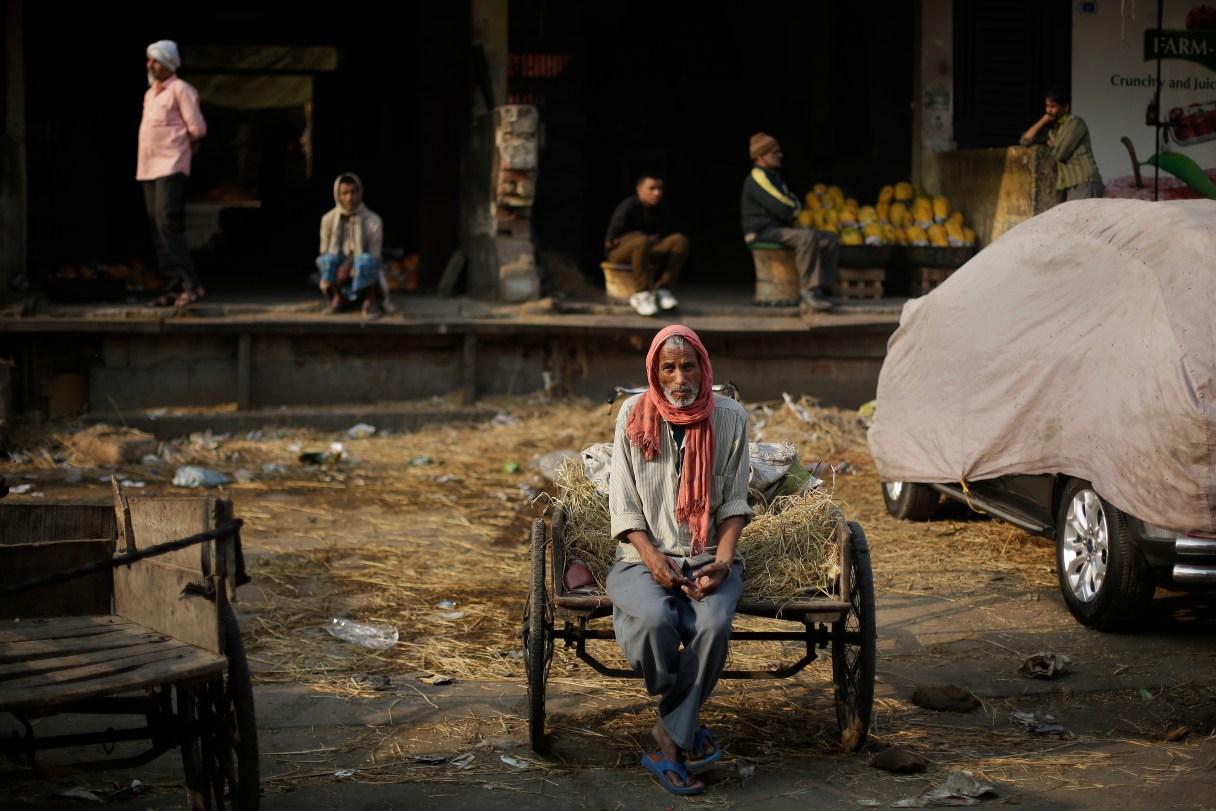
NEW DELHI (AP) – The scale of India’s cash economy can be seen in the Azadpur Mandi wholesale fruit and vegetable market. Trucks bring load after load of fresh produce to its grimy lanes every day. Then a complex web of wholesale merchants, smaller traders and retailers delivers the produce to most of north India.
Almost every transaction, like most in India, is done in cash. And business at the massive New Delhi market is evaporating, the food spoiling and wasted, two weeks after the government’s surprise currency move made more than 80 percent of India’s banknotes useless.
By withdrawing all 500- and 1,000-rupee notes from circulation, the government is trying to clean India’s economy of “black money,” or untaxed wealth. Its success remains to be seen, but for now the move has created serpentine queues outsides banks and ATMs of people replacing their rupee notes or making small withdrawals.
Few people have access to banks, however. The vast majority of Indians earn and spend in cash, and more than half of the country’s 1.3 billion people have no bank accounts.
In Azadpur people are upset: the impossibly wiry laborers who transport fruit and vegetables in handcarts around the 90-acre market, the big traders who conduct hundreds of thousands of rupees of business in a day and the small retailers who buy a few baskets or crates of food to sell each day.