
Wednesday, November 11, 2026Nov 11

Veterans protest travel ban, saying it hurts interpreters

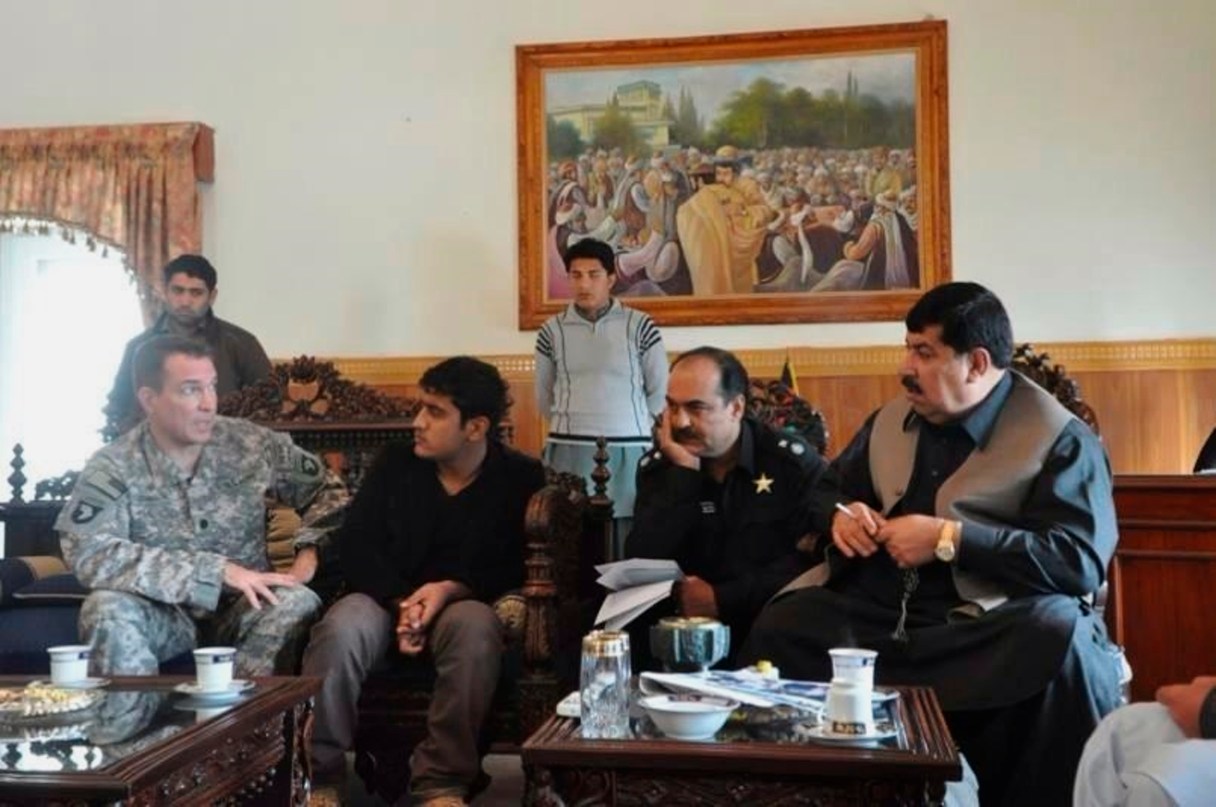
In this 2010 photo provided by U.S. Army Capt. Matthew Ball shows his interpreter Qismat Amin, second seated from left, in Jalalabad, the capital of Nangarhar province of Afghanistan. Amin, who has been living in hiding after getting threats from Taliban and Islamic state fighters, got his visa Sunday, Jan. 29, 2017, after nearly four years of interviews. Ball bought him a $1,000 plane ticket to San Francisco and plans to meet him at the airport with an attorney. Ball said he has bought a plane ticket for his Afghan translator in case that country is added to the list of banned nations. (U.S. Army Capt. Matthew Ball via AP)
In this 2010 photo provided by U.S. Army Capt. Matthew Ball shows his interpreter Qismat Amin, second seated from left, in Jalalabad, the capital of Nangarhar province of Afghanistan. Amin, who has been living in hiding after getting threats from Taliban and Islamic state fighters, got his visa Sunday, Jan. 29, 2017, after nearly four years of interviews. Ball bought him a $1,000 plane ticket to San Francisco and plans to meet him at the airport with an attorney. Ball said he has bought a plane ticket for his Afghan translator in case that country is added to the list of banned nations. (U.S. Army Capt. Matthew Ball via AP) In this 2010 photo provided by U.S. Army Capt. Matthew Ball shows his interpreter Qismat Amin, second seated from left, in Jalalabad, the capital of Nangarhar province of Afghanistan. Amin, who has been living in hiding after getting threats from Taliban and Islamic state fighters, got his visa Sunday, Jan. 29, 2017, after nearly four years of interviews. Ball bought him a $1,000 plane ticket to San Francisco and plans to meet him at the airport with an attorney. Ball said he has bought a plane ticket for his Afghan translator in case that country is added to the list of banned nations. (U.S. Army Capt. Matthew Ball via AP)

SAN DIEGO – U.S. combat veterans who served in Iraq and Afghanistan say they are outraged at the temporary ban on immigration from seven Muslim-majority countries that has blocked visas for Iraqi interpreters who risked their lives to help American troops on the battlefield.

Thousands of veterans have signed petitions. One soldier says he has bought a plane ticket for his Afghan translator in case that country is added to the list of banned nations.

Many veterans say they feel betrayed by the executive order signed by President Donald Trump on Friday that also suspends the admission of all refugees to the U.S. for 120 days and all Syrian refugees indefinitely.

They say the fight feels personal because they gave their word to people who aided American troops that the United States would protect them and their families.

“This administration just made me a liar in a very significant way, and I’m not willing to accept this,” said Iraq and Afghanistan combat veteran Michael Breen, president and CEO of the Truman National Security Project, a Washington-based nonprofit think tank.