
Wednesday, November 11, 2026Nov 11

Watch the picnic basket: Bear sightings surge in Connecticut

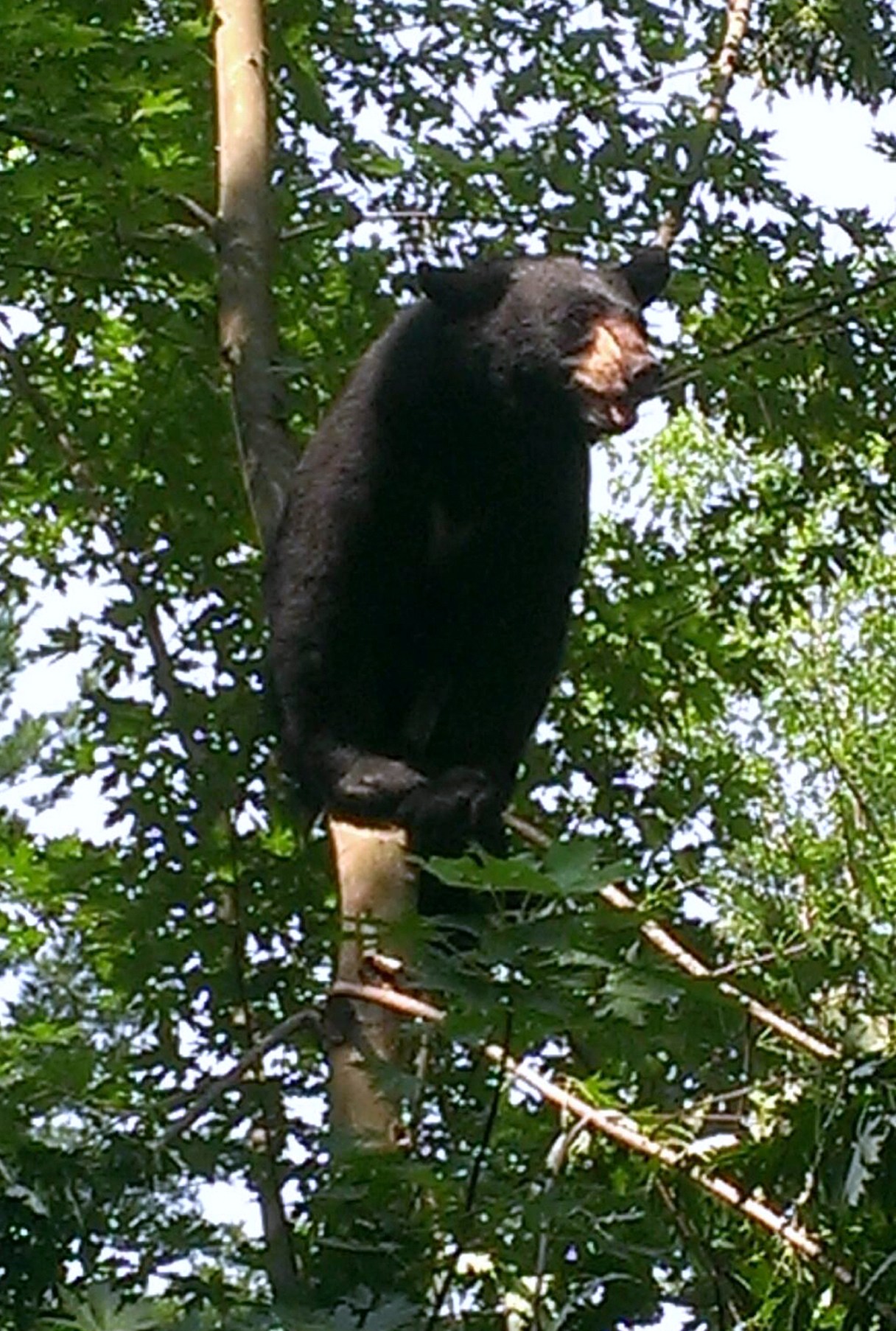
FILE - In this July 5, 2015 photo provided by the Hartford Police Department, a black bear sits perched in a tree in Hartford, Conn. The bear was safely tranquilized and relocated by state environmental officers. The state Department of Energy and Environmental Protection said there were about 6,700 black bear sightings in 2016, a 49 percent increase over the previous year.  (Hartford Police Department via AP, File)
FILE - In this July 5, 2015 photo provided by the Hartford Police Department, a black bear sits perched in a tree in Hartford, Conn. The bear was safely tranquilized and relocated by state environmental officers. The state Department of Energy and Environmental Protection said there were about 6,700 black bear sightings in 2016, a 49 percent increase over the previous year. (Hartford Police Department via AP, File) FILE - In this July 5, 2015 photo provided by the Hartford Police Department, a black bear sits perched in a tree in Hartford, Conn. The bear was safely tranquilized and relocated by state environmental officers. The state Department of Energy and Environmental Protection said there were about 6,700 black bear sightings in 2016, a 49 percent increase over the previous year. (Hartford Police Department via AP, File)

HARTFORD, Conn. (AP) – Keep an eye on the picnic basket. Bear sightings are surging across Connecticut.

The state Department of Energy and Environmental Protection says there were about 6,700 black bear sightings in 2016, a 49 percent increase over the previous year. Compare that to only about 450 sightings in 2000.

State wildlife biologist Paul Rego said black bear populations in Connecticut and other states have been increasing as land once used for farming has reverted back to forest. About 58 percent of the state is forest now, compared with 29 percent in 1860 when farming was hitting its peak and black bears had disappeared from Connecticut.

“Bears are responding to better habitat now,” Rego said.

A count by the International Union for Conservation of Nature puts the number at about 850,000 to 950,000 black bears in North America. The population surge in Connecticut since the early 1980s – when bears returned to the state after more than a century – has prompted discussion of possible control measures, but no action is planned, Rego said. The state’s had a few reports of bears being aggressive toward people over the years, but none has involved serious injuries.