
Saturday, November 14, 2026Nov 14

US economy unlikely to recover as rapidly as it collapsed

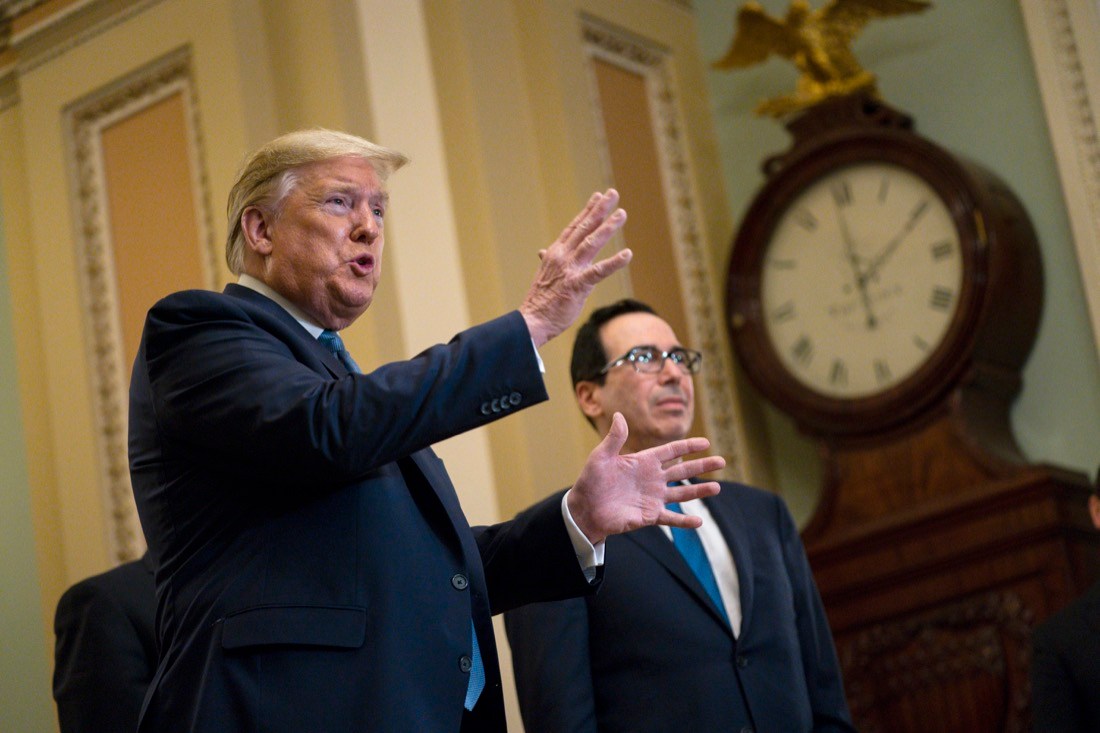
FILE - In this March 10, 2020 file photo, Treasury Secretary Steven Mnuchin listens as President Donald Trump talks to reporters about coronavirus after meeting with Republican lawmakers on Capitol Hill in Washington. Trump has been telling voters that the U.S. economy will leap back to life "like a rocket," stronger than ever after its bout with the coronavirus. But there is a reason economics is called the "dismal science." There are emerging signs that any recovery will fail to match the speed and severity of the economic collapse that occurred in just a few weeks. (AP Photo/Evan Vucci)

BALTIMORE (AP) – President Donald Trump has been telling voters that the U.S. economy will leap back to life “like a rocket,” stronger than ever after its bout with the coronavirus.

But there is a reason economics is called the “dismal science.” There are emerging signs that any recovery will fail to match the speed and severity of the economic collapse that occurred in just a few weeks. The 2020 presidential and Senate elections likely will take place as the world’s largest economy is still attempting to climb back from the deadly outbreak.

“Anyone who assumes we’re going to get a sharp snapback in activity isn’t thinking about how consumers are going to feel. They’re going to be very cautious,” said Nariman Behravesh, chief economist at IHS Markit. “Households and businesses have seen their finances deteriorate. People are buying groceries on their credit cards.”

To understand the consequences of a sudden negative shock on the economy, Behravesh studied how many people returned to flying after the Sept. 11, 2001, terrorist attacks.

“It took two and a half years for airline passenger traffic to go back to previous levels,” he said.