
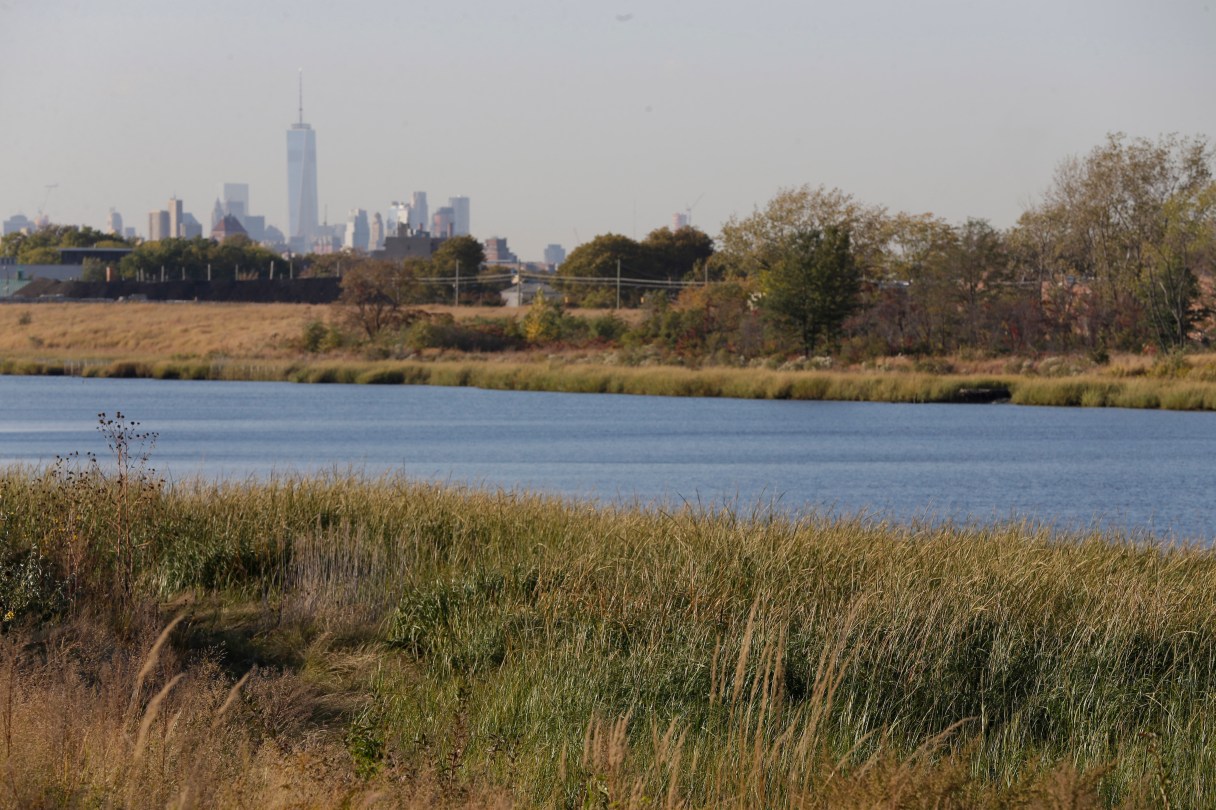
NEW YORK (AP) – Amid the crammed concrete and steel of Brooklyn, a ribbon of clear water stretches out into a vast bay. Tall grass rustles along the undulating shoreline, where bursts of golden flowers, pines and cacti flourish in the soft sand.
“This is what would have been here pre-us. Pre-European development,” said John McLaughlin, director of the office of ecological services at New York City’s department of environmental protection.
Just a few years ago, the tributary, known as Paerdegat Basin, was a fetid mess. The water was murky green, teeming with 1.8 billion gallons of sewage and rainwater that streamed in during storms. The working-class neighborhoods along the waterway stank like an outhouse during hot weather and low tide. The shoreline was strewn with rusted out cars, garbage and broken bottles.
“It was a junkyard. It was a chop shop,” McLaughlin said. “It was a weed-strewn mess, full of invasive plant life. And boy, did it smell.”
The Paerdegat tributary feeds directly into Jamaica Bay, a body of water and marsh sandwiched between Brooklyn and Queens, and on the shores of which sits Kennedy International Airport. Part of the area is run by the city; the other is Gateway National Recreational Area, which contains a wildlife refuge with one of the most important bird sanctuaries in the Northeast.