
WASHINGTON (AP) – President Barack Obama ordered the federal government on Thursday to cut its emissions of greenhouse gases by 40 percent, as the U.S. seeks to spur other nations to get serious about climate change.
Obama’s executive order also directs the government to ramp up use of renewable energy sources to 30 percent of the federal government’s consumption. The White House said U.S. taxpayers could save up to $18 billion in electricity costs by reducing greenhouse gases 40 percent over the next decade, compared to 2008 levels.
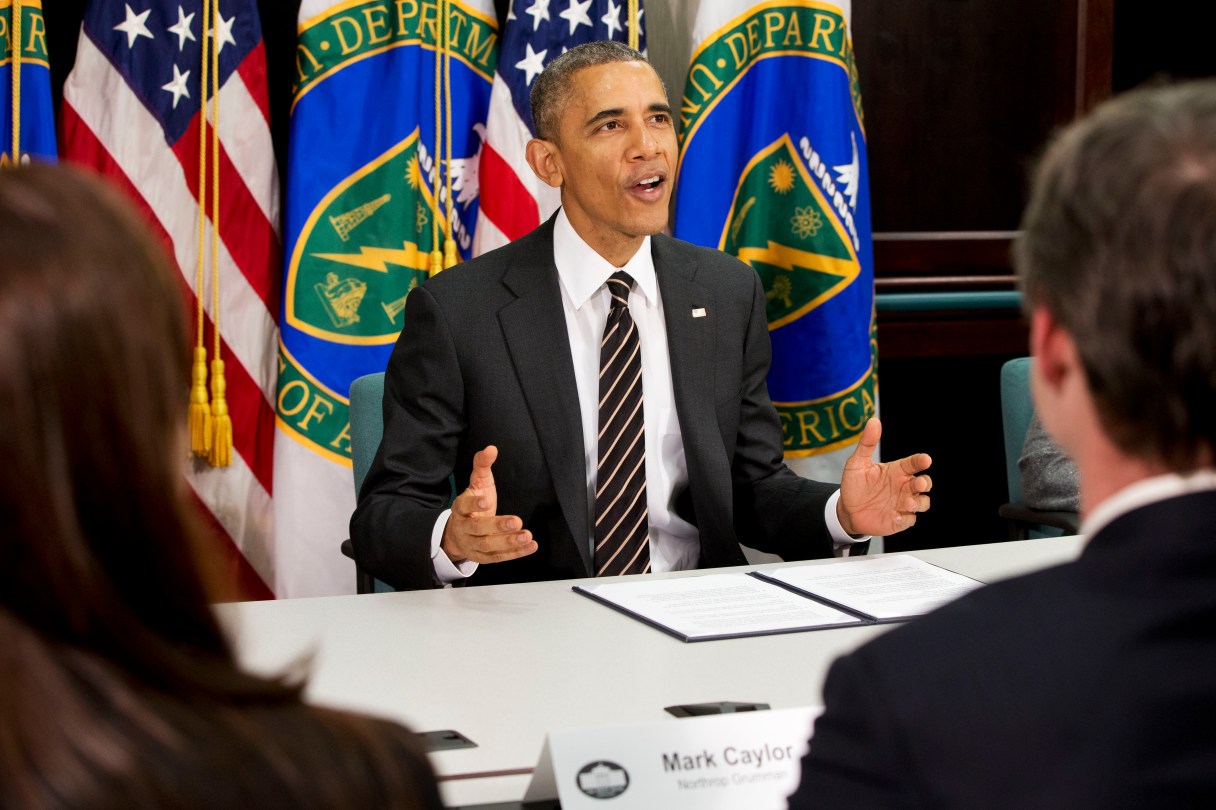
“These are ambitious goals, but we know they’re achievable goals,” Obama said at the Energy Department, where he toured a rooftop solar panel installation after signing the executive order at the White House.
Major companies that sell to the federal government like GE, HP, Northrup Grumman and Honeywell will also announce voluntary commitments to cut their own emissions of the heat-trapping gases blamed for global warming, the White House said. IBM, for example, said it will cut its energy consumption 35 percent by 2020 and buy at least 20 percent of its power from renewably sources by that year.
All told, the government pollution cuts along with industry contributions will have the effect of keeping 26 million metric tons of greenhouse gases out of the air by 2025, or the equivalent of what about 5.5 million cars would pump out through their tailpipes in an average year, the White House said. Yet it was unclear exactly how either the government or private companies planned to meet those targets.