
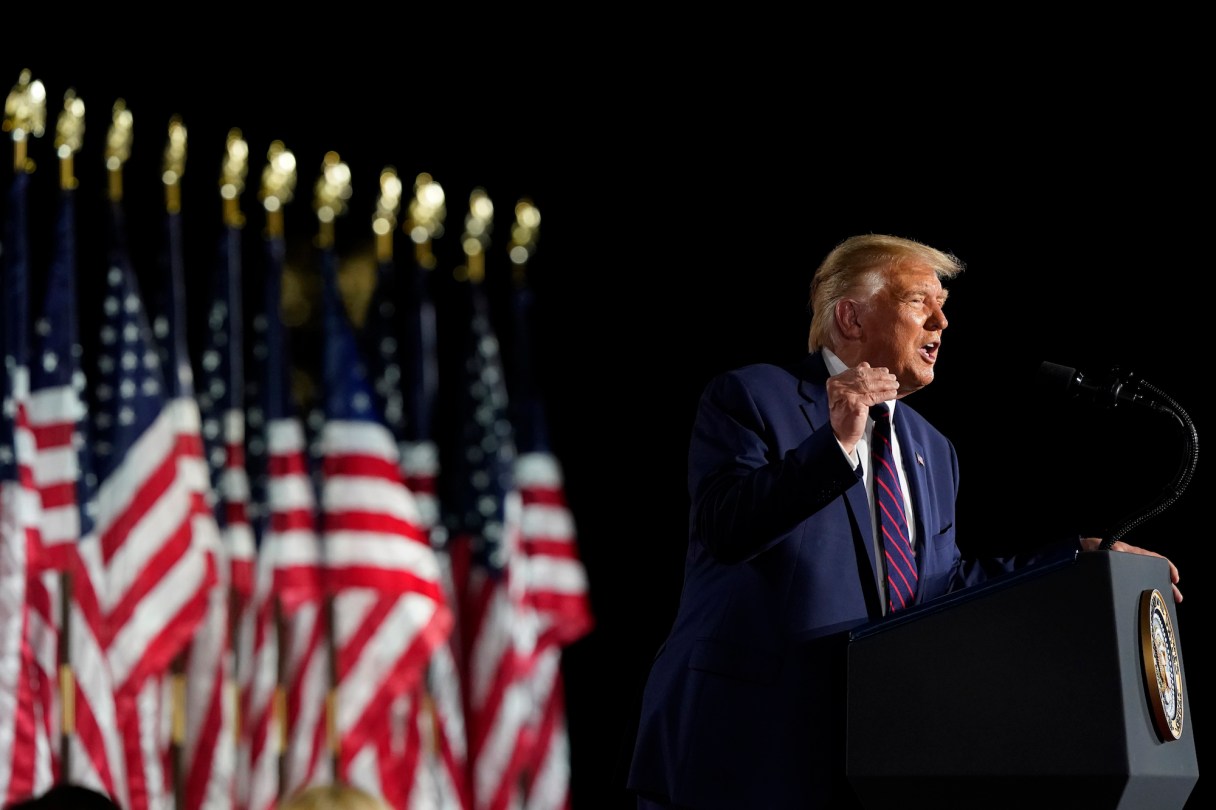
President Donald Trump gave one of his regular performances last Thursday night, his body language full of arrogance and his speech full of lies and half-truths. His mendacity runs so deep that it seems to be instinctual. That is not new, of course, and regardless of how outrageous his behavior is, it doesn’t matter to his supporters.
This is the same Trump who won election four years ago. And this election, same as that one, will not be decided by facts and policy positions, but by demeanor and salesmanship.
So what are Trump and Democratic nominee Joe Biden selling?
Trump is selling a paranoid vision of America that is largely disassociated from the truth. He doesn’t focus on the disturbing number of Black people – often unarmed – getting killed by police, or on armed vigilantes showing up unasked to “protect” property during demonstrations. Instead, he focuses on the fringe of protesters who have themselves become violent over frustration and anger at societal indifference to systemic racism and police brutality.
Trump offers no sign that he has the least interest in why his cities are burning during his presidency, on why protests and denunciations of police and the status quo have risen during his presidency, or on why the movement demanding change stretches from urban neighborhoods to suburban enclaves to rural America. He doesn’t care.