
Thursday, November 12, 2026Nov 12

Leading Polish filmmaker Andrzej Wajda died at 90

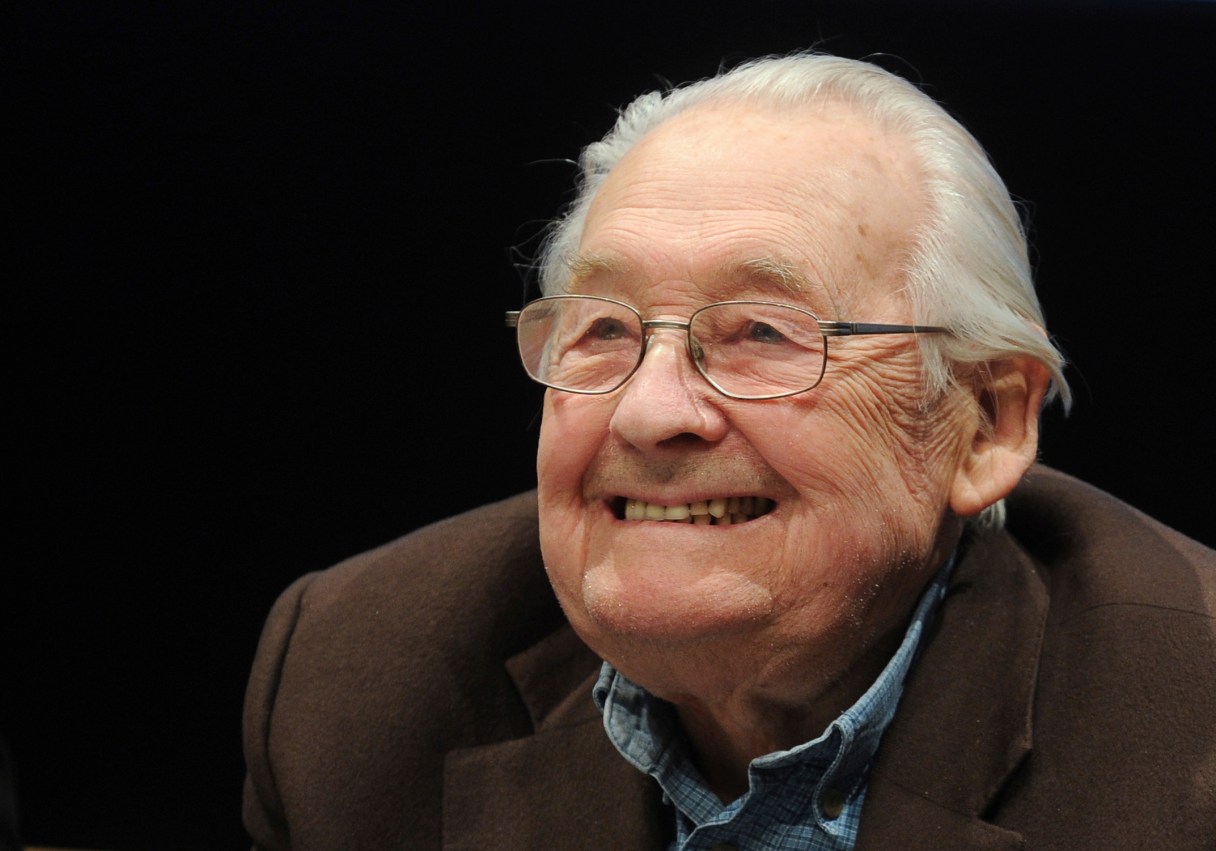
FILE - In this Thursday, March 3, 2016 file photo, Academy Award winning Polish film director Andrzej Wajda speaks during the opening of a review of some of his movies held on the occasion of his birthday in Warsaw, Poland. Wajda, whose career maneuvering between a repressive communist government and an audience yearning for freedom won him international recognition and an honorary Oscar, died Sunday, Oct. 9. He was 90. (AP Photo/Alik Keplicz, File)
FILE - In this Thursday, March 3, 2016 file photo, Academy Award winning Polish film director Andrzej Wajda speaks during the opening of a review of some of his movies held on the occasion of his birthday in Warsaw, Poland. Wajda, whose career maneuvering between a repressive communist government and an audience yearning for freedom won him international recognition and an honorary Oscar, died Sunday, Oct. 9. He was 90. (AP Photo/Alik Keplicz, File) FILE - In this Thursday, March 3, 2016 file photo, Academy Award winning Polish film director Andrzej Wajda speaks during the opening of a review of some of his movies held on the occasion of his birthday in Warsaw, Poland. Wajda, whose career maneuvering between a repressive communist government and an audience yearning for freedom won him international recognition and an honorary Oscar, died Sunday, Oct. 9. He was 90. (AP Photo/Alik Keplicz, File)

WARSAW, Poland (AP) – Poland’s leading filmmaker Andrzej Wajda, whose career maneuvering between a repressive communist government and an audience yearning for freedom won him international recognition and an honorary Oscar, has died. He was 90.

Wajda had recently been hospitalized and died Sunday night, according to his colleague, film director Jacek Bromski.

Though physically frail, Wajda worked until the end of his life. His latest film, “Afterimage,” was chosen last month as Poland’s official entry for an Oscar in the best foreign language film category. Poland’s Oscar Commission called the film – based on the life of Polish avant-garde artist Wladyslaw Strzeminski who was persecuted for refusing to follow the communist party line during the Stalinist era, “a touching universal story about the destruction of an individual by a totalitarian system” — a theme Wajda touched on throughout his lengthy career.

The film was also seen as yet another veiled political statement from Wajda – a declaration about artistic freedom at a time when Poland’s current conservative government is interfering with the arts and media.

Wajda received an honorary Oscar for lifetime achievement in 2000. He was cited as “a man whose films have given audiences around the world an artist’s view of history, democracy and freedom, and who in so doing has himself become a symbol of courage and hope for millions of people in postwar Europe.”