
Wednesday, November 11, 2026Nov 11

Researchers slowly homing in on risk of Zika birth defect

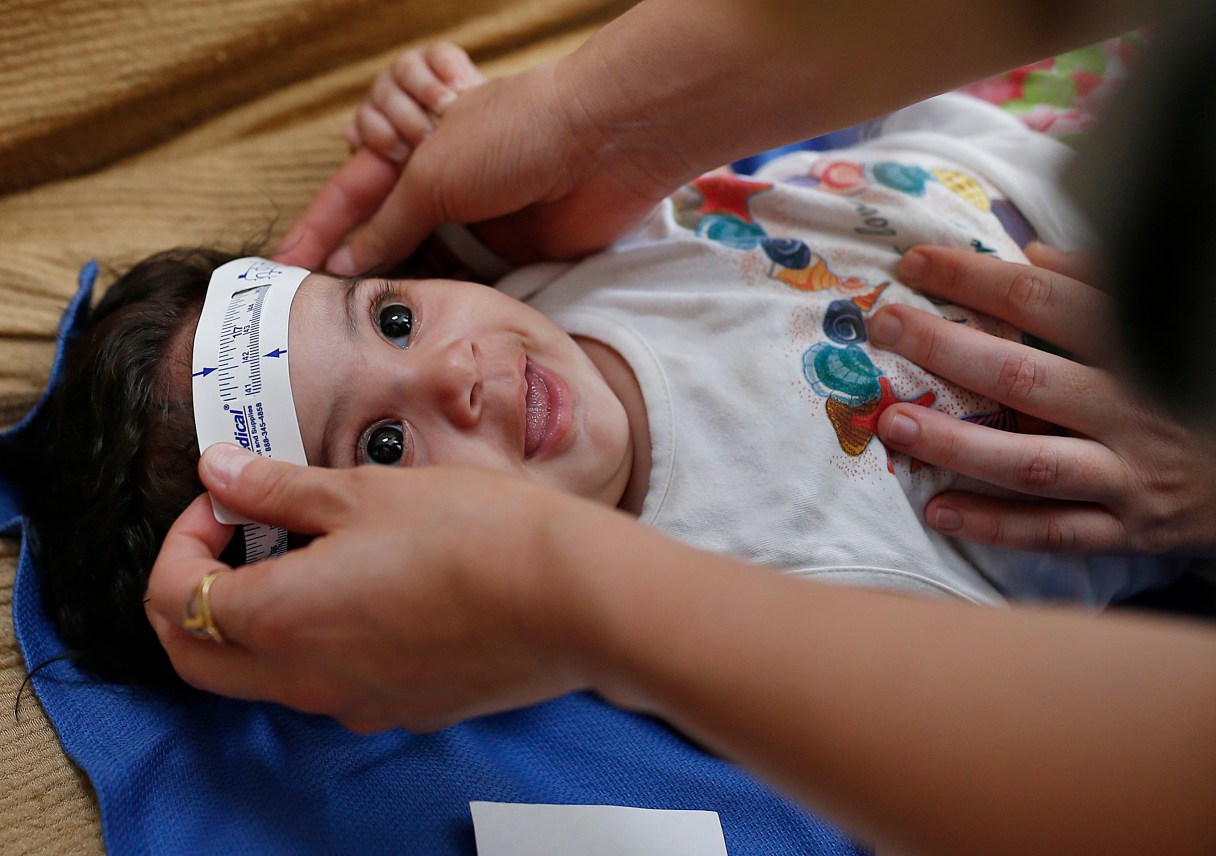
FILE - In this Wednesday, Feb. 24, 2016 file photo, 3-month-old Esther Kamilly has her head measured by Brazilian and U.S. health workers from the United States' Centers for Disease Control and Prevention (CDC) at her home in Joao Pessoa, Brazil, as part of a study on the Zika virus and the birth defect microcephaly. As the international epidemic of Zika has unfolded and led to devastating birth defects for at least 1,300 children in eight countries, an agonizing question has persisted: What is the chance that an infected pregnant woman will have a baby with these defects? (AP Photo/Andre Penner)
FILE - In this Wednesday, Feb. 24, 2016 file photo, 3-month-old Esther Kamilly has her head measured by Brazilian and U.S. health workers from the United States' Centers for Disease Control and Prevention (CDC) at her home in Joao Pessoa, Brazil, as part of a study on the Zika virus and the birth defect microcephaly. As the international epidemic of Zika has unfolded and led to devastating birth defects for at least 1,300 children in eight countries, an agonizing question has persisted: What is the chance that an infected pregnant woman will have a baby with these defects? (AP Photo/Andre Penner) FILE - In this Wednesday, Feb. 24, 2016 file photo, 3-month-old Esther Kamilly has her head measured by Brazilian and U.S. health workers from the United States' Centers for Disease Control and Prevention (CDC) at her home in Joao Pessoa, Brazil, as part of a study on the Zika virus and the birth defect microcephaly. As the international epidemic of Zika has unfolded and led to devastating birth defects for at least 1,300 children in eight countries, an agonizing question has persisted: What is the chance that an infected pregnant woman will have a baby with these defects? (AP Photo/Andre Penner)

NEW YORK (AP) – As the international epidemic of Zika virus disease has unfolded and led to devastating birth defects for at least 1,300 children in eight countries, an agonizing question has persisted: What is the chance that an infected pregnant woman will have a baby with these defects?

Researchers don’t yet have a complete answer, but they are slowly homing in on one.

The largest study to ever look at the question says the risk of one especially severe type of birth defect is “substantial” – in the range of 1 percent to 14 percent. It also reinforces the understanding that women infected in the early stages of pregnancy face the greatest risk.

The range is so unusually wide because researchers are relying on imprecise and incomplete information as they to try to quickly estimate the level of risk in advance of what they say is likely transmission of Zika by mosquitoes in the U.S. later this year.

The study focused on what was seen in just one place, a state in northeast Brazil. And it looks only at microcephaly, a condition in which a baby’s skull is much smaller than expected because the brain hasn’t developed properly. But health officials say Zika can cause other birth defects, too.