
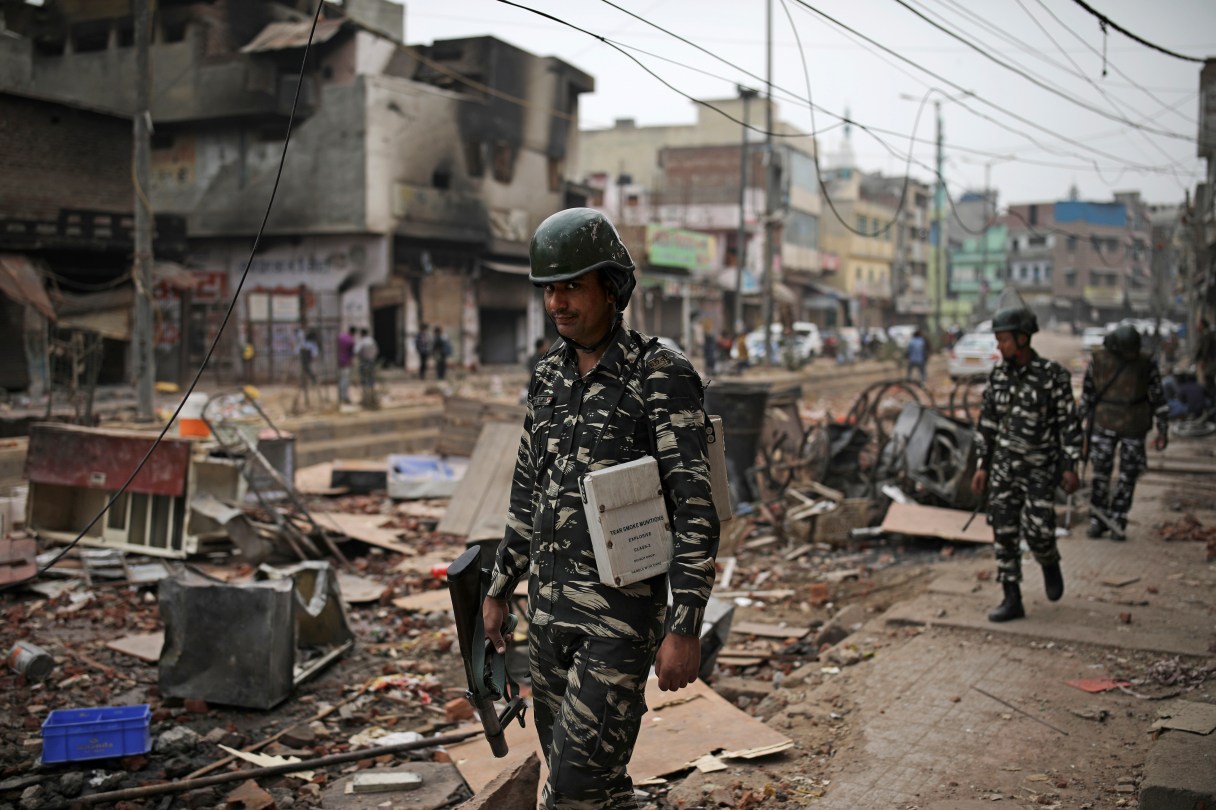
NEW DELHI (AP) – India’s hard-line Hindu nationalists watched anti-government protests centered in Muslim communities for months in anger that finally boiled over in the worst communal rioting in New Delhi in decades, leaving 38 people dead and the Indian capital shell-shocked.
Tensions had been building over a new citizenship law that critics see as a threat to India’s secular society and a way to further marginalize the country’s 200 million Muslims.
As Prime Minister Narendra Modi feted U.S. President Donald Trump on his first state visit to India, a moment that was supposed to help cement the country’s place on the world stage instead became an embarrassment.
On Sunday, as Modi prepared for Trump’s arrival, a group of predominantly Muslim protesters demonstrated in a northeastern corner of the capital against the citizenship law, which fast-tracks naturalization for some religious minorities from neighboring countries but not Muslims.
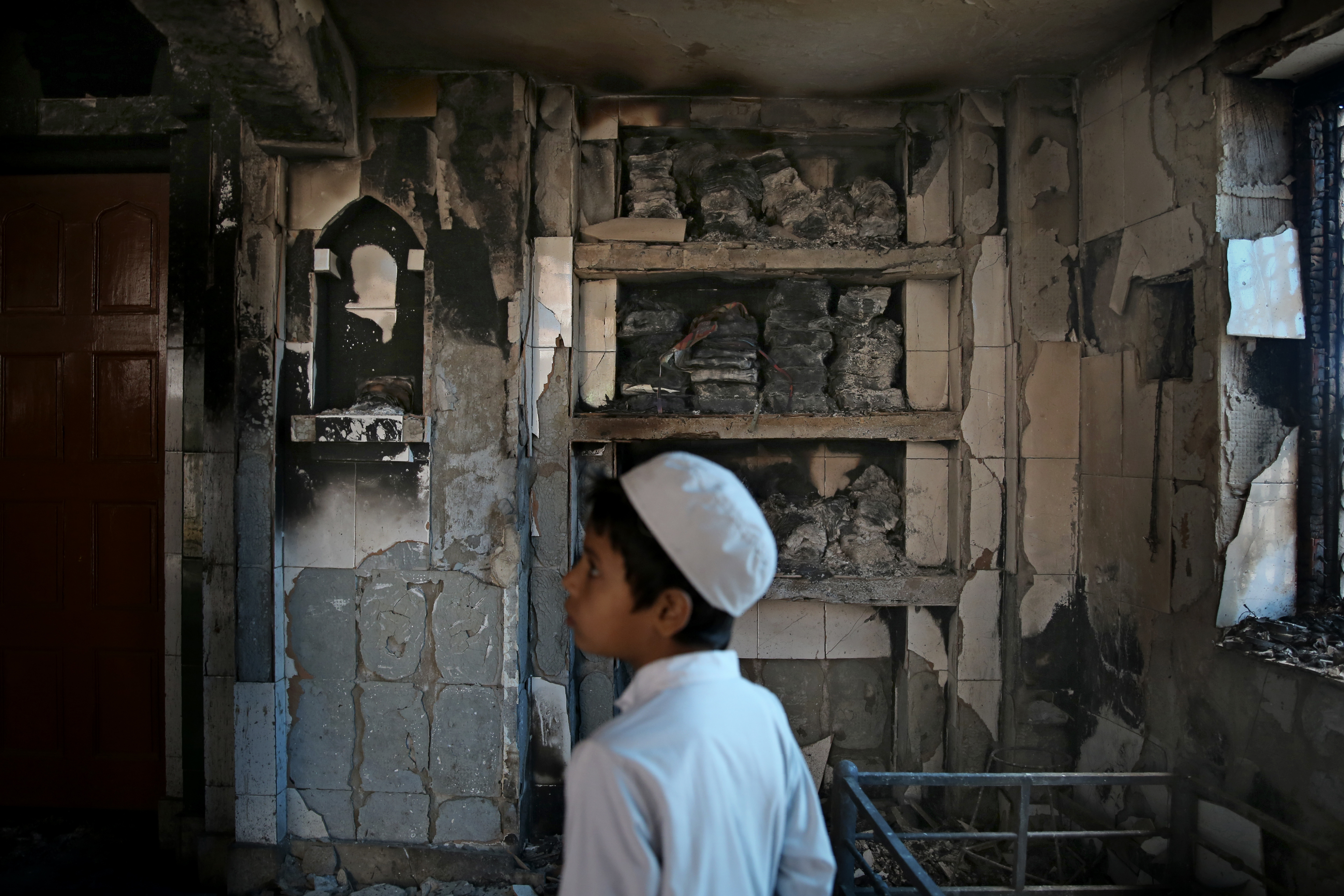 An Indian Muslim boy stands inside a mosque burnt in Tuesday’s violence in New Delhi, India, Thursday, Feb. 27, 2020. India accused a U.S. government commission of politicizing communal violence in New Delhi that killed at least 30 people and injured more than 200 as President Donald Trump was visiting the country. The violent clashes between Hindu and Muslim mobs were the capital’s worst communal riots in decades and saw shops, Muslim shrines and public vehicles go up in flames. (AP Photo/Altaf Qadri)
Kapil Mishra, a local leader of Modi’s Bharatiya Janata Party who lost his Delhi state assembly seat in recent elections, held his own rally, urging police to clear out the protesters.