
New technologies and distributed energy generation are threatening to upend the way homes and businesses get and use electricity in the future as America’s biggest government-owned utility prepares to enter its second century.
But the new head of Tennessee Valley Authority says he doesn’t feel threatened by such changes, even if they may mean scaling back the growth of TVA’s historically ambitious centralized power network.
“This is the most exciting time to be in this business in my career,” said Jeff Lyash, a 37-year utility executive who took over as TVA’s chief executive this month. “Is there uncertainty? Yes. Is there risk? Absolutely. Is there going to be change? Clearly, there will be.”
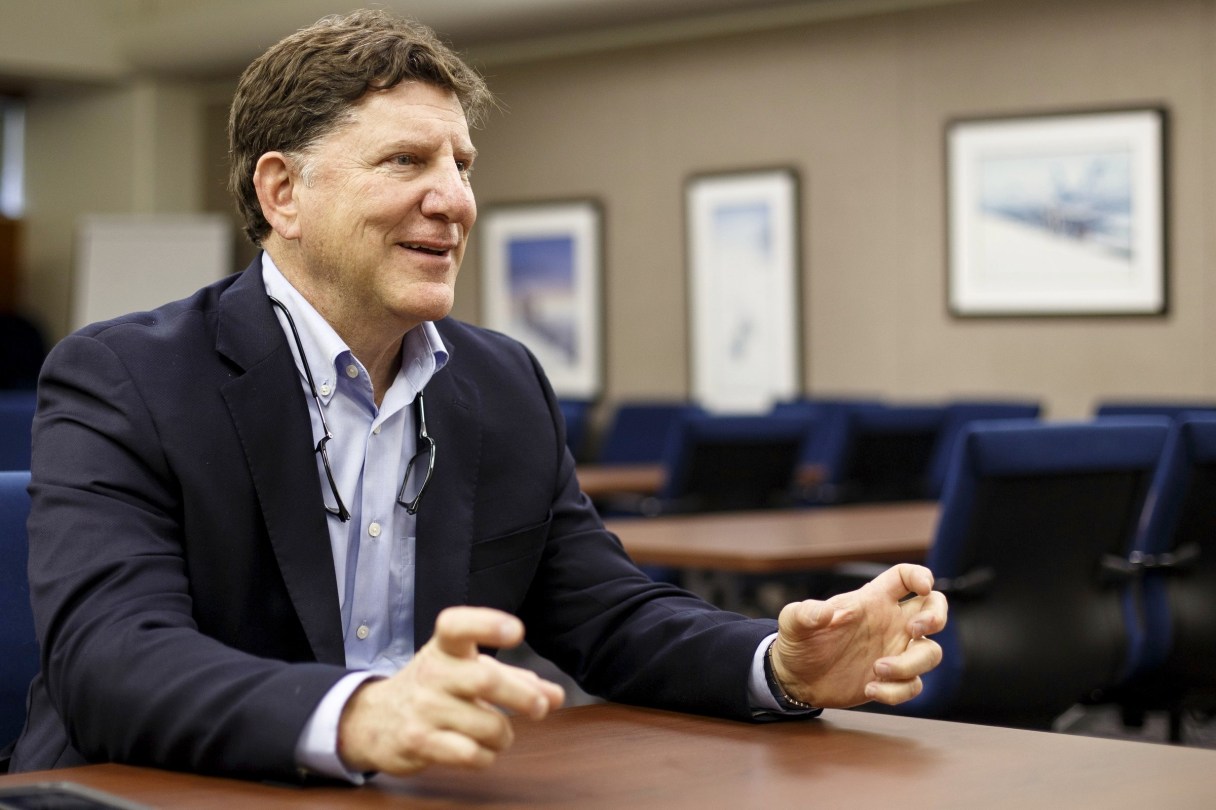
 Tennessee Valley Authority President Jeffrey Lyash speaks with the Times Free Press from the TVA Chattanooga Office Complex on Tuesday, April 23, 2019 in Chattanooga, Tenn.
But Lyash, a former CEO of one of Canada’s biggest public utilities, thinks TVA is uniquely positioned for the challenges ahead. In partnership with the 154 municipalities and power coops that distribute the power TVA generates, Lyash said the federal utility can take a longer-term approach to the environmental and economic changes ahead without some of the shareholder pressures of investor-owned utilities.
“We can focus on what is needed in the long run that might be more difficult for companies that have to focus on quarterly earnings and, by necessity, have to think shorter term,” Lyash said in an interview with the Times Free Press last week. “The public power model in the valley will allow us to think about what is best over time for all of our customers.”