
Wednesday, November 11, 2026Nov 11

Who lives, dies in attacks can give clues about terror cells

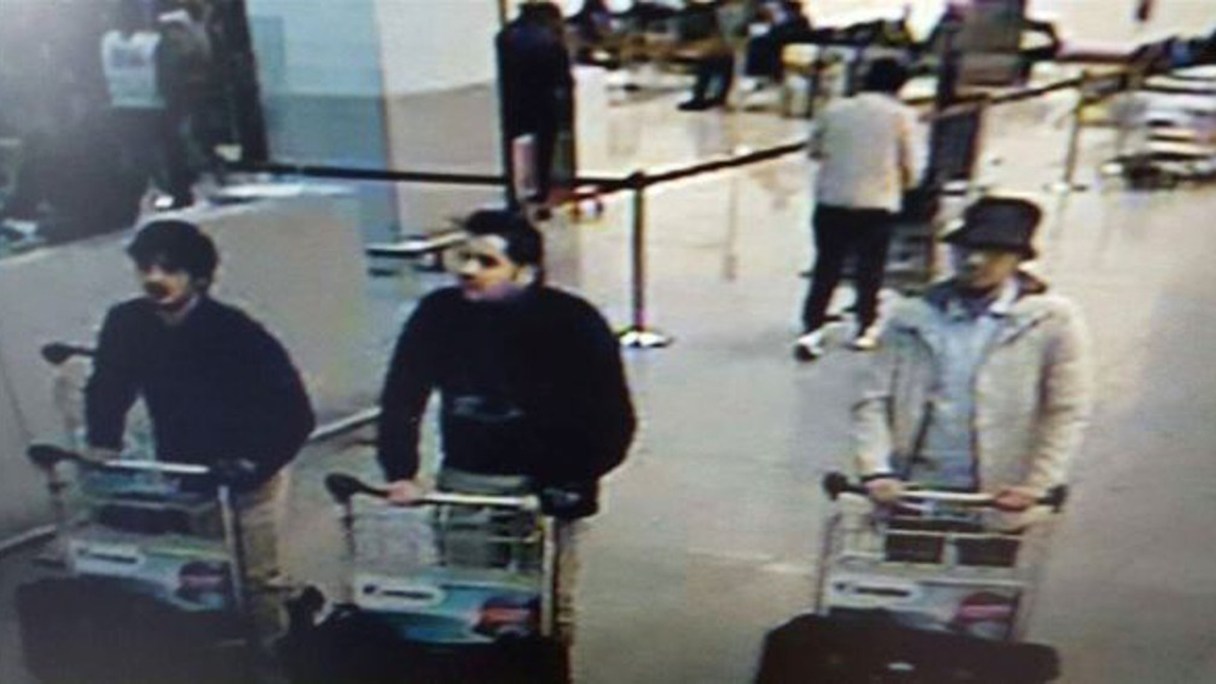
In this image provided by the Belgian Federal Police in Brussels on Tuesday, March 22, 2016 of three men who are suspected of taking part in the attacks at Belgium's Zaventem Airport. The man at right is still being sought by the police and two others in the photo that the police issued were according to a the Belgian Prosecutors 'probably' suicide bombers. Bombs exploded at the Brussels airport and one of the city's metro stations Tuesday, killing and wounding scores of people, as a European capital was again locked down amid heightened security threats. (Belgian Federal Police via AP)
In this image provided by the Belgian Federal Police in Brussels on Tuesday, March 22, 2016 of three men who are suspected of taking part in the attacks at Belgium's Zaventem Airport. The man at right is still being sought by the police and two others in the photo that the police issued were according to a the Belgian Prosecutors 'probably' suicide bombers. Bombs exploded at the Brussels airport and one of the city's metro stations Tuesday, killing and wounding scores of people, as a European capital was again locked down amid heightened security threats. (Belgian Federal Police via AP) In this image provided by the Belgian Federal Police in Brussels on Tuesday, March 22, 2016 of three men who are suspected of taking part in the attacks at Belgium's Zaventem Airport. The man at right is still being sought by the police and two others in the photo that the police issued were according to a the Belgian Prosecutors 'probably' suicide bombers. Bombs exploded at the Brussels airport and one of the city's metro stations Tuesday, killing and wounding scores of people, as a European capital was again locked down amid heightened security threats. (Belgian Federal Police via AP)

BRUSSELS (AP) – The bomb maker, the transporter, the landlord and the cipher. The four men slipped away after the Nov. 13 attacks in Paris, and all but one reappeared as key figures in the Islamic State cell that went on to attack Brussels.

Two are dead, one is captured, and the fate of the fourth remains a mystery.

Who lives and who dies in an attack can provide crucial clues to how terrorist cells are structured, demonstrating who is considered disposable and who is crucial for the next job. That status can be fleeting, as the two attacks show that someone considered vital in one operation may be sacrificed in another.

Some of the figures in the Paris plot had become “cannon fodder” by the time of the Brussels attacks, said Nicolas Henin, a journalist held hostage by Islamic State for 10 months.

“Once they had performed their services in Paris, they were considered expendable,” he wrote. “That is how (the Islamic State group) works in terms of human resources.”