
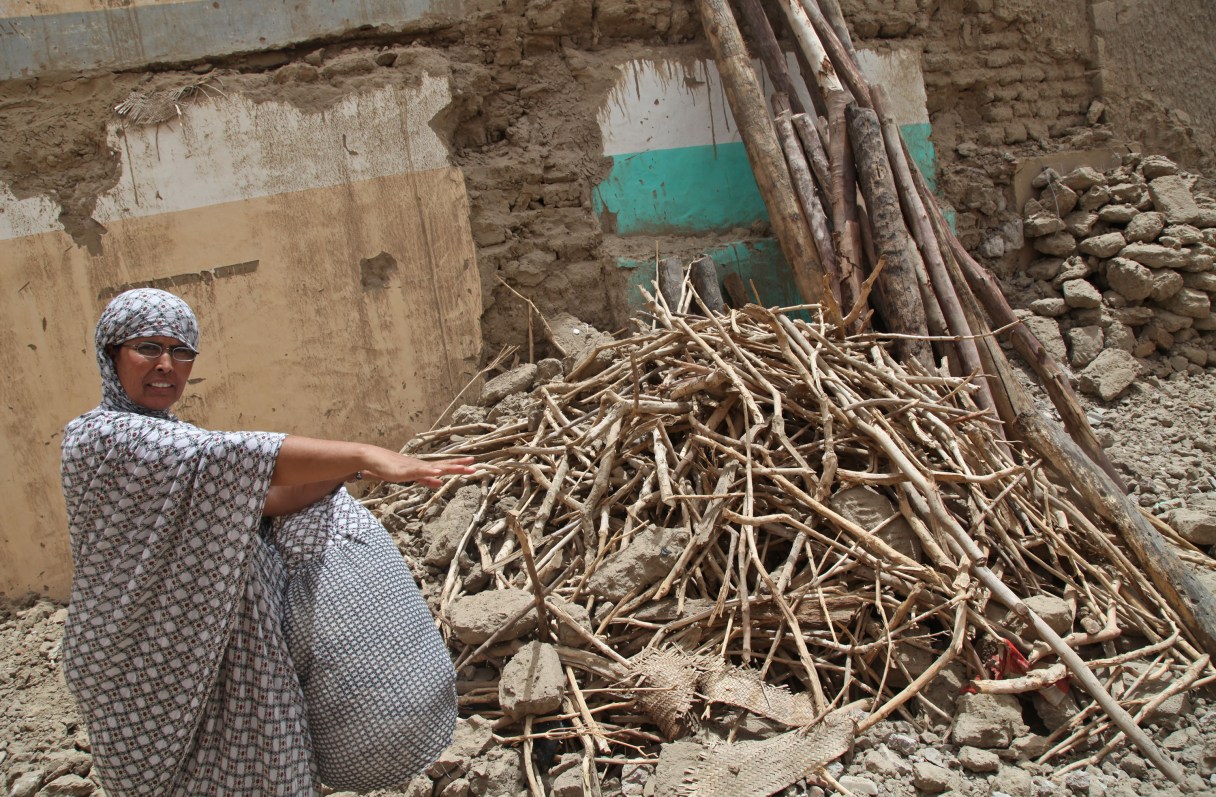
TIMBUKTU, Mali (AP) – A pile of stones and wood was all that remained of the house where Fadimata Walet Abdou Salam once lived when she and her young daughters returned after more than a year of sleeping in a tent as refugees in a foreign country.
Looters had stolen the windows and doors, and then heavy rains transformed the earthen walls into a heap of mud after she had to abandon her home in Timbuktu following unrest and violence.
Northern Mali fell under control of Tuareg separatists and then al-Qaida-linked Islamic extremists following a military coup in 2012. A French-led intervention last year scattered the extremists, but some remain active and there have been continued bursts of violence. Walet Abdou Salam and her family were among the Tuareg and Arab residents who fled reprisal attacks in January 2013 after jihadists were ousted from power.
For months, she and her two daughters – 11-year-old Aicha and 9-year-old Karima, lived in neighboring Burkina Faso, fearing for their lives after a series of attacks on ethnic Tuaregs like her.
“We came home to find our house in this state, and it was a huge shock for me,” she says of the looted plot of earth next to a school where her two-bedroom home used to stand.