
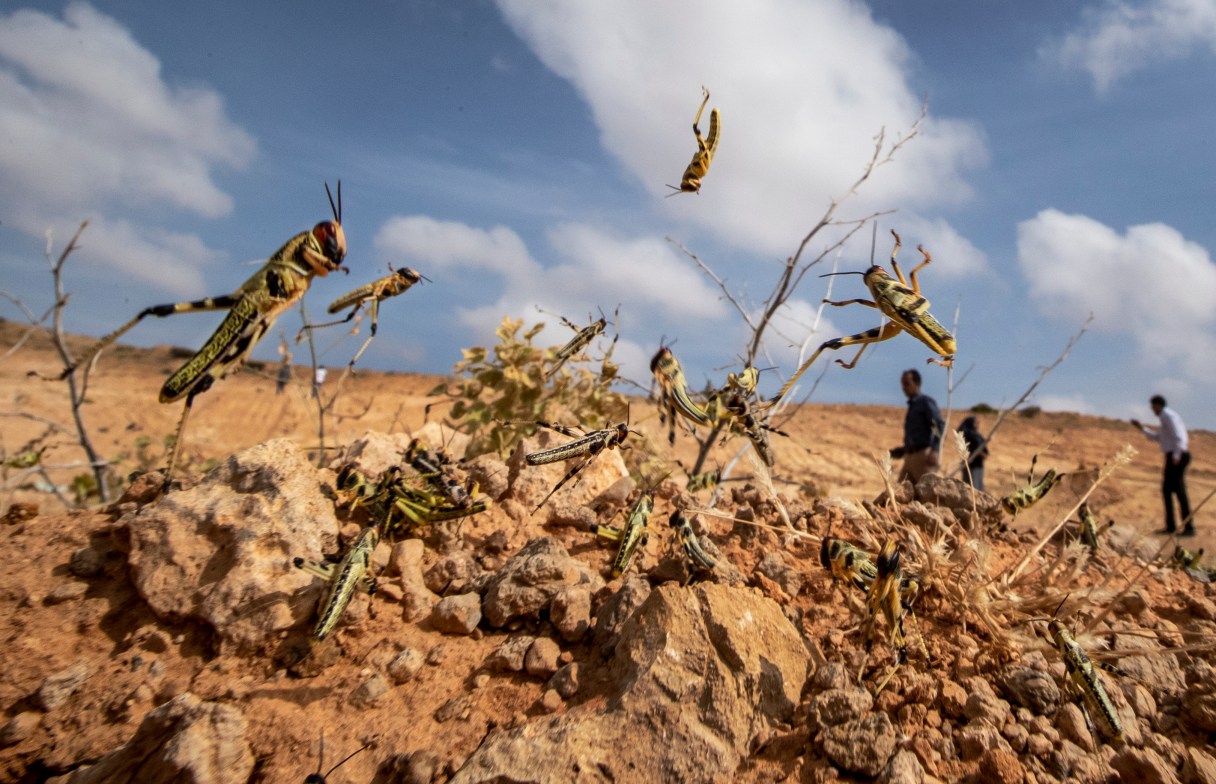
JUBA, South Sudan (AP) – The worst locust outbreak that parts of East Africa have seen in 70 years has reached South Sudan, a country where roughly half the population already faces hunger after years of civil war, officials announced Tuesday.
Around 2,000 locusts were spotted inside the country, Agriculture Minister Onyoti Adigo told reporters. Authorities will try to control the outbreak, he added.
The locusts have been seen in Eastern Equatoria state near the borders with Ethiopia, Kenya and Uganda. All have been affected by the outbreak that has been influenced by the changing climate in the region.
The situation in those three countries “remains extremely alarming,” the U.N. Food and Agriculture Organization said in its latest Locust Watch update Monday. Locusts also have reached Sudan, Eritrea, Tanzania and more recently Uganda.
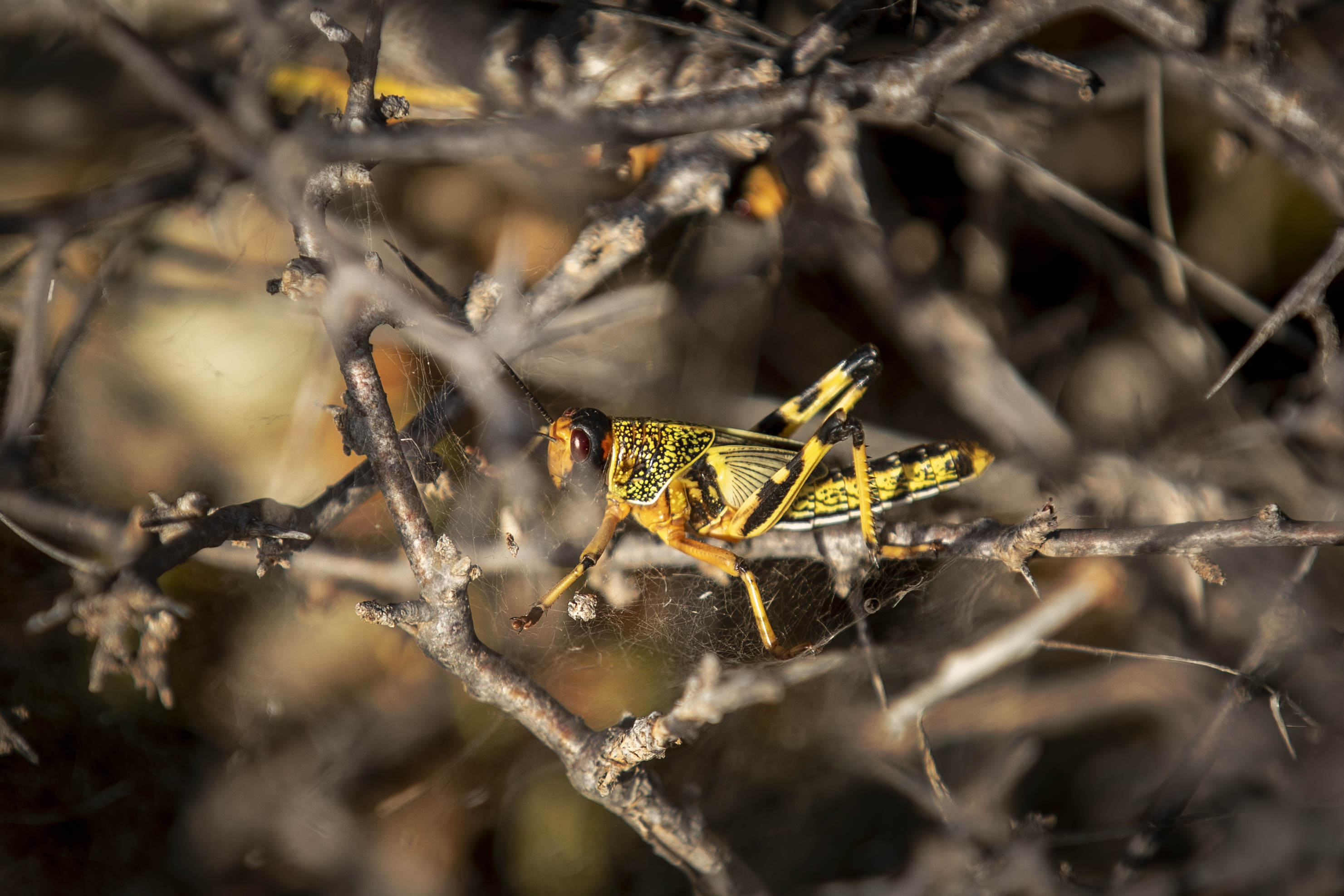 In this photo taken Tuesday, Feb. 4, 2020, a young desert locust that has not yet grown wings is stuck in a spider’s web on a thorny bush in the desert near Garowe, in the semi-autonomous Puntland region of Somalia. The desert locusts in this arid patch of northern Somalia look less ominous than the billion-member swarms infesting East Africa, but the hopping young locusts are the next wave in the outbreak that threatens more than 10 million people across the region with a severe hunger crisis. (AP Photo/Ben Curtis)
The soil in South Sudan’s Eastern Equatoria has a sandy nature that allows the locusts to lay eggs easily, said Meshack Malo, country representative with the FAO.