
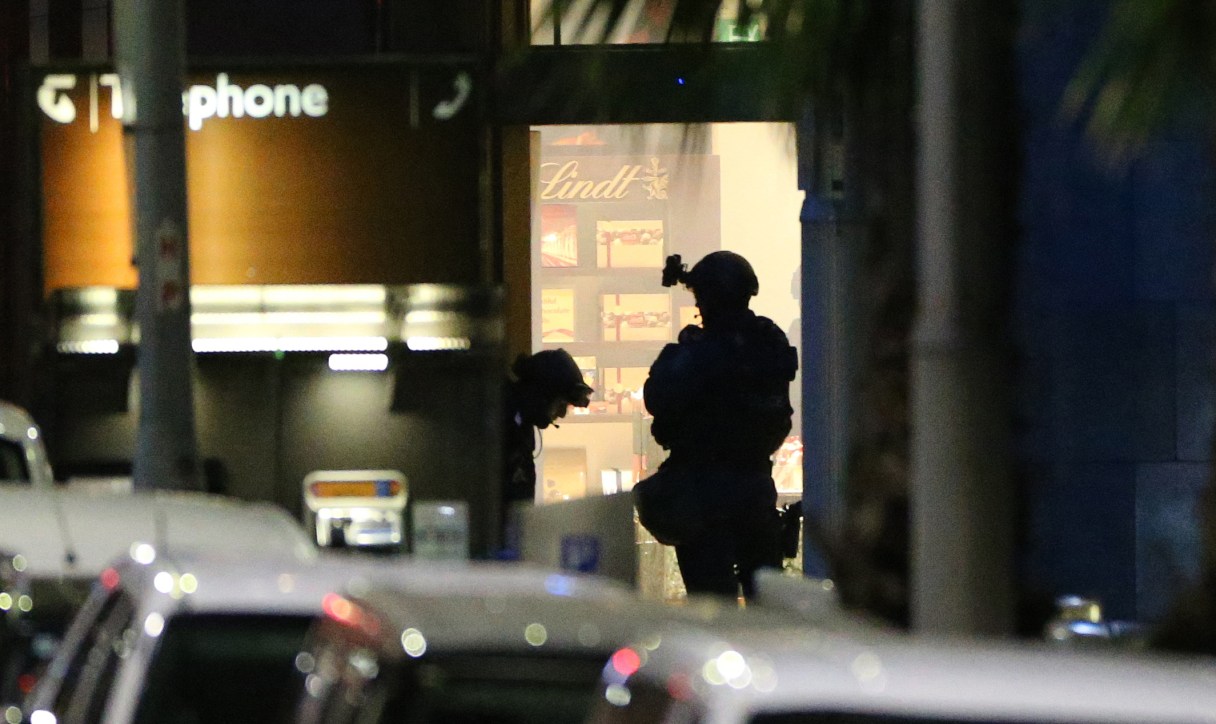
WASHINGTON (AP) – Five years before he held 18 people hostage inside a Sydney cafe, Iranian-born Man Haron Monis attracted the attention of the FBI as someone who had “the potential to incite others to violence,” according to documents obtained by The Associated Press.
A November 2009 memorandum from an FBI office in Australia to agency counterterrorism and international operations officials said that while Monis was not believed to be a threat to national security, “his ongoing offensive and nuisance behavior has the potential to incite others to violence.”
A shotgun-wielding Monis took customers and workers captive in a December 2014 siege at the Lindt Cafe in Sydney and demanded to be delivered an Islamic State flag, an incident that fueled anxiety about the extremist group’s expanding influence across the globe. Police stormed the cafe 16 hours later, after Monis fatally shot one of the hostages. Monis was shot dead by police and another hostage was killed in the crossfire.
Though it’s been established that Australian authorities failed to detect that Monis was a threat, despite years of warnings, the memo shows how the FBI was itself concerned about his rhetoric even before the Islamic State group emerged as a prominent international force and well ahead of the siege. The documents are heavily redacted, and it was not immediately clear what additional action, if any, was taken in Australia or how widely that assessment was shared across Australian law enforcement.
The memo, obtained through the Freedom of Information Act, was drafted as the FBI was looking into whether the self-styled cleric with a long criminal history should obtain a U.S.-based Internet service provider host his website.