
Wednesday, November 11, 2026Nov 11

Autonomous cars aren’t perfect, but how safe must they be?

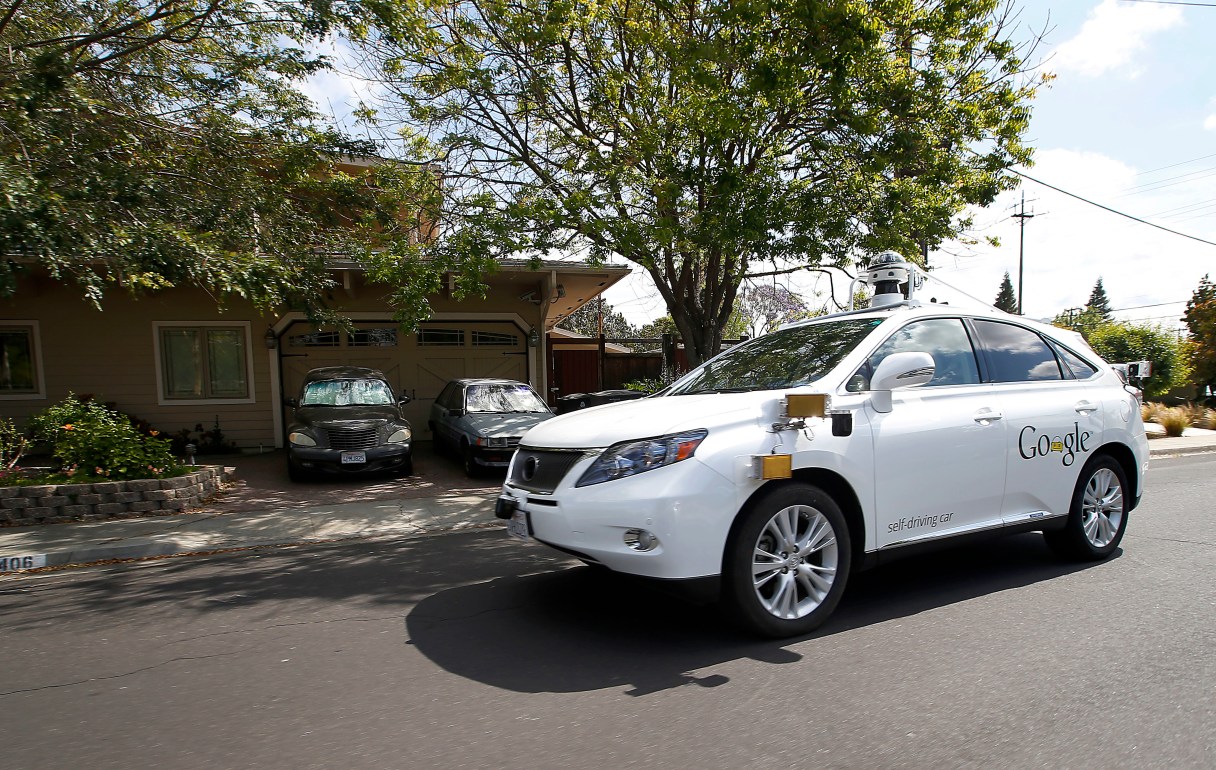
FILE - In this Wednesday, May 13, 2015, file photo, Google's self-driving Lexus car drives along street during a demonstration at Google campus on  in Mountain View, Calif. As Google cars encounter more and more of the obstacles and conditions that befuddle human drivers, the autonomous vehicles are likely to cause more accidents, such as a recent low-speed collision with a bus. (AP Photo/Tony Avelar, File)
FILE - In this Wednesday, May 13, 2015, file photo, Google's self-driving Lexus car drives along street during a demonstration at Google campus on in Mountain View, Calif. As Google cars encounter more and more of the obstacles and conditions that befuddle human drivers, the autonomous vehicles are likely to cause more accidents, such as a recent low-speed collision with a bus. (AP Photo/Tony Avelar, File) FILE - In this Wednesday, May 13, 2015, file photo, Google's self-driving Lexus car drives along street during a demonstration at Google campus on in Mountain View, Calif. As Google cars encounter more and more of the obstacles and conditions that befuddle human drivers, the autonomous vehicles are likely to cause more accidents, such as a recent low-speed collision with a bus. (AP Photo/Tony Avelar, File)

As autonomous car technology rapidly progresses, makers of the cars face the difficult question of how safe they must be before they’re ready to move people on highways and city streets.

Right now, companies such as Google, Audi, and Mercedes-Benz are testing the cars in a small number of cities to demonstrate they can be safer than human drivers. A top executive at Volkswagen’s new engineering and planning center in Chattanooga said earlier this month he expects VW to have fully self-driving cars on Chattanooga streets within a decade.

Backers of the driverless cars must figure out what level of risk is acceptable to both government regulators and a potentially skeptical public.

Government statistics show that human mistakes are responsible for 94 percent of the 33,000 traffic fatalities each year. Autonomous cars won’t get drowsy, distracted or drunk, so in theory they could eliminate those mistakes and save an estimated 31,000 lives a year.

But as a Valentine’s Day fender-bender involving a Google autonomous Lexus and a public bus shows, cars that drive themselves can make mistakes.