
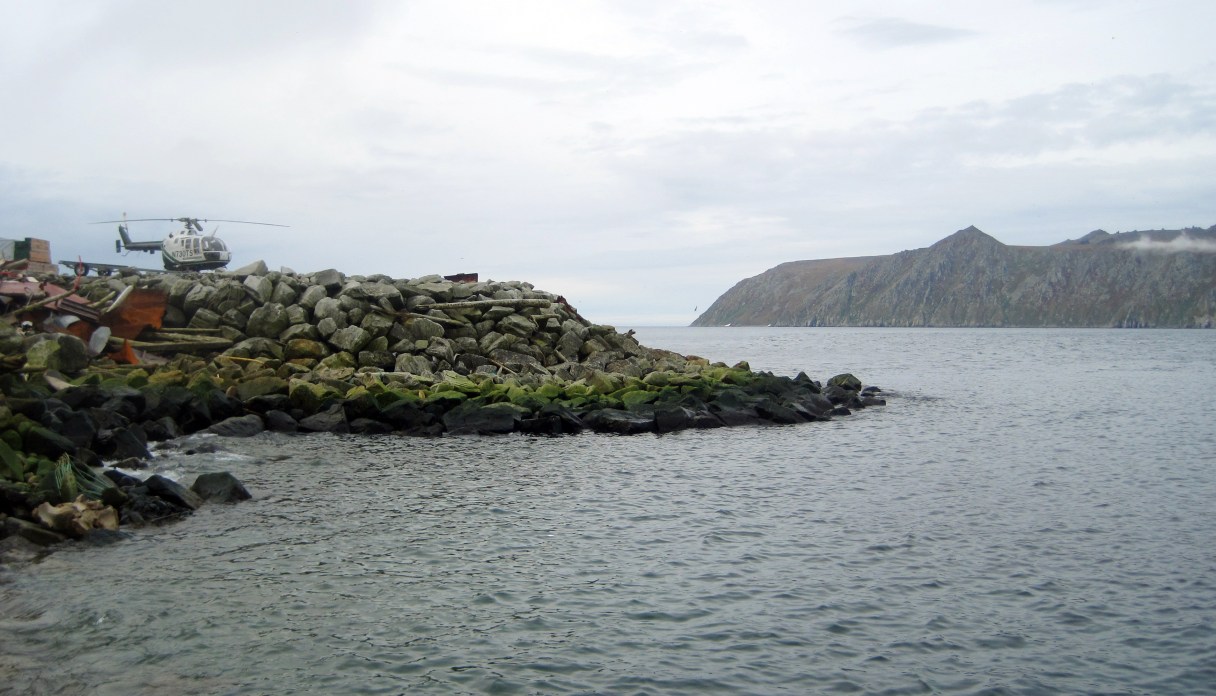
ANCHORAGE, Alaska (AP) – Across the Bering Strait, Robert Soolook can easily see the looming hulk of the neighboring Russian island where some of his relatives used to live before they were forced to relocate to the Soviet mainland at the start of the Cold War.
“It’s always a reminder, each and every day,” Soolook, an Inupiat Eskimo, says of the view from Little Diomede Island. Less than 3 miles away is Big Diomede Island, but it might as well be thousands of miles from his village, Diomede, because it is strictly off-limits, patrolled by Russian border guards.
Now Soolook and other residents from his tiny village want to resurrect ties with their relatives or at least connect with their descendants, thanks to National Park Service grants totaling more than $83,000.
Before World War II, indigenous people from both sides traveled freely between the two rocky islands for hundreds of years. Soolook had not been born yet when many indigenous people living in Russia’s nearby Chukotka region had to abandon settlements like the one on Big Diomede.
Soviet authorities ordered the 25 to 30 remaining inhabitants to move to the Yup’ik Eskimo village of Naukan in Chukotka in 1948, when the so-called political ice curtain was put in place. That new community was closed a decade later as the Soviets shut down more sites nearest to the Soviet-U.S. border. The former Big Diomede residents were forced to move again, dispersing among various communities.