
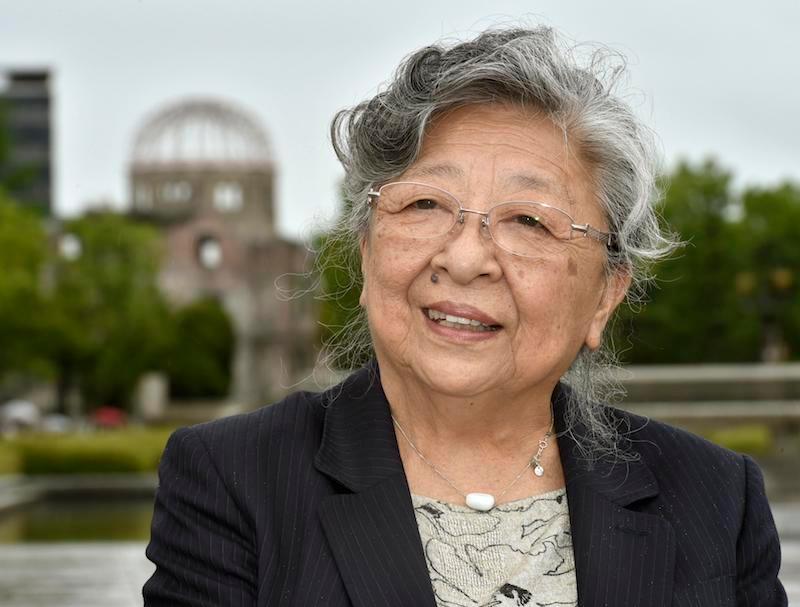
HIROSHIMA, Japan (AP) – For nearly 70 years, until he turned 85, Lee Jong-keun hid his past as an atomic bomb survivor, fearful of the widespread discrimination against blast victims that has long persisted in Japan.
But Lee, 92, is now part of a fast-dwindling group of survivors, known as hibakusha, that feels a growing urgency – desperation even – to tell their stories. These last witnesses to what happened 75 years ago this Thursday want to reach a younger generation that they feel is losing sight of the horror.
The knowledge of their dwindling time – the average age of the survivors is more than 83 and many suffer from the long-lasting effects of radiation – is coupled with deep frustration over stalled progress in global efforts to ban nuclear weapons. According to a recent Asahi newspaper survey of 768 survivors, nearly two-thirds said their wish for a nuclear-free world is not widely shared by the rest of humanity, and more than 70% called on a reluctant Japanese government to ratify a nuclear weapons ban treaty.
“I can’t live for another 50 years,” said Koko Kondo, 75, who was an 8-month-old baby in her mother’s arms when their house collapsed from the blast around a kilometer (half a mile) away. “I want each child to live a full life, and that means we have to abolish nuclear weapons right now.”
Even after so many years, too many nuclear weapons remain, Kondo said, adding, “We are not screaming loud enough for the whole world to hear.”