
Wednesday, November 11, 2026Nov 11

New Zealanders race to save whales after 400 stranded

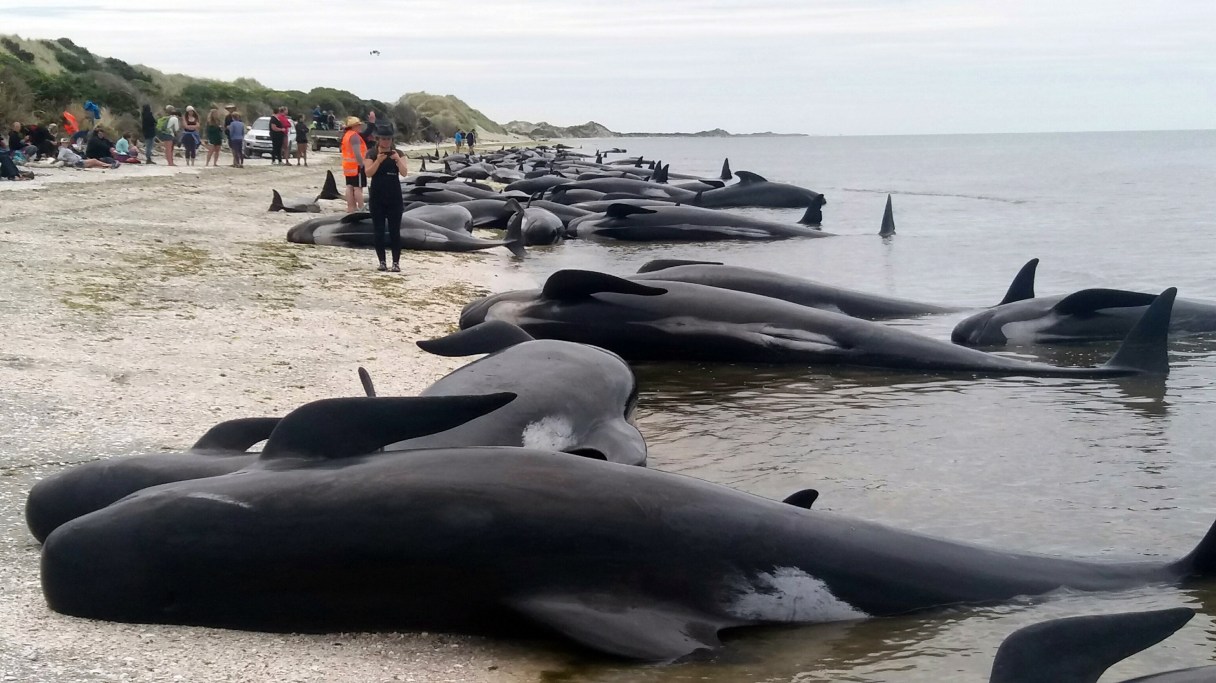
Whales are stranded at Farewell Spit near Nelson, New Zealand Friday, Feb. 10, 2017. New Zealand volunteers formed a human chain in the water at a remote beach on Friday as they tried to save about 100 whales after more than 400 of the creatures beached themselves in one of the worst whale strandings in the nation's history. About three-quarters of the pilot whales were already dead when they were found Friday morning at Farewell Spit at the tip of the South Island. (Tim Cuff/New Zealand Herald via AP)
Whales are stranded at Farewell Spit near Nelson, New Zealand Friday, Feb. 10, 2017. New Zealand volunteers formed a human chain in the water at a remote beach on Friday as they tried to save about 100 whales after more than 400 of the creatures beached themselves in one of the worst whale strandings in the nation's history. About three-quarters of the pilot whales were already dead when they were found Friday morning at Farewell Spit at the tip of the South Island. (Tim Cuff/New Zealand Herald via AP) Whales are stranded at Farewell Spit near Nelson, New Zealand Friday, Feb. 10, 2017. New Zealand volunteers formed a human chain in the water at a remote beach on Friday as they tried to save about 100 whales after more than 400 of the creatures beached themselves in one of the worst whale strandings in the nation's history. About three-quarters of the pilot whales were already dead when they were found Friday morning at Farewell Spit at the tip of the South Island. (Tim Cuff/New Zealand Herald via AP)

WELLINGTON, New Zealand (AP) – New Zealand volunteers formed a human chain in the water at a remote beach on Friday as they raced to save dozens of whales after more than 400 of the creatures beached themselves in one of the worst whale strandings in the nation’s history.

About three-quarters of the pilot whales were already dead when they were found Friday morning at Farewell Spit at the tip of the South Island.

The adult and baby whale carcasses were strewn three or four deep in places for hundreds of yards, often rolled over on the sand with their tail fins still aloft.

Volunteers wearing wetsuits and carrying buckets worked to keep the stranded survivors alive in an area that seems to confuse whales and has been the site of previous mass strandings.

Department of Conservation community ranger Kath Inwood said about 300 volunteers had joined conservation workers on the beach.