
Day or night, the lights inside cell 135C of central New Mexico’s Valencia County Detention Center were always on.
Locked inside, alone, for months, Jan Green – a 52-year-old computer technician with schizophrenia and bipolar disorder – rocked on a bench for hours, confiding in an imaginary companion.
“I would talk and hold conversations just in my little crazy world, I guess you would say, just to keep me company,” Green says.
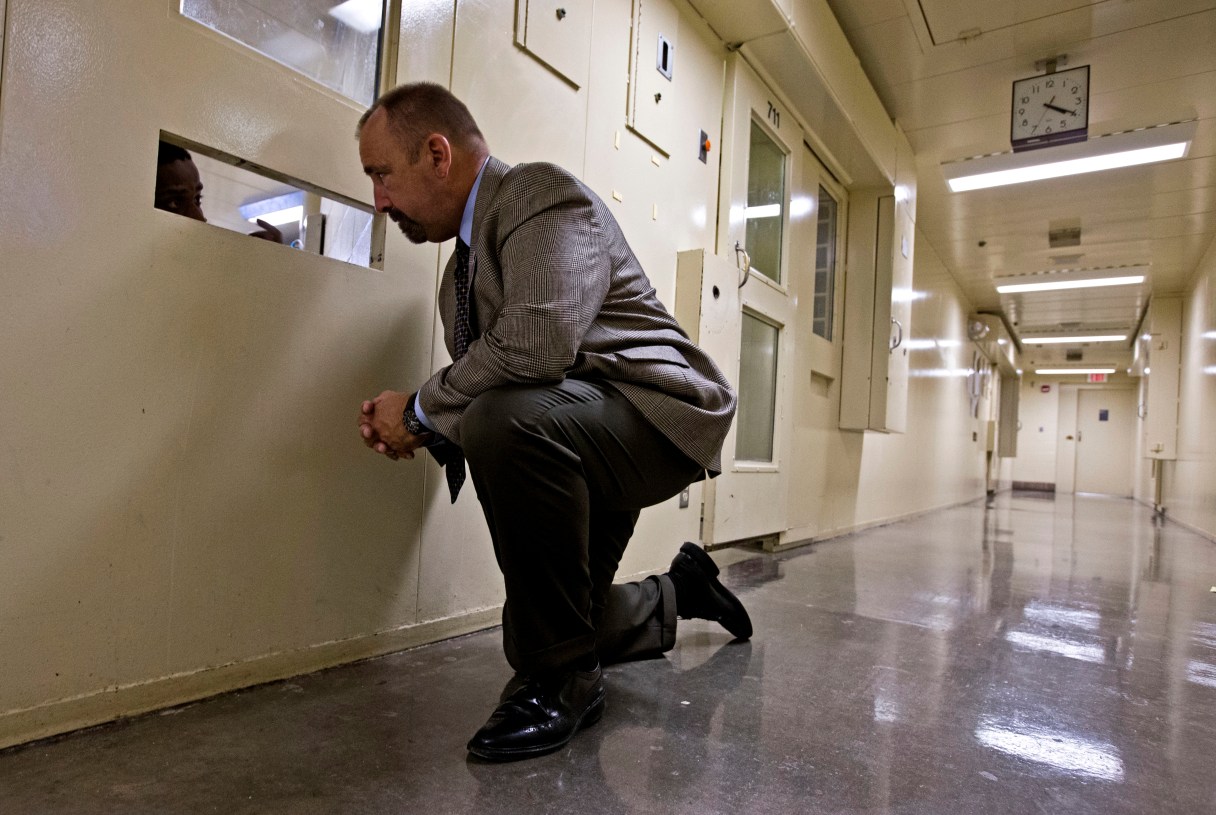
Though isolated, Green was, in a sense, far from alone. In jails around the country, inmates with serious mental illnesses are kept isolated in small cells for 23 hours a day or more, often with minimal treatment or human interaction.
Some states have moved to curb long-term “solitary confinement” in prisons, where research shows it can drive those with mental illnesses further over the edge. But there has been little attention to the use of isolation in the country’s 3,300 local jails, the biggest mental health facilities in many communities.