
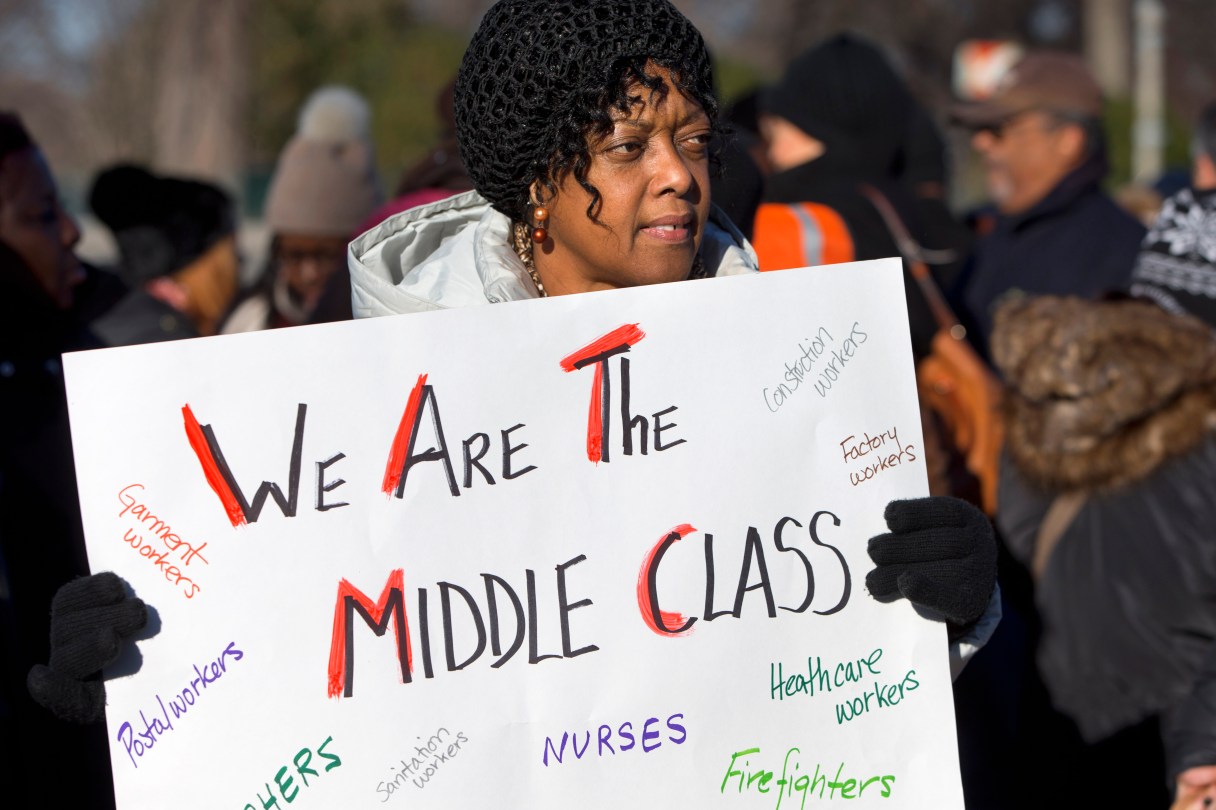
WASHINGTON – The Supreme Court appears ready to deliver a major setback to American unions as it considers scrapping a four-decade precedent that lets public-sector labor organizations collect fees from workers who decline to join.
During more than an hour of oral arguments Monday, the high court’s conservative justices seemed likely to side with a group of California teachers who say those mandatory fees violate the free-speech rights of workers who disagree with a union’s positions.
Labor officials fear unions’ very existence could be threatened if workers are allowed to get all the benefits of representation without at least paying fees to cover the costs of collective bargaining. The case affects more than 5 million workers in 23 states and Washington, D.C.
But Justice Anthony Kennedy rejected arguments by lawyers for the state of California and the California Teachers Association that the current fee system is needed to prevent non-members from becoming “free riders” – workers who reap the rewards of union bargaining and grievance procedures without paying for it.
“The union basically is making these teachers compelled riders for issues on which they strongly disagree,” Kennedy said, noting the political nature of bargaining issues like teacher salaries, merit promotions and class size.