
Wednesday, November 11, 2026Nov 11

Yellow wristbands, segregation for Florida homeless in Irma

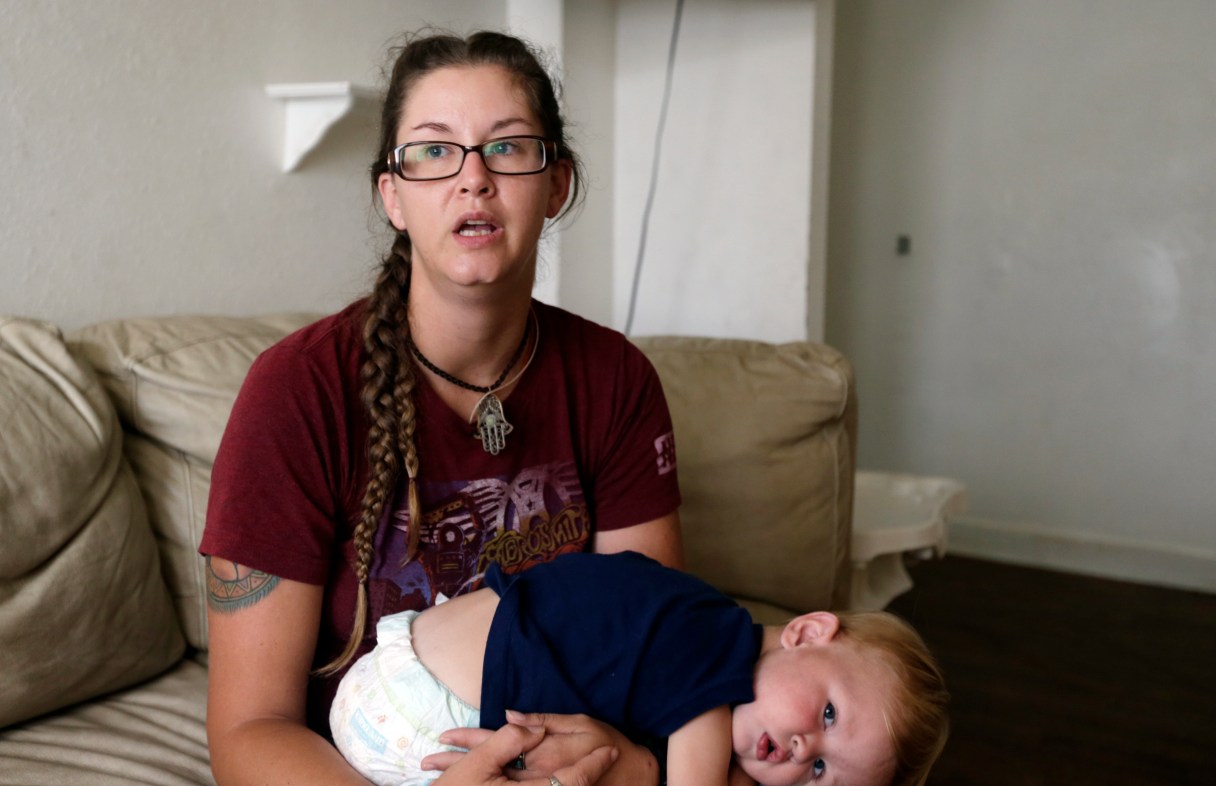
This Sept. 22, 2017 photo shows Shelby Hoogendyk and her 17 month-old son Caelan, at the St. Francis House in St. Augustine, Fla. Hoogendyk, her son and husband were evacuated from the homeless shelter during Hurricane Irma. When they arrived at a hurricane shelter they were segregated from the rest of the evacuees. Advocated for the homeless say the ill treatment of homeless people during disasters is a national problem that reflects the lack of state and local emergency planning to deal with that population. (AP Photo/Jason Dearen)
This Sept. 22, 2017 photo shows Shelby Hoogendyk and her 17 month-old son Caelan, at the St. Francis House in St. Augustine, Fla. Hoogendyk, her son and husband were evacuated from the homeless shelter during Hurricane Irma. When they arrived at a hurricane shelter they were segregated from the rest of the evacuees. Advocated for the homeless say the ill treatment of homeless people during disasters is a national problem that reflects the lack of state and local emergency planning to deal with that population. (AP Photo/Jason Dearen) This Sept. 22, 2017 photo shows Shelby Hoogendyk and her 17 month-old son Caelan, at the St. Francis House in St. Augustine, Fla. Hoogendyk, her son and husband were evacuated from the homeless shelter during Hurricane Irma. When they arrived at a hurricane shelter they were segregated from the rest of the evacuees. Advocated for the homeless say the ill treatment of homeless people during disasters is a national problem that reflects the lack of state and local emergency planning to deal with that population. (AP Photo/Jason Dearen)

ST. AUGUSTINE, Fla. (AP) – In the wake of Hurricane Irma, homeless people and their advocates in Florida are complaining that some were turned away from shelters, separated from other evacuees via yellow wristbands, or otherwise ill-treated during the crisis.

A record 72,000 Floridians sought refuge from the storm in early September at nearly 400 shelters.

Many of the complaints have been blamed on misunderstandings, the sheer magnitude of the disaster, the crush of people needing shelter immediately, or inadequate state and local emergency planning.

The response varied by county. In Miami, over 700 homeless were picked up and taken to shelters, but in Volusia County, officials were accused of turning evacuees away with no explanation.