
For many who grew up loving history, our most lasting memories of the Medal of Honor may be a spell-binding scene from “Sergeant York,” starring Gary Cooper as the most decorated soldier of The Great War, or a critical moment from “To Hell and Back,” chronicling the life of World War II’s most decorated soldier, Audie Murphy. Among the multitude of awards each man received for valor, both were Medal of Honor recipients and each had become an American hero even as their lives took totally different directions post-war.
York, a farmer from Fentress County, Tennessee, returned to his home on the Cumberland Plateau, married his childhood sweetheart and returned to farming, raising a large family and the crops that would sustain them. Murphy starred in the movie of his own wartime exploits and continued in that profession until his untimely death at age 46, having found civilian life more difficult to navigate than the battlefields.
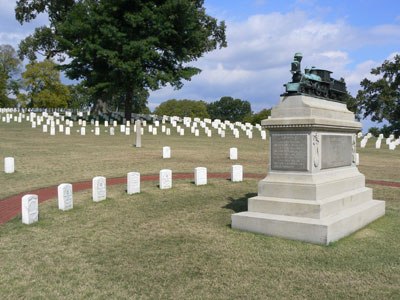
Both were buried with the honors associated with the highest battlefield award granted by the United States government, but few who followed their stories realized that the Medal of Honor was first awarded in Chattanooga, Tennessee. That story is only one of many reasons why the Charles H. Coolidge National Medal of Honor Heritage Center will open in Chattanooga on Feb. 22, 2020. But that story, as all the stories associated with the Medal of Honor, is worth remembering and sharing with a new generation searching for heroes beyond the Avengers and even Captain America.
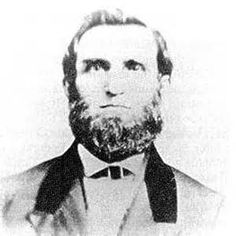 A sketch of James Andrews, made before his execution. / Contributed photo
It began, as so many stories in the South do, with the Civil War and Chattanooga’s prominence in Gen. Winfield Scott’s Anaconda Plan for Union victory. A critical element of the plan involved separating the upper South from the Deep South and carving the west from the eastern battlefields. Chattanooga was seen as the Gateway to the Deep South because of its railroads and river routes, so taking the city and using it as a launching point for a Southern invasion was viewed as integral to ending the war with an end to the Confederacy.
James Andrews, a civilian spy for the Union, understood that seizing a major railroad intersection in the South could speed the end of the war. He devised a simple plan to steal a Confederate train and then drive it through North Georgia, destroying the tracks and railroad bridges. Andrews would gather his 24 Raiders at Shelbyville, Tennessee, and the military volunteers, all 22 of them, changed into civilian clothes and began their trip to Chattanooga. To avoid creating suspicion, they formed small traveling groups, pretending to be Kentucky men hoping to join the Confederate forces near Georgia and Alabama. They traveled to Marietta and, during the early hours of April 12, 1862, boarded a train known as The General and headed north. During a stop at Big Shanty, the Raiders made their bold move. Quietly and efficiently, surrounded by hundreds of encamped Confederate soldiers, they uncoupled the locomotive and four other cars from the rest of the train. Under Andrew’s direction, The General shot forward and the chase was on.