
Wednesday, November 11, 2026Nov 11

South Sudan’s civil war creates a new lost generation

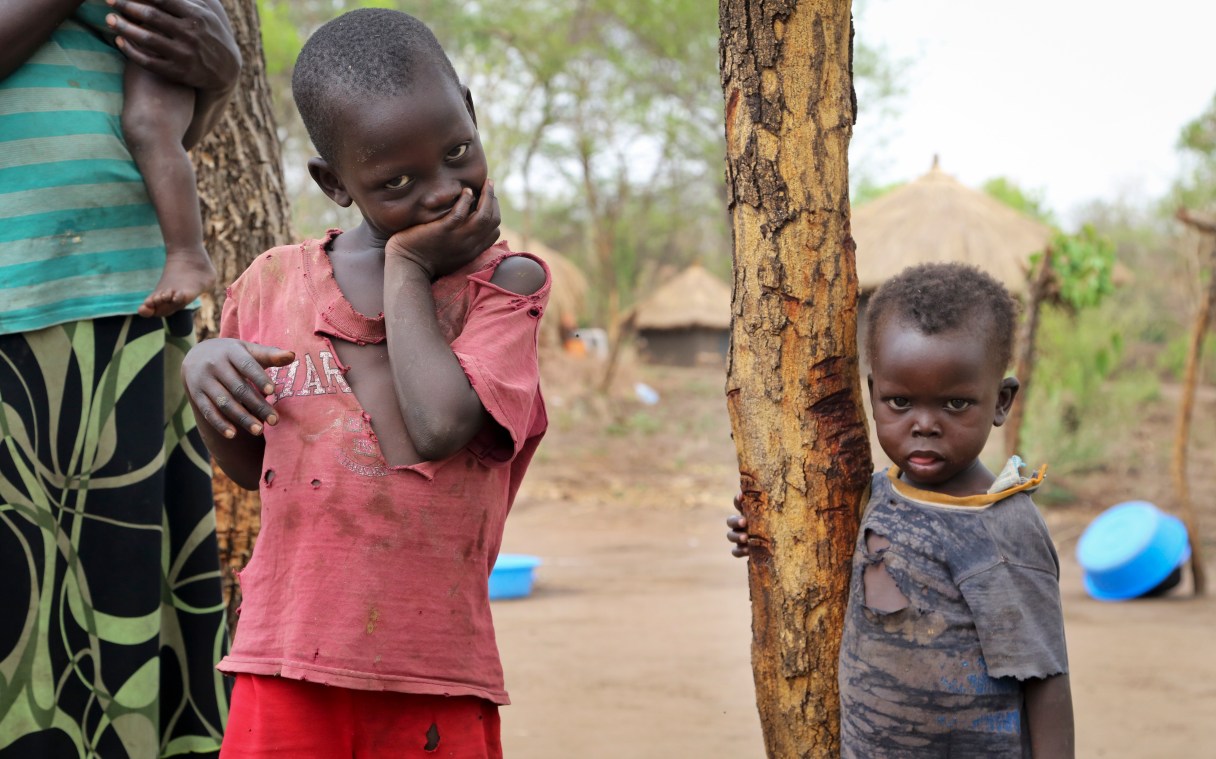
In this photo taken Wednesday, March 15, 2017, six-year-old South Sudanese refugee Santo, left, stands with his brother in Bidi Bidi camp, northern Uganda. South Sudan is known for its "lost boys," roughly 20,000 orphans who trekked across southern Sudan in the 1980s during the region's struggle for independence, but three decades later there is another lost generation of children whose new nation, barely older than themselves, has been ripped apart by civil war. (AP Photo/Justin Lynch)
In this photo taken Wednesday, March 15, 2017, six-year-old South Sudanese refugee Santo, left, stands with his brother in Bidi Bidi camp, northern Uganda. South Sudan is known for its "lost boys," roughly 20,000 orphans who trekked across southern Sudan in the 1980s during the region's struggle for independence, but three decades later there is another lost generation of children whose new nation, barely older than themselves, has been ripped apart by civil war. (AP Photo/Justin Lynch) In this photo taken Wednesday, March 15, 2017, six-year-old South Sudanese refugee Santo, left, stands with his brother in Bidi Bidi camp, northern Uganda. South Sudan is known for its "lost boys," roughly 20,000 orphans who trekked across southern Sudan in the 1980s during the region's struggle for independence, but three decades later there is another lost generation of children whose new nation, barely older than themselves, has been ripped apart by civil war. (AP Photo/Justin Lynch)

BIDI BIDI, Uganda (AP) – Six-year-old Santo proudly wears a Harvard T-shirt as if he has just been accepted into the elite institution, but its warped lettering, layers of dirt and gaping holes say more about the young refugee’s future.

After fleeing South Sudan’s three-year civil war, Santo and his family have found themselves in the bleak Bidi Bidi settlement in northern Uganda, among hundreds of thousands of people who make up the world’s fastest-growing refugee crisis.

Santo’s father, Godfrey Moro, described desolate conditions for his son: no school, no electricity or running water, a shortage of food and little respite from the sweltering sun.

As Moro spoke to The Associated Press, the young boy gnawed at his own hands to keep himself entertained.

“The war has affected these children in so many ways,” Moro said.