
Friday, November 13, 2026Nov 13

Farm use of drones to take off as feds loosen restrictions

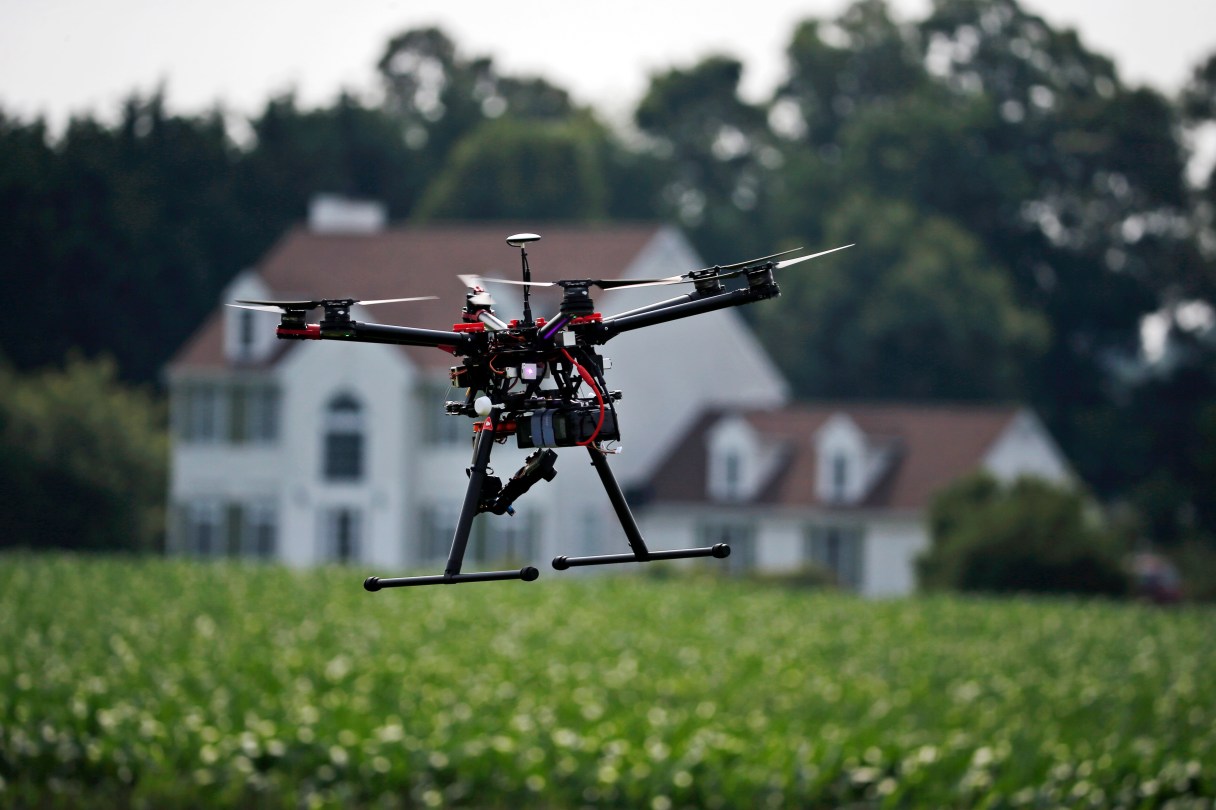
In this June 11, 2015, photo, a hexacopter drone is flown by Intelligent UAS, during a drone demonstration at a farm and winery on potential use for board members of the National Corn Growers in Cordova, Md. The small, relatively inexpensive unmanned aerial vehicles could replace humans in a variety of ways around large farms, transmitting detailed information about crops, directing farmers to problem spots and cutting down on the amount of water and chemicals used. (AP Photo/Alex Brandon)

CORDOVA, Md. (AP) – Mike Geske wants a drone.

Watching a flying demonstration on Maryland’s Eastern Shore, the Missouri farmer envisions using an unmanned aerial vehicle to monitor the irrigation pipes on his farm – a job he now pays three men to do.

“The savings on labor and fuel would just be phenomenal,” Geske says, watching as a small white drone hovers over a nearby corn field and transmits detailed pictures of the growing stalks to an iPad.

Nearby, farmer Chip Bowling tries his hand at flying one of the drones. Bowling, president of the National Corn Growers Association, says he would like to buy one for his Maryland farm to help him scout out which individual fields need extra spraying.

Another farmer, Bobby Hutchison, says he is hoping the man he hires weekly to walk his fields and observe his crops gets a drone, to make the process more efficient and accurate.