
Wednesday, November 11, 2026Nov 11

Holocaust jacket, and prisoner’s story, found at tag sale

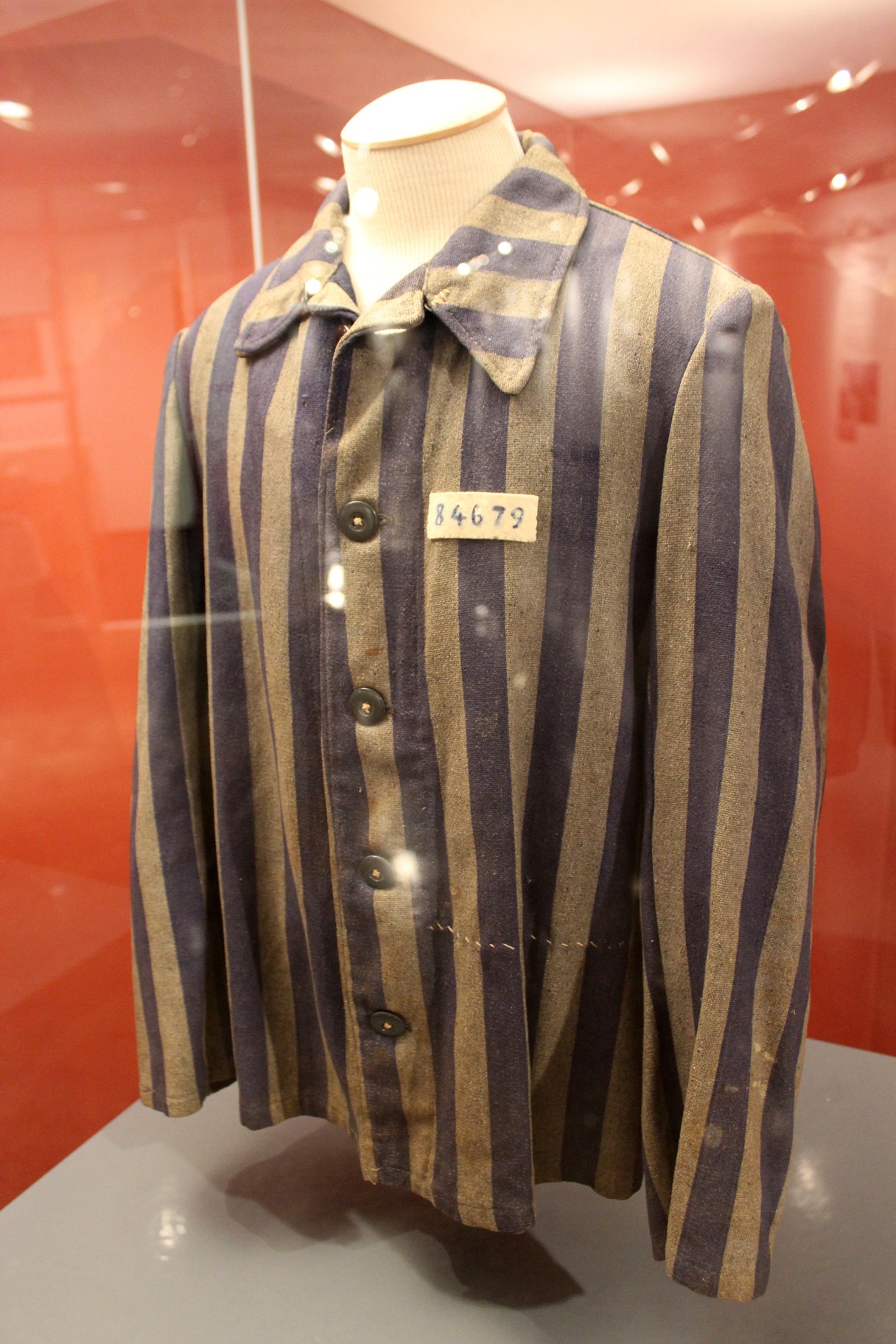
This Tuesday, Nov. 15, 2016, shows a jacket once worn by a Holocaust survivor in the Queens borough of New York. A woman hunting for bargains at a tag sale on July 4, 2015, found the jacket hanging in the back of an upstairs bedroom closet and bought it. She then donated it to the Kuperferberg Holocaust Center at Queensborough Community College, where it is the centerpiece of an exhibit about the life of the man who wore it, the late Ben Peres. (AP Photo/Frank Eltman)
This Tuesday, Nov. 15, 2016, shows a jacket once worn by a Holocaust survivor in the Queens borough of New York. A woman hunting for bargains at a tag sale on July 4, 2015, found the jacket hanging in the back of an upstairs bedroom closet and bought it. She then donated it to the Kuperferberg Holocaust Center at Queensborough Community College, where it is the centerpiece of an exhibit about the life of the man who wore it, the late Ben Peres. (AP Photo/Frank Eltman) This Tuesday, Nov. 15, 2016, shows a jacket once worn by a Holocaust survivor in the Queens borough of New York. A woman hunting for bargains at a tag sale on July 4, 2015, found the jacket hanging in the back of an upstairs bedroom closet and bought it. She then donated it to the Kuperferberg Holocaust Center at Queensborough Community College, where it is the centerpiece of an exhibit about the life of the man who wore it, the late Ben Peres. (AP Photo/Frank Eltman)

NEW YORK (AP) – The blue and gray stripes struck Jillian Eisman like a lightning bolt.

She was rummaging through a packed closet during a Long Island tag sale when she immediately recognized the symbol of horror and hate: A jacket worn by a prisoner at the Nazi Dachau concentration camp during World War II.

“I knew exactly what it was, even before I saw the numbers (84679 on the chest),” said Eisman, who purchased the jacket for $2 at the sale last year and donated it to the Kupferberg Holocaust Center in New York City.

Curators there not only put the jacket on display but also unearthed the story of the person who wore it: a teenager forced to make munitions for the German war effort, spent four years in a relocation camp and then came to America, never telling his children much about Dachau or that he kept the jacket.

The story of Benzion Peresecki – who later became Ben Peres – is told in extraordinary detail, thanks largely to the serial number and careful records he kept and that his daughter found long after he died.