
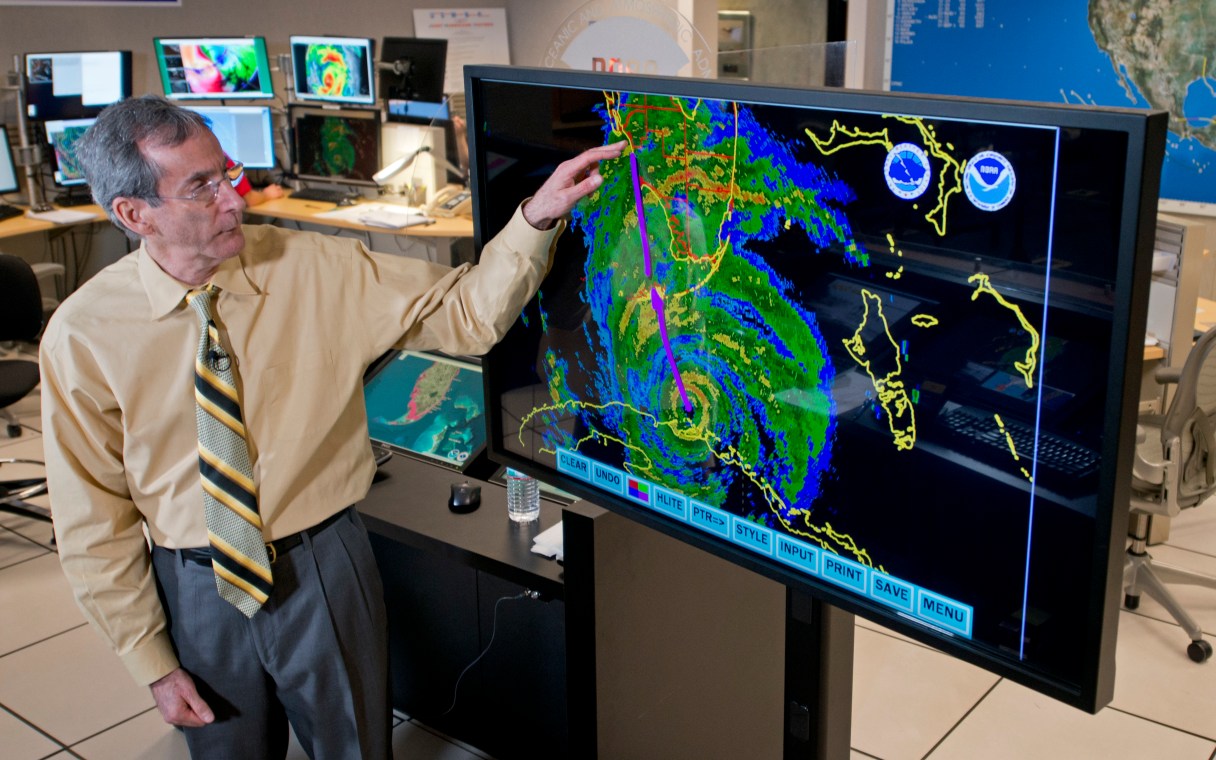
Before crashing into Florida, Hurricane Irma set all sorts of records for brute strength as it flattened Caribbean islands and swamped the Florida Keys. Irma’s assault – so soon after Harvey’s deluge of Houston – marked the first time the U.S. was hit by two Category 4 storms in the same year.
Irma hit the Sunshine State as a big wide beast, though not quite the monster it once was shaping up to be. Earlier, it was the most powerful recorded storm in the open Atlantic. But as the once-Category 5 storm neared the U.S. mainland, it lost some oomph after running into the northern coast of Cuba.
Winds dropped to a quite potent 115 mph (185 kph) by the time Irma made landfall on Marco Island, on the Florida peninsula, still a major and dangerous hurricane yet not near its 185 mph (297 kph) former self when it set a record Tuesday for the most powerful storm in the open Atlantic. And on top of that, Irma avoided what could have been its most destructive paths along the Florida peninsula – over Miami and the heavily developed Atlantic seaboard. Still, at about 400 miles (640 kilometers) wide, it raked much of the state with devastating storm surge, destructive winds and drenching rains.
“There’s a huge difference between a (Category) 3 and 5 when it makes landfall,” said private meteorologist Ryan Maue of WeatherBell Analytics. “Barbudo is an example of that. It was wiped.”
“This is obviously not the worst case scenario for Florida overall,” Maue said. Had the center of Irma hit Florida 20 to 30 miles (32-50 kilometers) to the east “it would have been much worse.”